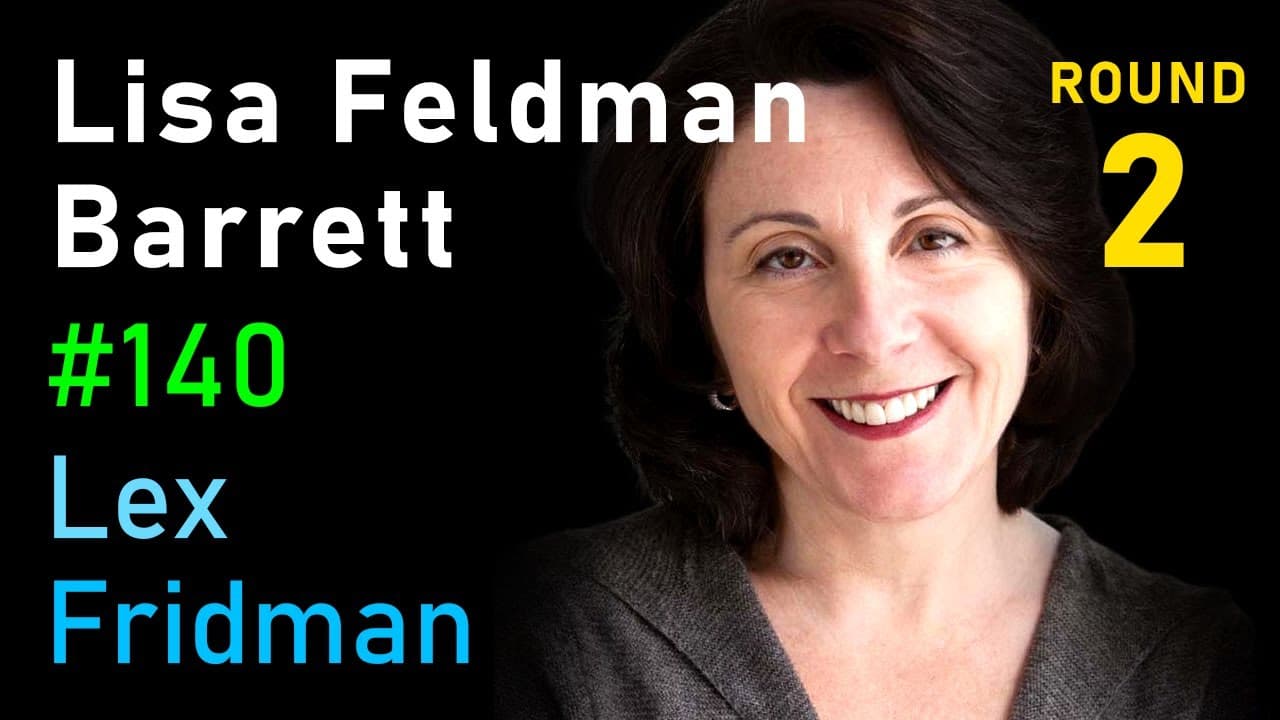
Lisa Feldman Barrett: Love, Evolution, and the Human Brain | Lex Fridman Podcast #140
TL;DR
Neuroscientist Lisa Feldman Barrett reveals insights from her book, '7 and a Half Lessons About the Brain,' discussing the interplay between emotions, evolution, and love. She elaborates on her romantic journey with her husband and the complexities of writing popular science, emphasizing the balance of detail and storytelling.
Transcript
the following is a conversation with Lisa Feldman Barrett her second time on the podcast she's a neuroscientist at Northeastern University and one of my favorite people her new book called 7 and a half lessons about the brain is out now as of a couple of days ago so you should definitely support Lisa by buying it and sharing with friends if you lik... Read More
Key Insights
- 🤕 The human brain's evolution is influenced by various factors, such as the emergence of hunting, sensory abilities, and head development.
- 📔 Writing a book requires balancing scientific accuracy with brevity and storytelling skills.
- 🥰 Love and evil are not fixed essences, but rather dynamic phenomena affected by environmental factors and individual experiences.
- 🎙️ More videos with Lisa Feldman Barrett:
Install to Summarize YouTube Videos and Get Transcripts
Explore YouTube Video Summarizer or Get YouTube Transcript Extractor
Questions & Answers
Q: Did the human brain evolve to think?
While the exact reason for brain evolution is still unknown, neuroscientists believe that the development of cognitive abilities, including thinking, was influenced by the emergence of hunting as a survival strategy during the Cambrian Period.
Q: How does writing a book differ from writing scientific papers?
Writing a book requires the ability to balance scientific accuracy with brevity and storytelling. It involves the exploration of fascinating tidbits of neuroscience and their connection to philosophical questions without losing the validity of the science.
Q: What can we learn from brain evolution?
Brain evolution is a complex process that involves changes in sensory abilities, head development, and the adaptation to hunting. It highlights the flexibility of human brains and the importance of environmental factors in shaping behaviors, both positive and negative.
Q: How does Lisa Feldman Barrett approach the concept of love and evil from a neuroscience perspective?
Barrett believes that love and evil are not fixed essences but rather complex phenomena influenced by environmental factors. While the brain's capacity for violence exists, so does the potential for kindness and altruism, showing the malleability of human behavior.
Key Insights:
- The human brain's evolution is influenced by various factors, such as the emergence of hunting, sensory abilities, and head development.
- Writing a book requires balancing scientific accuracy with brevity and storytelling skills.
- Love and evil are not fixed essences, but rather dynamic phenomena affected by environmental factors and individual experiences.
- The brain's capacity for violence coexists with its potential for kindness and altruism, highlighting the complexity of human behavior.
Summary
In this conversation, Lex Fridman interviews Lisa Feldman Barrett, a neuroscientist and author. They discuss various topics, including Lisa's romantic story of falling in love with her husband, the magic of love and relationships, the process of writing books, and the challenges and joys of brevity in writing.
Questions & Answers
Q: Can you share the story of how you fell in love with your husband?
Lisa shares the romantic story of falling in love with her husband, which involves a sushi party, personal ads, and initial correspondence that led to a deep connection and eventually meeting in person.
Q: Does learning how something works ruin the magic of it?
Lisa explains that learning how something works actually adds to the magic for her, as understanding the neuroscience behind human experiences, such as falling in love or making eye contact, deepens her appreciation for them.
Q: Can you speak about the stickiness of falling in love?
Lisa discusses the stickiness of falling in love and finding someone who truly understands and accepts you, even with your faults. She believes that true love involves appreciating and loving someone despite their faults, making the experience all the more special.
Q: From the process of writing your books, what have you learned about the actual process of writing?
Lisa shares that writing a book always takes longer than expected and involves navigating the balance between detail and brevity. Additionally, she highlights the challenge of knowing what to leave out in order to maintain the validity of the story. Writing shorter essays, as in her book "7 and a half lessons about the brain," was a challenge she embraced and found enjoyable.
Q: What have you learned about brevity in writing?
Lisa emphasizes the importance of brevity in writing and the struggle to convey big ideas in a concise format. She discusses how her latest book was a deliberate attempt to write in a brief format while still maintaining the validity of the scientific content. The goal was to create a book that people could easily read in various settings, such as on the beach or during a commute.
Takeaways
Writing a book often takes longer than expected and involves the challenge of knowing what to leave out. However, brevity in storytelling allows for concise exploration of big ideas while maintaining the validity of the content. The process of writing can deepen one's appreciation for various subjects, and learning about how something works can add to the magic of the experience rather than detracting from it. Furthermore, finding someone who truly understands and accepts you, faults and all, is a key aspect of falling in love and building a lasting relationship.
Summary & Key Takeaways
-
Lisa Feldman Barrett's second appearance on the podcast highlights her new book, "7 and a Half Lessons About the Brain," which offers a concise introduction to the complexities of the human brain.
-
The conversation covers various topics, ranging from love to music to philosophy, emphasizing the importance of exploring different dimensions and alternating between technical discussions and lighter subjects.
-
Lisa shares a romantic story of how she fell in love with her husband, Dan, and discusses the challenges and joys of writing her books, including the struggle to know what to include and what to leave out.
Read in Other Languages (beta)
Share This Summary 📚
Summarize YouTube Videos and Get Video Transcripts with 1-Click
Try YouTube Summary with ChatGPT & Claude or YouTube Transcript Generator
Explore More Summaries from Lex Fridman Podcast 📚



Summarize YouTube Videos and Get Video Transcripts with 1-Click
Try YouTube Summary with ChatGPT & Claude or YouTube Transcript Generator