How Did the Brain Evolve for Survival?
TL;DR
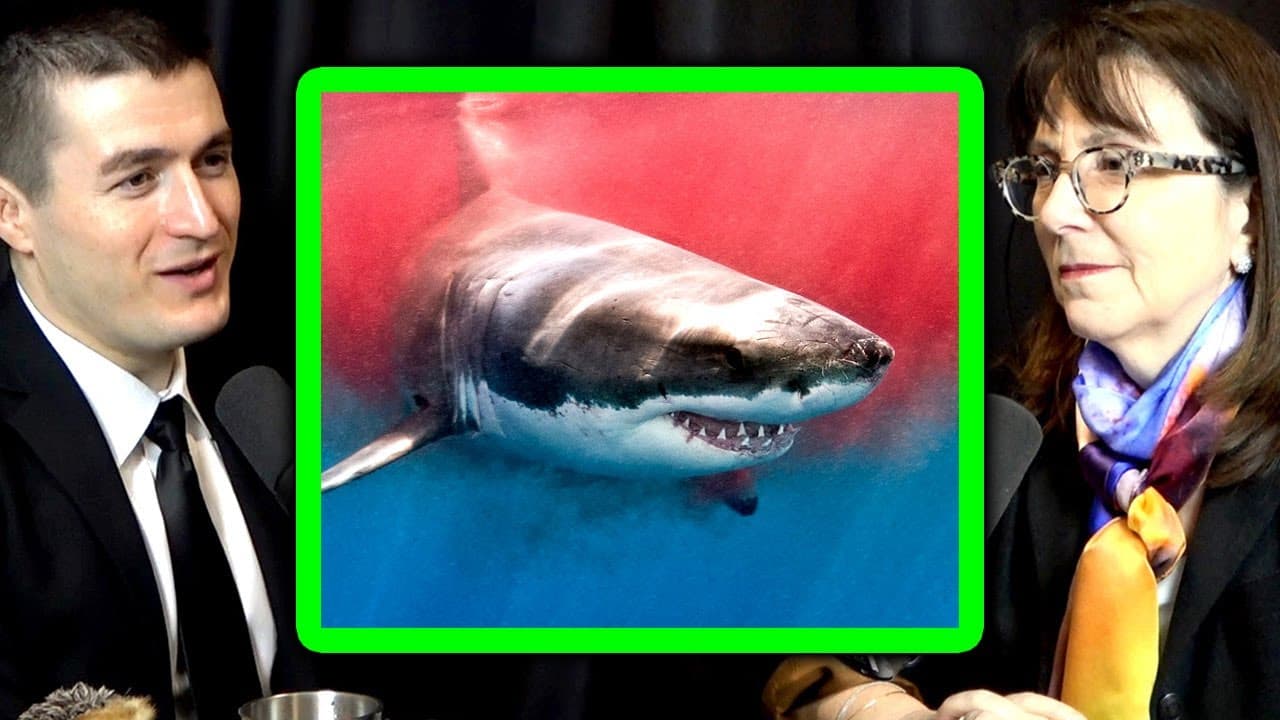
The brain evolved as a predictive tool primarily to enhance survival through motor control and sensing threats. Initially, early creatures like amphioxus lacked complex sensory systems, but as predation emerged, the development of senses became crucial for social interaction and survival tactics.
Transcript
i wonder from almost an ai perspective but just computationally is the brain just mostly a prediction machine then like is the perception just the nice little feature added on top like the both the the integration of new perceptual information i wonder how big of an impressive system is that relative to just the big predictor model construction wel... Read More
Key Insights
- 🧠 The brain is primarily a prediction machine, with perception being an additional feature.
- 🤕 Early creatures like amphioxus had no brain, head, or senses, but eventually evolved them for survival.
- 🥺 Senses evolved in response to predatory behavior, leading to an arms race between predators and prey.
- 😅 Social interaction in animals initially revolved around determining if one would eat or be eaten.
- 😋 Early creatures like amphioxus reacted to changes in food concentration through random movement, without intentional action.
- 🪛 The evolution of senses was not driven by the purpose of consciousness or experiencing the environment.
- 👻 The emergence of senses allowed for the development of more complex social interactions.
- 🎙️ More videos with Lisa Feldman Barrett:
Install to Summarize YouTube Videos and Get Transcripts
Explore YouTube Video Summarizer or Get YouTube Transcript Extractor
Questions & Answers
Q: Did senses evolve for the purpose of consciousness?
No, senses evolved in the service of motor control and survival. Consciousness is not the primary function of senses.
Q: What triggered the evolution of senses?
The evolution of senses was triggered by the emergence of predatory behavior, creating an arms race between predators and prey.
Q: Did senses evolve to facilitate intentional action?
No, early creatures like amphioxus did not guide their actions intentionally. They reacted to changes in food concentration through random movement.
Q: How important were senses for early social interaction?
Senses played a crucial role in the earliest form of social interaction, as animals needed to determine if they would be eaten or if they would eat others.
Summary & Key Takeaways
-
The brain is primarily a prediction machine, with perception being a secondary feature.
-
Early creatures like amphioxus had no brain, head, or senses, but evolved them to survive predation.
-
Senses evolved in service of motor action, with the ability to see and sense each other being crucial for social interaction.
Read in Other Languages (beta)
Share This Summary 📚
Summarize YouTube Videos and Get Video Transcripts with 1-Click
Try YouTube Summary with ChatGPT & Claude or YouTube Transcript Generator
Explore More Summaries from Lex Clips 📚





Summarize YouTube Videos and Get Video Transcripts with 1-Click
Try YouTube Summary with ChatGPT & Claude or YouTube Transcript Generator