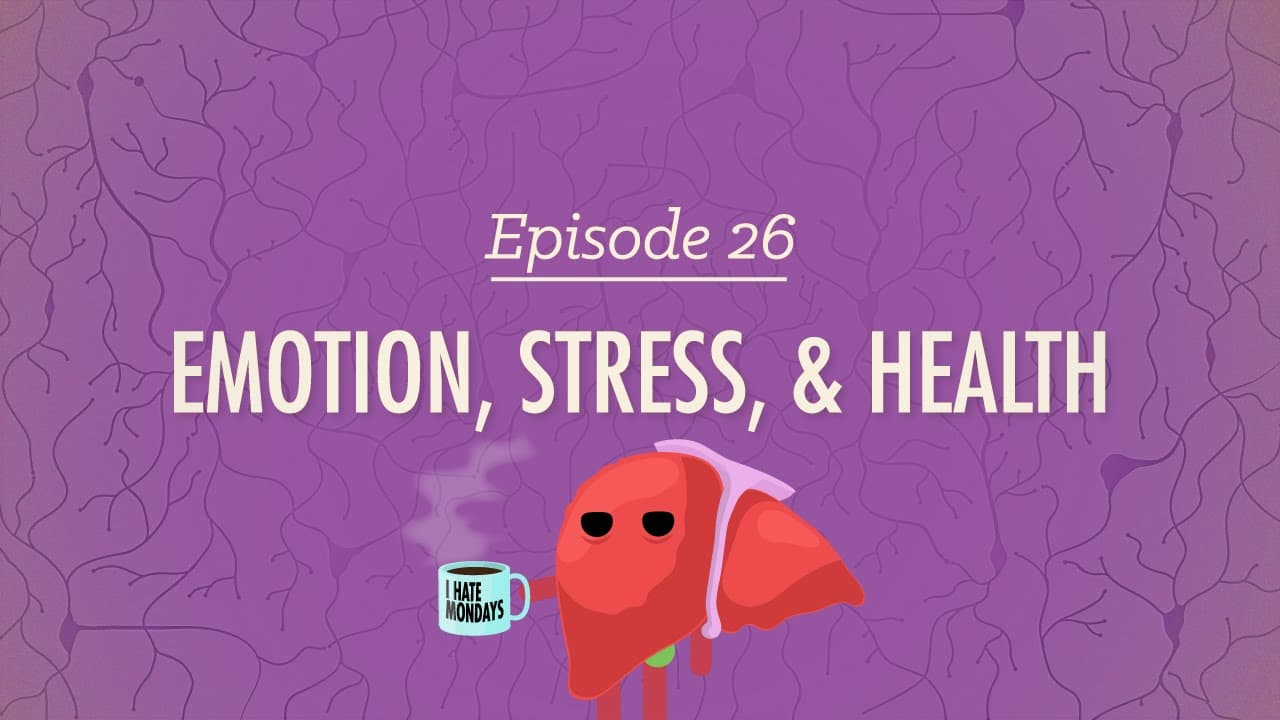
Emotion, Stress, and Health: Crash Course Psychology #26
TL;DR
Emotions influence health, stress can be deadly.
Transcript
Did you know that astronauts in space have a hard time communicating without words because their weightless bodily fluids make their faces all puffy and hard to read? Have you heard that Botox can actually improve your mood, and not by smoothing wrinkles but actually by easing depression? Or that this "come here" gesture is common in the US but is ... Read More
Key Insights
- Facial expressions are universally understood across cultures, helping in emotion communication and regulation, as suggested by the Facial Feedback Hypothesis.
- Positive emotions are linked to longer, healthier lives, while negative emotions like anger and fear can lead to stress-related health issues.
- Stress is a reaction to perceived challenges or threats and can be categorized into catastrophes, significant life changes, and daily inconveniences.
- Short-term stress can be beneficial by enhancing focus and immune response, but chronic stress can harm health, particularly affecting the heart and digestive systems.
- The autonomic nervous system plays a crucial role in stress response, affecting bodily functions like digestion and heart rate through the sympathetic and parasympathetic systems.
- Chronic stress can lead to heart disease by increasing cholesterol and blood pressure, as demonstrated by studies on stress-prone professionals like tax accountants.
- Pessimism and depression, closely related to stress, have been linked to increased risk of heart disease and other health issues due to behavioral and biological factors.
- Understanding and managing emotions can improve health outcomes, emphasizing the importance of not letting emotions dominate one's life.
Install to Summarize YouTube Videos and Get Transcripts
Explore YouTube Video Summarizer or Get YouTube Transcript Extractor
Questions & Answers
Q: How do facial expressions influence emotions?
Facial expressions not only communicate emotions but also help regulate them according to the Facial Feedback Hypothesis. Smiling can elevate mood, while frowning can lower it. This is supported by studies showing that even Botox injections, which limit frowning, can reduce depression by inhibiting negative expressions.
Q: What is the relationship between emotions and stress?
Emotions and stress are interconnected; negative emotions like anger and fear can lead to stress, affecting health. Stress is a reaction to perceived threats or challenges, and while short-term stress can be beneficial, chronic stress can harm health, leading to issues like heart disease and digestive problems.
Q: How does the autonomic nervous system respond to stress?
The autonomic nervous system, comprising the sympathetic and parasympathetic systems, regulates stress responses. The sympathetic system activates the fight-or-flight response, while the parasympathetic system calms the body. Stress impacts functions like digestion and heart rate, with chronic stress causing long-term health issues.
Q: What are the health effects of chronic stress?
Chronic stress can lead to serious health problems, including heart disease, due to increased blood pressure, cholesterol, and heart rate. It also affects digestion and can cause gastrointestinal issues. Stress impacts the body's ability to function properly, leading to increased risk of various diseases.
Q: How do pessimism and depression relate to stress and health?
Pessimism and depression are linked to stress and can exacerbate health issues, including heart disease. They may lead to neglect of health, isolation, and increased inflammatory proteins, all contributing to poorer health outcomes. Positive emotions, in contrast, are associated with longer, healthier lives.
Q: What role do cultural differences play in expressing emotions?
Cultural differences significantly impact how emotions are expressed and interpreted. Gestures like the peace sign or thumbs up can have different meanings across cultures, leading to misunderstandings. Understanding these differences is crucial for effective communication and emotional regulation across diverse cultural contexts.
Q: What is the two-dimensional model of emotional experience?
The two-dimensional model describes emotions based on valence (positive or negative) and arousal (excited or calm). Emotions can be mapped on this spectrum, with combinations indicating specific feelings. For example, elation is a combination of positive valence and high arousal, while depression involves negative valence and low arousal.
Q: How can understanding emotions improve health outcomes?
Understanding emotions helps in managing them effectively, reducing stress and its associated health risks. Recognizing emotional triggers and responses allows for better emotional regulation, promoting positive emotions that contribute to improved health and well-being. Avoiding chronic stress and negative emotional states is crucial for maintaining good health.
Summary & Key Takeaways
-
Facial expressions are a universal language for emotions, helping regulate feelings through the Facial Feedback Hypothesis. Positive outlooks contribute to longer, healthier lives, while negative emotions can lead to stress-related health problems.
-
Stress is a response to perceived threats, categorized into major events, life changes, and daily hassles. While short-term stress can be beneficial, chronic stress can damage health, particularly affecting heart and digestive systems.
-
The autonomic nervous system mediates stress responses, influencing bodily functions. Chronic stress elevates heart disease risk, with pessimism and depression exacerbating health issues. Managing emotions is crucial for better health outcomes.
Read in Other Languages (beta)
Share This Summary 📚
Summarize YouTube Videos and Get Video Transcripts with 1-Click
Try YouTube Summary with ChatGPT & Claude or YouTube Transcript Generator
Explore More Summaries from CrashCourse 📚



Summarize YouTube Videos and Get Video Transcripts with 1-Click
Try YouTube Summary with ChatGPT & Claude or YouTube Transcript Generator