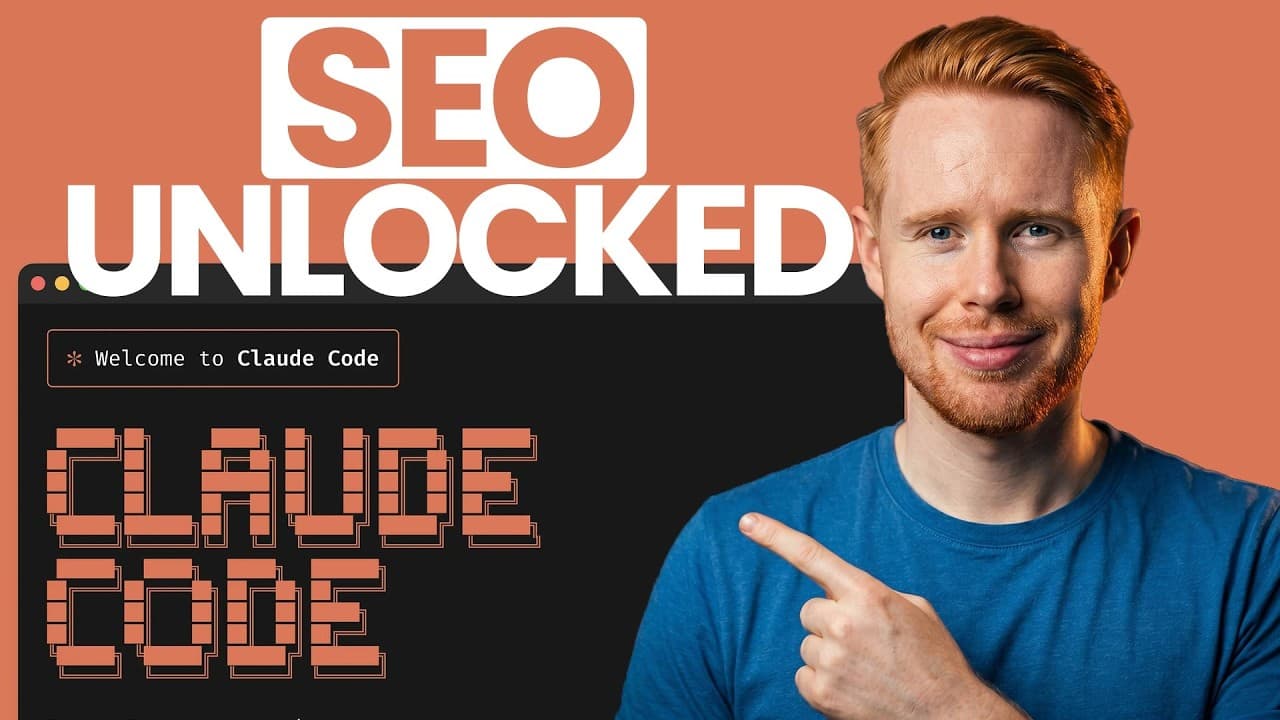
How to Scale SEO Content With Claude Code
TL;DR
Use Claude Code to build a statically generated website, then target validated keywords with scalable blog posts and service pages. The presented workflow combines SEMrush research, on-page optimization, technical improvements, and off-page authority, with the creator attributing more than $500,000 in past earnings and 50,000 monthly Google clicks to these methods.
Transcript
This video is a complete masterclass on Claude code and search engine optimization. We're going to be going over two strategies that I have used to earn over half a million dollars on the previous company I sold, generate 50,000 clicks every single month or 1,500 clicks every single day. Took me four to maybe six years to learn this kind of stuff, ... Read More
Key Insights
- SEO is the process of improving how highly a website appears in Google results so search visitors can become paying customers. The creator states that roughly 40 percent of searchers click the first result and 20 percent click the second, making position a major factor in traffic.
- Keyword selection is the first strategic requirement because keywords do not offer equal opportunities. Asking Claude for a generic list of plumbing keywords produces only its best guesses, so the workflow instead recommends systematic research with SEMrush to identify stronger targets before investing in content production.
- The two featured growth tactics are publishing blog posts at scale and creating service pages. Blog posts address a broad collection of searchable topics, while service pages are designed around the services a business offers and the visitors who may become customers.
- Claude Code can create the basic website structure from plain-language instructions. The demonstrated prompt requests a homepage, a blog index, and a service index, while a Claude.md file supplies project rules and standard operating procedures that guide how the coding assistant completes its work.
- A visual reference is important because an unrestricted website prompt can produce generic-looking output. The workflow uses a screenshot of a plumbing design found on Dribbble, attaches it to the Claude Code prompt, and asks the system to reproduce that design direction when generating the site.
- Static site generation is the recommended build approach because completed pages are immediately available when Google crawls them. The creator contrasts this with server-side rendering, which builds pages after a request, and client-side rendering, which can leave a crawler without a complete page.
- On-page SEO covers a page's written material, subject matter, structure, and publishing format, while technical SEO covers how the site is built. The description says the complete workflow automates more than 80 on-page signals in one prompt and moves Lighthouse results from red to green.
- AI SEO is presented as an extension of conventional SEO rather than a separate discipline. The creator argues that Google, ChatGPT, Perplexity, and Claude retrieve information through search listings, so pages that rank well in traditional search should also have a stronger basis for appearing in AI-generated answers.
Install to Summarize YouTube Videos and Get Transcripts
Explore YouTube Video Summarizer or Get YouTube Transcript Extractor
Questions & Answers
Q: How can Claude Code be used to build an SEO website?
Create a dedicated project folder, add a Claude.md file containing the project's instructions and operating rules, and open that folder in a coding workspace with Claude Code. Prompt it to build a homepage, a blog index, and a service index. Attach a screenshot showing the desired design, then review the generated site through its local browser link before producing content.
Q: Why should an SEO website use static site generation?
Static site generation makes a completed page available as soon as Google requests it, which supports reliable crawling and ranking. The creator compares it to receiving an already prepared slice of pizza. Server-side rendering requires the page to be assembled after the request, while client-side rendering may fail to present the crawler with a complete page.
Q: How should businesses find winning SEO keywords?
Businesses should use a systematic research process rather than asking an AI assistant to guess a list of relevant terms. The creator warns that a generic request for 20 plumbing keywords may miss the valuable opportunities. The full workflow uses SEMrush research to identify promising targets before time is committed to writing and publishing pages at scale.
Q: What are the two main SEO content strategies presented?
The two strategies are blog posts at scale and high-converting service pages. Blog posts let a site address many searchable subjects through an expanding content index. Service pages focus on the services the business provides and support conversion from search visitor to customer. The creator credits these tactics with doing the main work behind the reported results.
Q: What is the difference between on-page and technical SEO?
On-page SEO includes what a page says, what subjects it covers, how the information is structured, and how it is published. Technical SEO concerns the website's underlying construction, including load speed and Core Web Vitals. The described workflow uses Claude Code to handle both categories, including more than 80 on-page signals and Lighthouse improvements from red to green.
Q: How can a Claude Code website avoid generic AI design?
Provide a strong visual reference instead of relying only on a broad text prompt. In the demonstration, the creator searches Dribbble for a plumbing website, captures a screenshot of a suitable landing page, uploads it through the Claude interface, and asks Claude Code to copy that design direction while building the requested homepage and content index pages.
Q: How does traditional SEO relate to AI SEO?
The creator treats AI SEO as fundamentally similar to traditional SEO because answer systems retrieve information from online listings before presenting a response. The stated view is that strong conventional search rankings should therefore support visibility in answers from Google, ChatGPT, Perplexity, or Claude. The recommended priority remains sound keyword research, useful pages, technical accessibility, and authority.
Q: What results does the creator attribute to this SEO method?
The creator says the methods generated more than $500,000 at a previously sold company and now produce 50,000 Google clicks per month from one website, described as about 1,500 clicks per day. The creator also says the underlying knowledge took four to six years to develop and centers the training on the two content tactics presented.
Summary & Key Takeaways
-
The workflow begins by creating a project folder, adding a Claude.md instruction file, and asking Claude Code to build a homepage plus separate indexes for blog and service content. A design screenshot from a reference site helps guide the visual result and reduces generic-looking AI output without requiring the user to write code.
-
Static site generation is presented as essential because it gives Google an immediately available, complete page to crawl. Server-side rendering may require the page to be built when requested, while client-side rendering can make content harder to retrieve. The supplied Claude.md instructions are intended to make static generation a default project requirement.
-
The broader strategy combines carefully researched keywords with two content formats: blog posts at scale and high-converting service pages. It also covers automated on-page signals, technical improvements measured through Lighthouse, and off-page authority. The creator says this approach generated 50,000 monthly clicks and contributed to more than $500,000 in earnings.
Read in Other Languages (beta)
Share This Summary 📚
Summarize YouTube Videos and Get Video Transcripts with 1-Click
Try YouTube Summary with ChatGPT & Claude or YouTube Transcript Generator
Explore More Summaries from Jono Catliff 📚



Summarize YouTube Videos and Get Video Transcripts with 1-Click
Try YouTube Summary with ChatGPT & Claude or YouTube Transcript Generator