What Are Personality Disorders and How Are They Diagnosed?
TL;DR
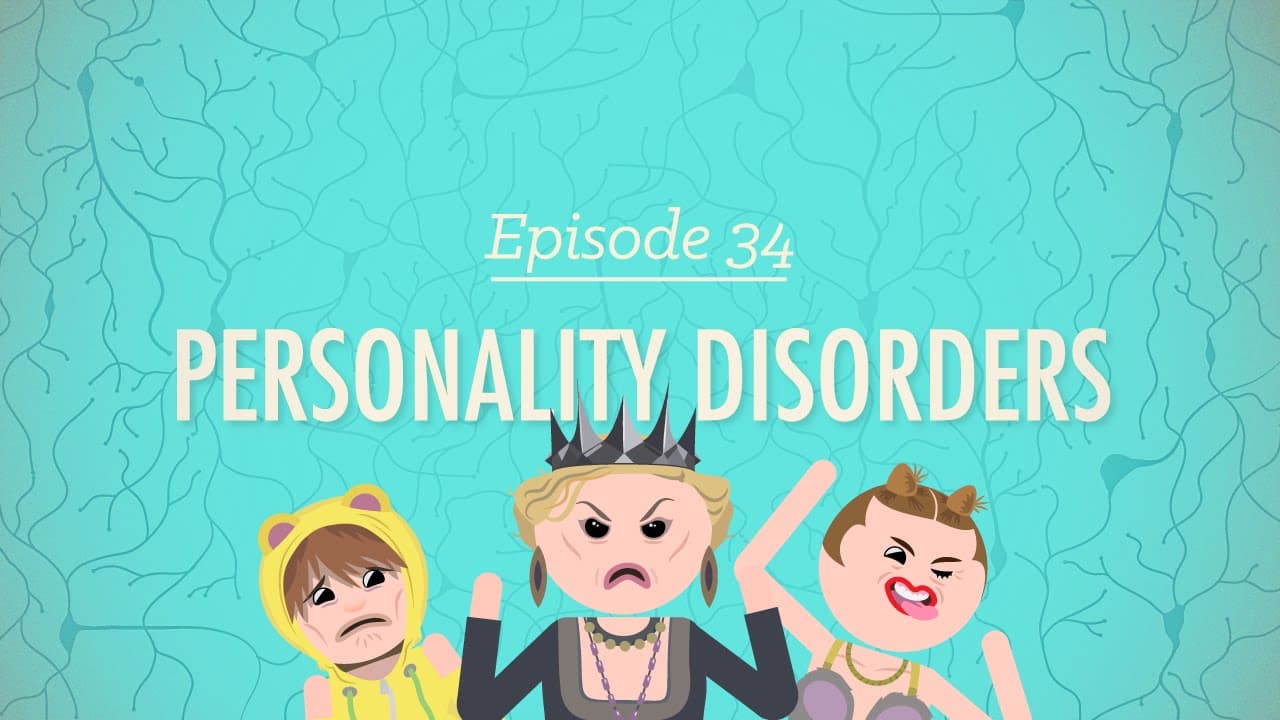
Personality disorders are chronic psychological conditions characterized by rigid behavior patterns that disrupt social functioning, often without the individual's awareness. They fall into three clusters: A (odd/eccentric), B (dramatic/emotional), and C (anxious/fearful), making diagnosis complicated due to overlapping traits. Early intervention, especially in children exhibiting conduct disorder symptoms, can help redirect negative behaviors and potentially prevent more severe disorders.
Transcript
I can be smooth and charming and slick. I can make a very confident impression and it's hard to leave me at a loss for words. Sometimes I find myself fantasizing about unlimited success and power, and beauty. I have repeatedly used deceit to cheat, con, or defraud others for my personal gain. To be honest, I don't have much concern for the feelings... Read More
Key Insights
- Personality disorders are psychological conditions with enduring, inflexible behavior patterns that impair social functioning, often without the sufferer's awareness.
- They are categorized into three clusters: A (odd/eccentric), B (dramatic/emotional), and C (anxious/fearful), each with distinct characteristics.
- Diagnosing personality disorders can be challenging due to overlapping traits, leading to the common use of 'Personality Disorder Not Otherwise Specified' (PDNOS).
- The Dimensional Model proposes assessing personality traits on a spectrum rather than diagnosing discrete disorders, offering a more nuanced understanding.
- Borderline Personality Disorder (BPD) involves dysfunctional behaviors learned as coping mechanisms in response to traumatic or neglectful environments.
- Antisocial Personality Disorder, often linked to psychopathy, involves a lack of empathy and conscience, with potential biological and environmental causes.
- Research shows antisocial individuals may have reduced frontal lobe activity, affecting impulse control and empathy, and an overactive dopamine reward system.
- Early intervention in children showing conduct disorder symptoms could prevent the development of antisocial traits by channeling behaviors into positive outlets.
Install to Summarize YouTube Videos and Get Transcripts
Explore YouTube Video Summarizer or Get YouTube Transcript Extractor
Questions & Answers
Q: What are personality disorders and how do they affect individuals?
Personality disorders are psychological conditions marked by enduring, inflexible behavior patterns that impair social functioning. Individuals with these disorders often do not recognize their condition, as the behaviors are egosyntonic, meaning they align with their self-image. These disorders can lead to significant challenges in relationships and daily functioning.
Q: How are personality disorders categorized?
Personality disorders are categorized into three clusters according to the DSM-5. Cluster A includes odd or eccentric traits, Cluster B encompasses dramatic, emotional, or impulsive traits, and Cluster C involves anxious, fearful, or avoidant traits. Each cluster contains specific disorders with distinct characteristics, though there is often overlap between them.
Q: What challenges exist in diagnosing personality disorders?
Diagnosing personality disorders is challenging due to overlapping symptoms and traits, which can make it difficult to distinguish between specific disorders. This has led to the frequent use of the diagnosis 'Personality Disorder Not Otherwise Specified' (PDNOS). The proposed Dimensional Model aims to address these challenges by assessing personality traits on a spectrum.
Q: What is Borderline Personality Disorder and its causes?
Borderline Personality Disorder (BPD) is characterized by unstable moods, behavior, and relationships. It often results from dysfunctional behaviors learned as coping mechanisms in response to traumatic or neglectful environments, particularly during childhood. BPD can involve intense emotions, impulsivity, and self-destructive behaviors, posing challenges for both patients and clinicians.
Q: What are the characteristics of Antisocial Personality Disorder?
Antisocial Personality Disorder, often associated with psychopathy or sociopathy, involves a lack of empathy and conscience for wrongdoing. Individuals with this disorder may engage in manipulative, deceitful, or criminal behavior. It is more common in men and can be identified by behaviors such as lying, stealing, and aggression from a young age.
Q: What biological factors are linked to Antisocial Personality Disorder?
Research indicates that individuals with Antisocial Personality Disorder may have reduced activity in the frontal lobe, affecting impulse control and empathy. They may also have an overactive dopamine reward system, leading to impulsive behavior for short-term rewards. These biological factors, combined with environmental influences, contribute to the disorder's development.
Q: How can early intervention help prevent Antisocial Personality Disorder?
Early intervention in children showing symptoms of conduct disorder, a precursor to Antisocial Personality Disorder, can help prevent the development of antisocial traits. By identifying warning signs and working with families to correct behavior and remove negative influences, children's behaviors can be redirected into positive outlets, reducing the risk of developing the disorder.
Q: What is the Dimensional Model in the context of personality disorders?
The Dimensional Model proposes assessing personality traits on a spectrum rather than diagnosing discrete disorders. This approach aims to provide a more nuanced understanding of personality disorders by evaluating individuals based on the intensity of various traits, such as narcissism or avoidance, rather than fitting them into specific diagnostic categories.
Summary & Key Takeaways
-
Personality disorders are chronic psychological conditions characterized by inflexible behavior patterns that impair social functioning, often without the individual's awareness. These disorders are categorized into three clusters, each with distinct traits, and diagnosing them can be challenging due to overlapping symptoms.
-
The Dimensional Model offers a spectrum-based approach to understanding personality traits, moving away from discrete diagnoses. Borderline Personality Disorder (BPD) involves learned dysfunctional behaviors from traumatic environments, while Antisocial Personality Disorder is linked to a lack of empathy and conscience.
-
Research suggests antisocial traits may result from biological and environmental factors, including reduced frontal lobe activity and an overactive dopamine system. Early intervention in children with conduct disorder symptoms could prevent antisocial traits by redirecting behaviors positively.
Read in Other Languages (beta)
Share This Summary 📚
Summarize YouTube Videos and Get Video Transcripts with 1-Click
Try YouTube Summary with ChatGPT & Claude or YouTube Transcript Generator
Explore More Summaries from CrashCourse 📚




Summarize YouTube Videos and Get Video Transcripts with 1-Click
Try YouTube Summary with ChatGPT & Claude or YouTube Transcript Generator