Rick Rule: Banking crisis not over, here’s how to save your deposits
TL;DR
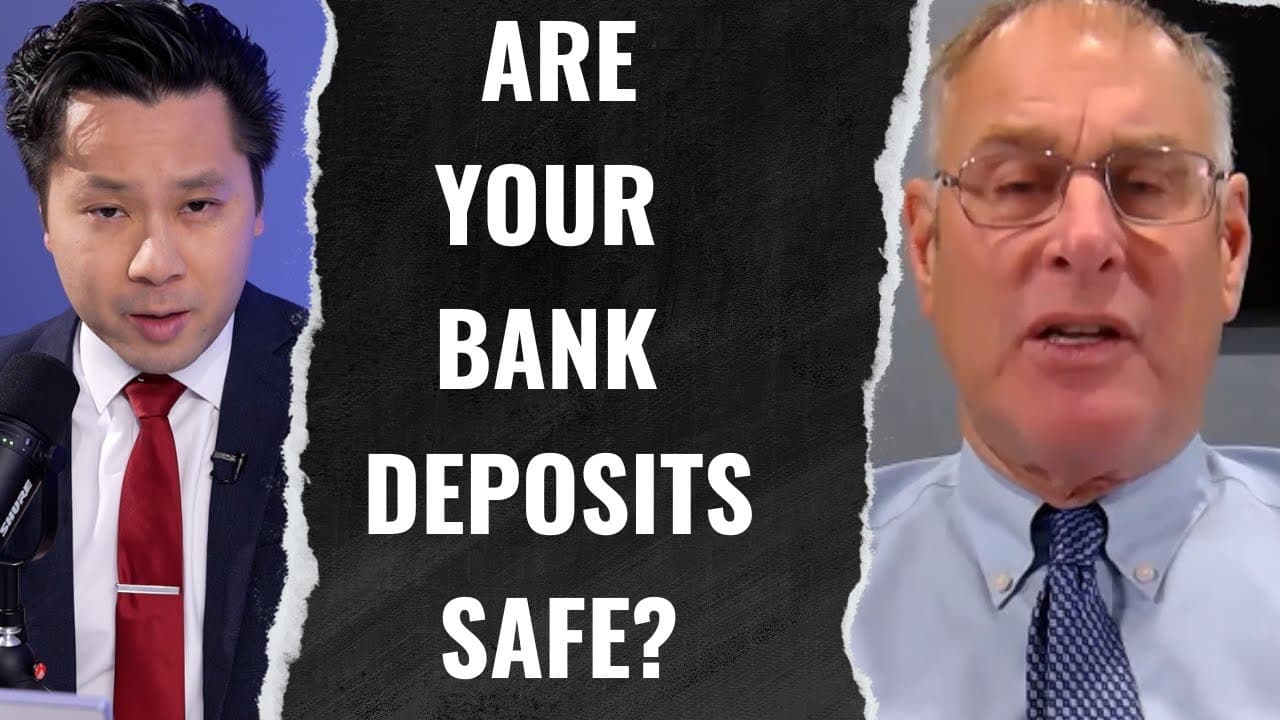
Legendary investor Rick Rule discusses the ongoing banking crisis, the importance of depositors conducting due diligence, and the potential consequences for the economy.
Transcript
and it really goes to the difficulty that the that our society has guaranteeing very very very large amounts of deposit with relatively limited pools of capital it seems like people do more due diligence buying a pair of sneakers uh than they do before they put 250 000 in a bum bank and I hope that that changes over time we're lucky to be joined by... Read More
Key Insights
- 🏦 Confidence in the banking system has been maintained, despite ongoing concerns about the banking industry's practices and potential crises.
- 🔍 Depositors have outsourced due diligence to the government, relying on Federal Deposit Insurance Corporation (FDIC) guarantees instead of conducting their own research.
- 💹 Jamie Dimon, CEO of JP Morgan, believes that the banking crisis is not yet over, highlighting ongoing issues within the industry.
- 💰 The sins of the banking industry, such as borrowing short and lending long, have not been fully resolved, and the Federal Reserve has acted excessively to maintain confidence in the system.
- 🏦 Depositors tend to concentrate their deposits in the "too big to fail" banks, which pay no interest on checking accounts.
- 📊 When evaluating the safety of a bank, it is important to look at metrics such as book equity, cash and cash equivalents, and the mark-to-market value of portfolios.
- 😬 There is concern about the moral risks associated with bailing out shareholders of certain institutions and the need for depositors to take control of their financial future.
- 💡 The future of community and regional banks is seen as bright, but large banks lack transparency and may face challenges with their derivatives exposure and risk management.
- 🔋 The energy transition and the growing demand for battery metals will have a significant impact on the natural resource sector, creating potential investment opportunities.
- 💼 Industrial materials, excluding gold and silver, are essential for the future of humanity, and demand for these materials is expected to grow rapidly, leading to potential supply shortages.
- 💰 Precious metals, particularly gold and silver, are expected to see increased market share in savings and investment products due to factors such as negative real interest rates, a banking crisis, and debt and deficits.
- 🌍 The transition to renewable and alternative energy sources will require significant investment and exploration in critical and strategic metals.
- ⛏️ The natural resource investing sector offers promising opportunities for investors, and conferences and boot camps provide valuable education for all age groups.
- 💰 Natural resource investing and cryptocurrency investing are not mutually exclusive, and young investors may consider both asset classes based on their interests and goals.
- 🎙️ More videos with Rick Rule:
Install to Summarize YouTube Videos and Get Transcripts
Explore YouTube Video Summarizer or Get YouTube Transcript Extractor
Questions & Answers
Q: How has the banking industry reacted to the sins of borrowing short and lending long?
The Federal Reserve has taken quick action to maintain confidence in the system, but Rick Rule is concerned about the moral hazard of bailing out shareholders and the lack of consequences for banking mistakes.
Q: Why should depositors read the statement of financial condition of banks they deposit in?
By reading the statement of financial condition, depositors can assess metrics such as book equity, cash and cash equivalents, and mark to market value, which are crucial for determining the safety of a bank.
Q: What risks do depositors face by depositing money in too big to fail banks?
Rick Rule points out that depositors face the risk of concentrating their deposits in banks that may not be as safe as they assume, and too big to fail banks often pay no interest on checking accounts.
Q: How does Rick Rule suggest depositors protect their savings in a banking crisis?
Rick Rule recommends depositing money in banks that have strong equity and capital reserves, such as the Royal Bank of Canada, or considering safer alternatives like Treasury bonds for amounts exceeding $250,000.
Q: How does Rick Rule view the FDIC's ability to handle a significant banking crisis?
While Rick Rule believes the FDIC can handle the current level of potential liabilities, the aggregate mark to market losses in the banking system far exceed the FDIC's reserves. He suggests depositors opt for insured deposits in already solvent banks.
Q: What is the difference between "available for sale" and "held to maturity" bonds in bank balance sheets?
Banks can account for their bond holdings in two ways, and the ones marked as "available for sale" must be marked to market, while "held to maturity" bonds can be kept at face value if the bank intends to hold them until maturity.
Q: How does Rick Rule view the impact of the banking crisis on the broader economy?
Rick Rule believes there will be more uncertainty and turmoil in the market, and credit availability may decrease due to banks focusing on repairing their own balance sheets, resulting in higher real costs of capital.
Q: How does Rick Rule view the future of energy metals and their impact on society?
Rick Rule emphasizes the increasing demand for energy metals to meet the growing population's energy needs and believes there will be dramatic shortages and higher prices if there is no recession or depression. He sees a bright future for these metals.
Summary & Key Takeaways
-
Rick Rule believes that while the banking crisis may not become a full-blown catastrophe, there are still significant issues within the banking industry, such as excessive borrowing and lending practices.
-
Depositors have outsourced due diligence to the government, resulting in a lack of scrutiny when depositing money in banks, which poses risks to their savings.
-
Rick Rule suggests three key metrics for depositors to assess the safety of a bank: book equity, cash and cash equivalents, and the mark to market value of their portfolios.
Read in Other Languages (beta)
Share This Summary 📚
Summarize YouTube Videos and Get Video Transcripts with 1-Click
Try YouTube Summary with ChatGPT & Claude or YouTube Transcript Generator
Explore More Summaries from David Lin 📚



Summarize YouTube Videos and Get Video Transcripts with 1-Click
Try YouTube Summary with ChatGPT & Claude or YouTube Transcript Generator