How to ride the AI boom while watching oil risk
TL;DR
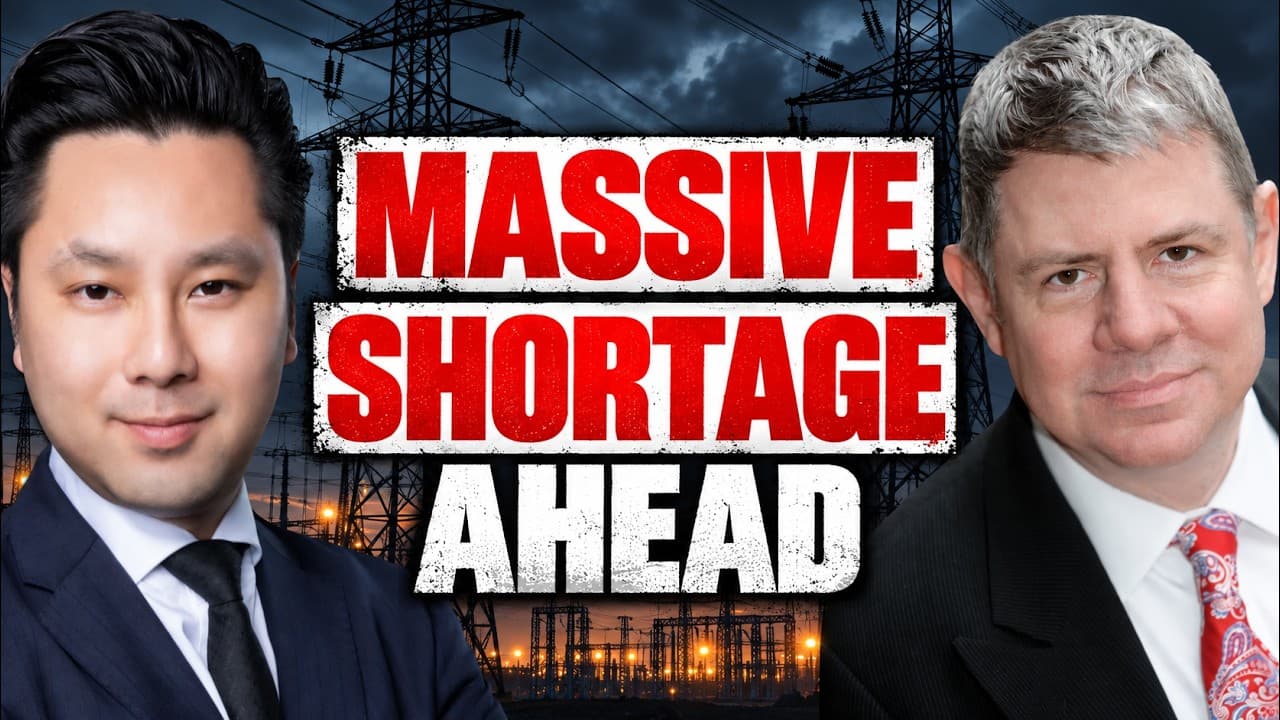
Oil prices have been pressured by supply actions and headlines, but liquidity support from governments can keep markets buoyant. Clem Chambers argues the AI buildout and energy demand create a tug of war between growth and inflation, with yields and sentiment shifting as policymakers intervene. Investors should watch AI stock dynamics and energy supply signals rather than headlines alone.
Transcript
That's why things like copper are, are, are already at all-time highs, but will d- double, triple in the next 10 years. Copper- Yeah ... it's that thing you dig out the ground that makes all your energy work. Yeah. Yeah? And, and they've barely got enough of it now. It's the nervous system of the AI build out. If they don't do the AI build out, gam... Read More
Key Insights
- Oil is described as the nervous system of the AI buildout, with current and future supply constraints driving price pressure.
- The G7 diesel release and political pressure are cited as examples of liquidity injections that can support risk assets rather than spark a downturn.
- A contrarian view is offered: media headlines may misprice risk, and government actions can bend yields and liquidity to their preferred outcomes.
- Bond yields are seen as influenced by government policy and Fed actions, with the possibility of lower rates after political events like midterms.
- The AI trade is depicted as a major but contested theme, with alternating days of gains and pulls in AI related stocks.
- Defensive, homegrown consumer stocks are described as a counterweight to the AI optimism in a tug of war for market leadership.
- Pimco is quoted noting value in high yields, but the host remains skeptical about bonds as an equity investor.
- The idea of QE and bond buybacks is discussed as a tool governments and central banks could use to manage liquidity and inflation expectations.
Install to Summarize YouTube Videos and Get Transcripts
Explore YouTube Video Summarizer or Get YouTube Transcript Extractor
Questions & Answers
Q: What is described as the nervous system of the AI buildout?
Copper and other energy inputs are described as the nervous system of the AI buildout because they enable the energy infrastructure required for AI deployment. The implication is that underlying commodity demand and supply dynamics will influence AI related investment and growth prospects, making energy markets a key signal for tech driven expansion.
Q: What action did the G7 take regarding diesel, and why is this relevant?
The G7 agreed to release up to 100 million barrels of diesel from their reserves. This is relevant because it represents a coordinated liquidity intervention intended to stabilize energy markets and influence risk sentiment, potentially supporting risk assets during a period of price volatility and geopolitical tension.
Q: How does Clem Chambers view headlines about oil and energy in relation to market prices?
Clem Chambers suggests taking headlines with skepticism, arguing that media narratives can misprice risk. He emphasizes that government actions can be used to manipulate yields and liquidity, meaning traders should process whether such actions would actually be true or shift prices before reacting to headlines.
Q: What is the tension described between AI stocks and defensive stocks?
There is a tug of war between the AI driven investment boom and defensive, homegrown consumer stocks. One day AI stocks surge on optimism about automation and technology, the next day defensive plays may outperform as investors rebalance for risk, creating a cycle of volatility driven by differing market theses.
Q: What role do bond yields play in the speaker’s outlook?
Bond yields are central to the outlook as they reflect government influence on monetary conditions. The speaker notes that yields can be manipulated through liquidity measures and policy steps, with the potential for lower yields after political events like midterms, though this depends on the alignment between the Fed and the White House.
Q: How is inflation treated in the context of these monetary actions?
Inflation is treated as a trade-off consequence of liquidity and yield management. Governments can bend the yield curve and provide liquidity, but doing so risks higher inflation over time, a price policymakers may be willing to pay to support growth and debt financing in the near term.
Q: What is the investor’s stance on long bonds versus equities?
The speaker expresses a preference for equities over long bonds, viewing bonds as less attractive for generating returns in a rising cycle. While short term bonds can provide “dead money” with modest yields, they see equities, particularly those tied to AI and tech, as offering better upside potential.
Q: What broader theme ties together oil, AI, and policy actions in this discussion?
The overarching theme is how energy demand, AI driven investment, and policy actions interact to shape market dynamics. Energy supply constraints, liquidity injections, and the evolving AI trade create a multi dimensional environment where prices and yields can move in response to both technological optimism and geopolitical risk.
Summary & Key Takeaways
-
The video discusses how oil markets are influenced by supply actions, such as the G7 releasing diesel reserves, and by broader liquidity and policy actions that affect risk sentiment.
-
Clem Chambers highlights a tension between an AI driven investment boom and defensive sectors, noting how sentiment and policy shape near term moves.
-
The discussion covers bond yields, the potential for rate changes after midterms, and how governments can influence the yield curve and liquidity to support markets.
Read in Other Languages (beta)
Share This Summary 📚
Summarize YouTube Videos and Get Video Transcripts with 1-Click
Try YouTube Summary with ChatGPT & Claude or YouTube Transcript Generator
Explore More Summaries from David Lin 📚



Summarize YouTube Videos and Get Video Transcripts with 1-Click
Try YouTube Summary with ChatGPT & Claude or YouTube Transcript Generator