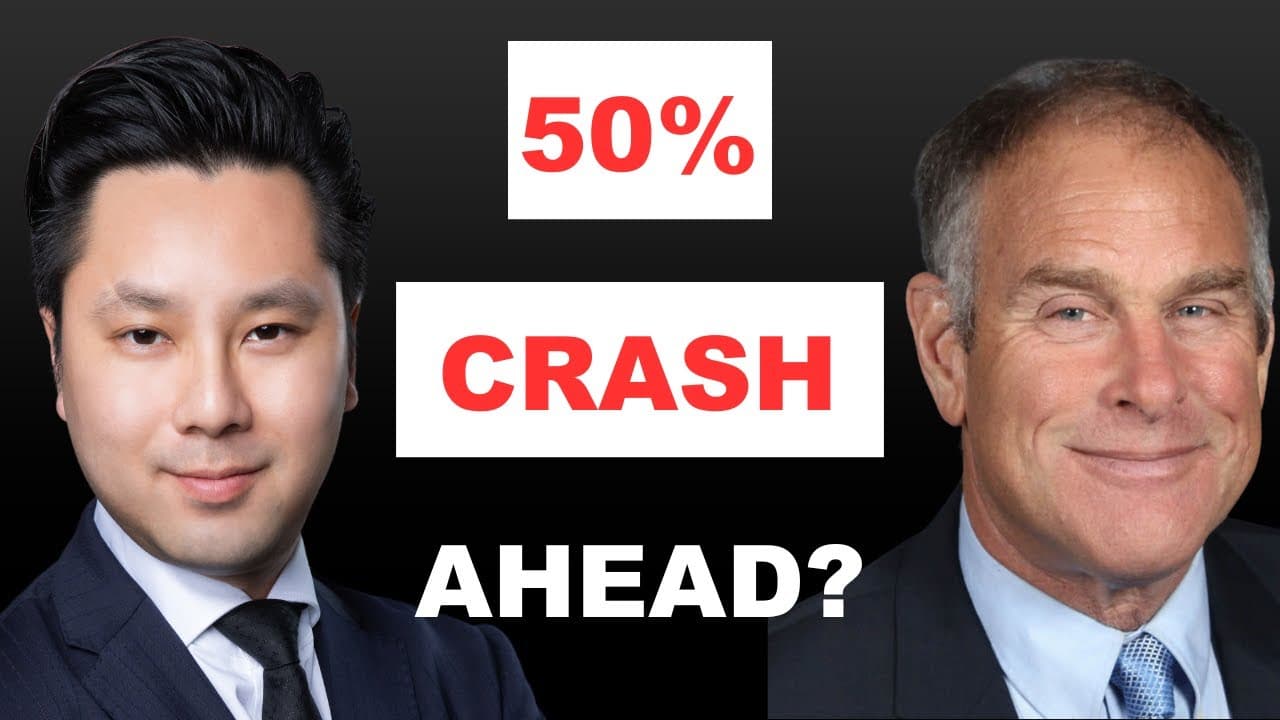
Rick Rule on Gold Crashing 30-50% Before Hitting $10,000
TL;DR
Gold will fall by 30% or more at least twice over the next decade, possibly by 50%, even as its nominal price climbs toward $5,000-$10,000, according to Rick Rule. He sold 25% of his junior mining holdings to recoup all capital invested since 2020, rotating into quality names and cheap oil and gas, and expects the U.S. dollar to lose 75% of its purchasing power over 10 years.
Transcript
I will guarantee you, David, and I don't guarantee much, that the gold market in the next 10 years will fall by 30% or more at least twice. Mhm. Uh it may fall by 50%. Which is to say, I think a reckoning is coming in the energy market. Yeah. Uh I think a reckoning is coming in the industrial materials market. Give us one or two of these things tha... Read More
Key Insights
- Gold will fall by 30% or more at least twice over the next 10 years and may drop by 50%, even while its nominal price rises because the dollar's purchasing power keeps declining, according to Rick Rule.
- The U.S. dollar will lose 75% of its purchasing power over 10 years, yet Rule believes it will still perform relatively well against other major currencies whose central banks face weaker economies and failing bond auctions.
- Interest rate cuts function as a subsidy to spenders paid by savers, and because spenders outnumber savers in a democracy, American savers end up 'on the lunch menu' while the dollar's integrity is abandoned.
- Policy divergence is widening: the Fed is cutting 25 basis points while the Bank of Canada holds, the Bank of Japan raises, and the ECB may raise, which Rule expects to weaken the dollar further.
- Rule sold 25% of his junior mining holdings, recouping all capital invested in the space since 2020 and paying the capital gains tax, calling it a good trade for a 72-year-old because it eliminated his downside.
- Rule rotated proceeds into quality: half into gold, Franco-Nevada, Wheaton, and precious metals (beta over alpha), and half into oil and gas, which he considers very cheap.
- Silver has risen roughly twice as fast as gold this year, reaching $60 after investors celebrated at $40 and felt euphoria at $50, consistent with Rule's observation that silver outruns gold once momentum validates the narrative.
- Mining earnings surprises are coming because Bay Street consensus uses a gold price of $3,000-$3,200, making it difficult for an industry selling gold at $4,200 not to beat estimates.
Install to Summarize YouTube Videos and Get Transcripts
Explore YouTube Video Summarizer or Get YouTube Transcript Extractor
Questions & Answers
Q: How much does Rick Rule predict gold will fall over the next 10 years?
Rick Rule guarantees that the gold market will fall by 30% or more at least twice over the next 10 years, and says it may fall by 50%. Despite these sharp drawdowns, he believes the nominal price of gold will rise across the decade because the dollar's purchasing power keeps declining, potentially targeting $5,000 to $10,000. He frames the coming volatility as part of a broader 'reckoning' also hitting energy and industrial materials markets.
Q: Why does Rick Rule think the U.S. dollar will weaken?
Rule believes the dollar will lose 75% of its purchasing power over 10 years, driven by policy divergence and politicization of the currency and interest rates. While the Fed cuts rates by 25 basis points, other central banks like the Bank of Japan and ECB may raise, partly because they cannot 'get away with' what the U.S. can. He says the U.S. is signaling to global savers that it does not care about the dollar's integrity or purchasing power.
Q: Why did Rick Rule sell his junior mining stocks?
Rule anticipated the current cycle back in 2022 and was surprised by the strength in juniors this year. When the financing window opened, nearly the whole junior industry issued stock, which told him insiders believed investors' money was worth more than their paper. He sold 25% of his junior holdings, recouped all capital invested since 2020, and paid the capital gains tax, eliminating his downside while keeping upside, a good trade for a 72-year-old.
Q: What did Rick Rule buy with the proceeds from selling juniors?
Rule did not exit the resource space entirely. He took half the proceeds and bought a package of quality names including gold, Franco-Nevada, Wheaton, and precious metals, favoring 'beta instead of alpha' since he considered juniors overpriced. He put the other half into the oil and gas business, which he continues to consider very cheap. He will keep harvesting gains from juniors and recycling that money into relatively more attractive positions rather than adding new capital.
Q: How does Rick Rule view the Fed's interest rate cut?
Rule views the rate cut not as a response to the economy but as a subsidy to spenders paid for by savers. Because spenders outnumber savers in a democracy, savers end up 'on the lunch menu.' He says the cut also makes near-term government debt more affordable. Fundamentally, it signals the abandonment of any concern by American society for the integrity and purchasing power of the U.S. dollar, even though the economy itself is neither great nor bad.
Q: Why is silver outperforming gold according to Rick Rule?
Rule notes that when momentum in gold attracts generalist investors and validates the narrative, silver begins to move faster than gold. Over the past five or six weeks this has happened, and across the year silver has risen roughly twice as fast as gold. Silver reached $60 after investors celebrated at $40 and felt euphoria at $50. He says this pattern matches his experience in prior bull markets, with generalist retail money flowing into bullion-oriented ETFs.
Q: Is there still an investment case for resource stocks despite high metal prices?
Rule answers yes, yes, and yes. He expects the dollar's purchasing power to decline for 10 years, meaning gold's nominal price rises for 10 years. As momentum from both gold and silver improves industry perception, producers' free cash flow and valuations increase. He also expects earnings surprises because Bay Street consensus uses a gold price of $3,000-$3,200, making it hard for an industry selling gold at $4,200 not to beat estimates.
Q: What is Rick Rule's view on bonds and how he positions his portfolio?
Rule owns no bonds with a duration longer than two years. He says the deterioration of purchasing power and artificially low interest rates have made the long-duration bond portfolio he maintained in the 1990s a 'dinosaur' that is gone. He positions toward quality resource names and cheap oil and gas, values mining companies on a price-to-net-asset-value (P-NAV) or adjusted P-NAV basis, and prefers buying securities on market rather than through poorly priced private placements.
Summary & Key Takeaways
-
Rick Rule forecasts a reckoning across gold, energy, and industrial materials markets, guaranteeing gold will fall 30% or more at least twice in the next decade and possibly 50%, even as its nominal price could reach $5,000-$10,000 because the dollar loses purchasing power.
-
Rule argues the Fed's rate cut is not about the economy but about subsidizing middle-class spenders at savers' expense and making government debt more affordable, signaling the U.S. no longer cares about the dollar's integrity or purchasing power.
-
Having anticipated this cycle in 2022, Rule sold 25% of his junior mining stocks, recovered all capital invested since 2020, and moved into quality gold names and cheap oil and gas while holding no bonds longer than two years' duration.
Read in Other Languages (beta)
Share This Summary 📚
Summarize YouTube Videos and Get Video Transcripts with 1-Click
Try YouTube Summary with ChatGPT & Claude or YouTube Transcript Generator
Explore More Summaries from David Lin 📚





Summarize YouTube Videos and Get Video Transcripts with 1-Click
Try YouTube Summary with ChatGPT & Claude or YouTube Transcript Generator