What Are Embodied Conversational Agents?
TL;DR
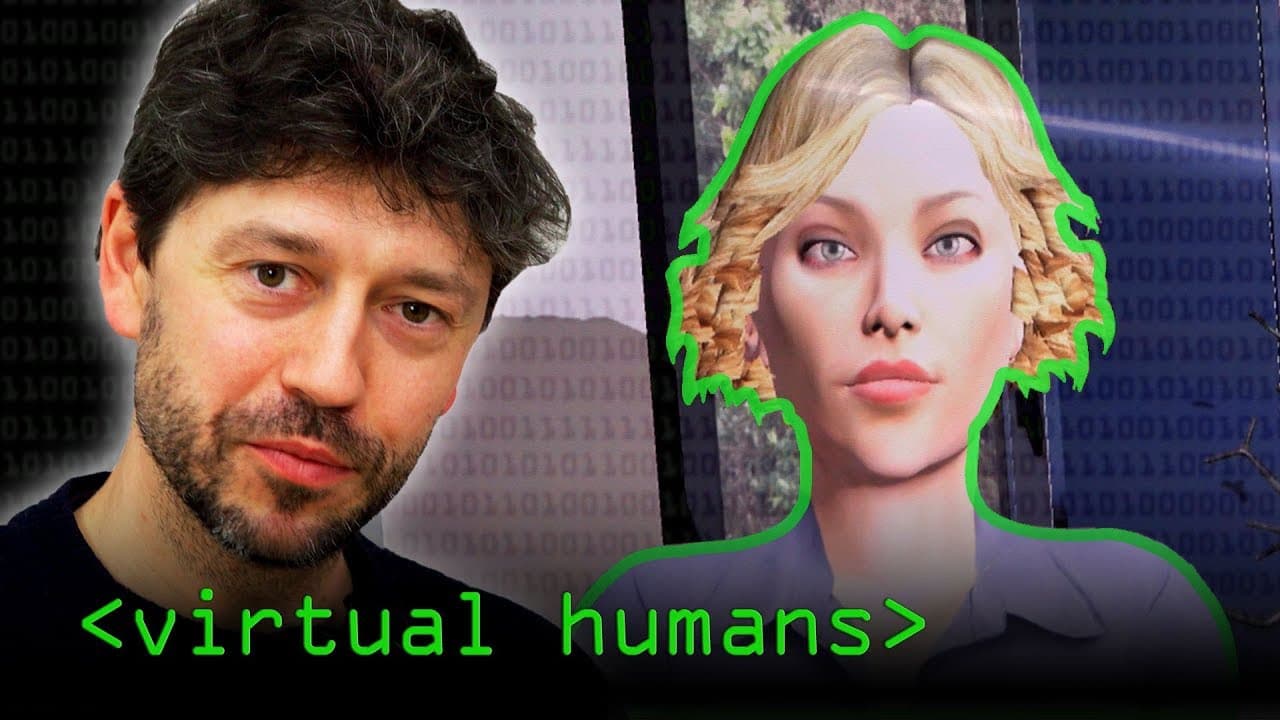
Embodied conversational agents, or virtual humans, mimic human interactions through speech and facial expressions. They utilise sensors to engage users in dynamic conversations, making them ideal for replacing traditional questionnaires in studies. These agents are designed to adapt their responses based on user emotions and engagement.
Transcript
This is a virtual human She's currently not really paying attention to me but but later on we will turn her on and then she will be able to respond to me when I said virtually even I really what I mean is an embodied conversational agent, but that's quite a mouthful so we just call it's shorthand virtually human the point is that it looks like a hu... Read More
Key Insights
- 👤 Virtual humans use a combination of speech recognition, facial expression analysis, and behavior markup language to interact with users.
- 💄 They have the ability to interrupt and adapt to conversations, making them more realistic.
- ⚾ Virtual humans are currently crafted using rule-based systems, with the goal of incorporating machine learning for greater flexibility.
- 💁 They can be used in various scenarios, such as research studies and interactive information sessions.
- 👤 Virtual humans can provide personalized interactions based on user input and emotional responses.
- 😯 The development of synchronized lips and speech control allows for more natural and interactive conversations.
- 😯 The challenges in recognizing speech and turn-taking are addressed through machine learning techniques.
Install to Summarize YouTube Videos and Get Transcripts
Explore YouTube Video Summarizer or Get YouTube Transcript Extractor
Questions & Answers
Q: How do virtual humans differ from robots?
Virtual humans are embodied conversational agents that appear on a screen, behaving and reacting like humans. They do not have physical bodies like robots.
Q: How do virtual humans respond to stimuli?
Virtual humans use microphone and camera sensors to see and hear. They can analyze facial expressions and respond accordingly, such as smiling back when smiled at.
Q: Can virtual humans be customized?
Yes, virtual humans can be replaced with any other unity character, allowing for customization. This feature enables the creation of different personas and characters.
Q: What is the role of the dialogue manager in virtual humans?
The dialogue manager determines what the virtual human will say next, based on the input received and the current dialogue state. It helps maintain the flow of conversation.
Summary & Key Takeaways
-
Virtual humans are not robots, but rather embodied conversational agents that look and act like humans on a screen.
-
They use microphone and camera sensors to see and hear, and can respond to stimuli.
-
These virtual humans can be used in studies to replace written questionnaires and engage users in interactive conversations.
Read in Other Languages (beta)
Share This Summary 📚
Summarize YouTube Videos and Get Video Transcripts with 1-Click
Try YouTube Summary with ChatGPT & Claude or YouTube Transcript Generator
Explore More Summaries from Computerphile 📚

Summarize YouTube Videos and Get Video Transcripts with 1-Click
Try YouTube Summary with ChatGPT & Claude or YouTube Transcript Generator