What Happened in the Extreme Marksman 12-Foot Wall of Flame Challenge on Mountain Men: Ultimate Marksman Season 1?
TL;DR
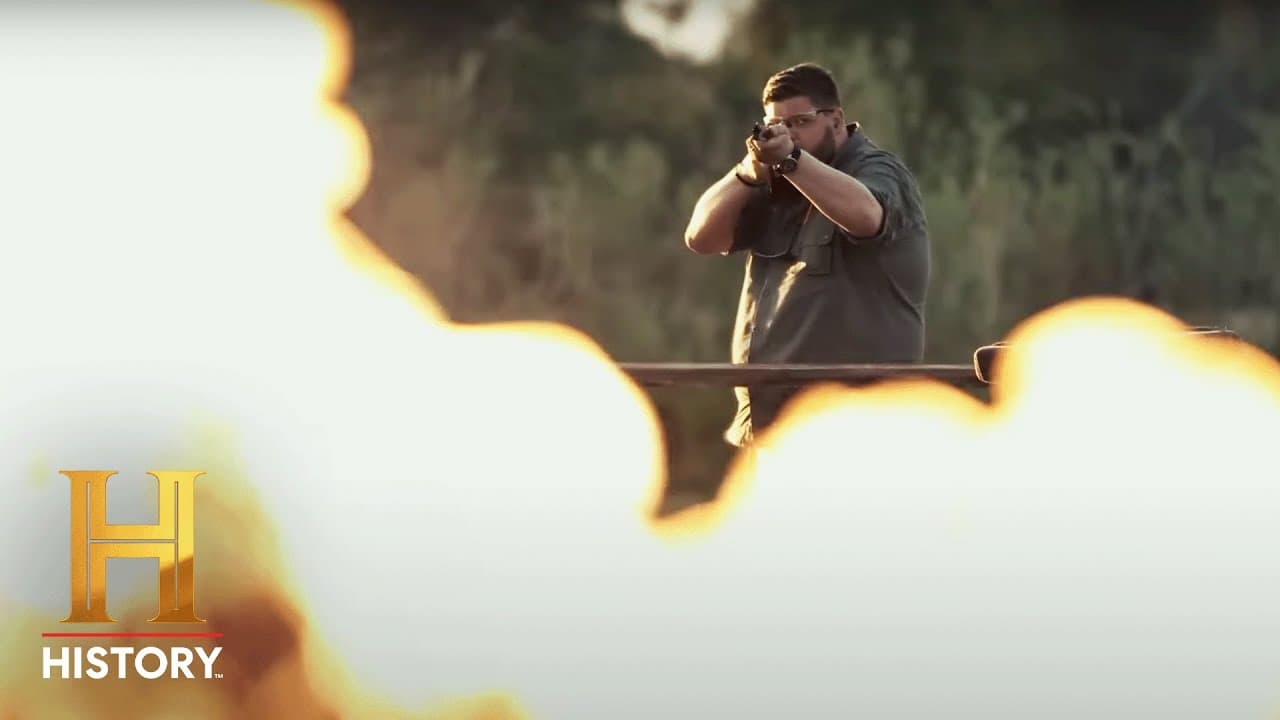
The extreme marksman challenge tested shooters with an 1860 Henry repeating rifle, seven shots, 60 seconds, and five targets behind a 12-foot wall of flame. Eddie recovered from two misses, hit the distant final target, won the Mountain Men: Ultimate Marksman competition, and claimed $10,000. Read on for the rules, results, and difficulties each marksman faced.
Transcript
mountain men dealt with harsh conditions and foul weather all the time in many instances snow storms rain even wind made visibility difficult worse than that it made precision and accuracy with a weapon challenging at best with that in mind we designed this third challenge to be your toughest yet so you ready for some action yeah how about a lever ... Read More
Key Insights
- The final challenge required each competitor to fire seven shots within 60 seconds while using an 1860 Henry repeating rifle to engage five targets placed at distances of up to 100 yards behind a 12-foot wall of flame.
- The first four shots had to be directed at the first four steel targets, leaving only three possible attempts at the final blue target. Explosive feedback was attached to the difficult last target so a successful hit would be immediately clear.
- The wall of flame was designed to reproduce the visual difficulty that mountain men faced during snowstorms, rain, and wind. Because snow was unavailable, the organizers used heat to interfere with sight pictures, perception, judgment, precision, and accuracy.
- The 1860 Henry repeating rifle uses simple front and rear iron sights rather than a scope. Accurate shooting requires both sights to be leveled, the rifle to remain steady, and the trigger to be squeezed while the shooter works against the clock.
- Careful rifle positioning is important during loading because holding the Henry at an overly acute angle can cause cartridges to strike one another. Loading also consumes part of the fixed 60-second period, reducing the time available to locate targets and shoot.
- Melinda scored three hits for 15 points despite being unable to see one of the 50-yard targets through the fire. She had previous success with the Henry rifle and had won national championships, but the added fire and disruption changed the shooting conditions.
- Bradley failed to score enough hits to remain in contention after struggling to find targets through the flames. His result showed that confidence, historical firearm knowledge, hunting experience, and physical height did not remove the challenge of obscured visibility and limited time.
- Eddie won the competition and its $10,000 prize after recovering from two misses and hitting the distant final target. Jenny’s Olympic competition experience supported her confidence under pressure, but her final-round performance did not produce the winning overall result.
Install to Summarize YouTube Videos and Get Transcripts
Explore YouTube Video Summarizer or Get YouTube Transcript Extractor
Questions & Answers
Q: What made this an extreme marksman challenge?
Each marksman had seven shots and 60 seconds to hit five targets at distances of up to 100 yards. A 12-foot wall of flame obscured the targets and affected visibility, perception, judgment, precision, and accuracy.
Q: What were the rules of the final shooting challenge?
The marksmen had to hit five targets using seven shots within 60 seconds. Their first four shots had to be used on the first four steel targets, leaving three possible attempts at the final blue target far downrange.
Q: Which rifle did the marksmen use?
The competitors used an 1860 Henry repeating rifle with simple front and rear iron sights. They had to level the sights, hold the rifle steady, and squeeze the trigger while working against the clock.
Q: Why did the challenge use a 12-foot wall of flame?
The organizers wanted to recreate the visibility problems that mountain men faced during snowstorms, rain, and wind. Because it was the wrong time of year for snow, they used intense heat and flames to obscure the targets.
Q: How did Melinda perform in the final challenge?
Melinda recorded three hits for 15 points but missed the final target. She said she could not see the 50-yard target through the flame, despite being comfortable with the Henry rifle and having won national championships.
Q: Why was Bradley eliminated from the competition?
Bradley struggled to find the targets through the fire and missed his early shots. Loading, acquiring a sight picture, and shooting through the flames consumed his limited time, leaving him without enough points to remain in contention.
Q: How did Eddie win the $10,000 prize?
Eddie hit his first target, missed his next two shots, and then recovered with another hit. He also struck the final target far downrange, finished ahead of Melinda after all three rounds were scored, and won the $10,000 prize.
Q: How did Jenny approach the final round?
Jenny entered the round confidently and relied on mental toughness developed through Olympic-style competition. Loading used part of her 60-second limit, forcing her to hurry as time ran down, and her overall score did not surpass Eddie or Melinda.
Summary & Key Takeaways
-
Four competitors entered a final shooting challenge using an 1860 Henry repeating rifle. Each marksman had seven shots and 60 seconds to hit five targets positioned at distances of up to 100 yards. A 12-foot wall of flame obscured the targets, deliberately disrupting visibility, perception, judgment, and accurate use of the rifle’s iron sights.
-
Melinda recorded three hits for 15 points but missed the final distant target. Bradley struggled to locate targets through the flames and was eliminated from contention. Eddie hit his first target, missed his next two shots, recovered with another hit, and then struck the final target positioned far downrange before his time expired.
-
Jenny relied on mental toughness developed through Olympic-style competition, but loading consumed valuable time and she had to hurry near the end. After all three rounds were scored, Jenny and Bradley were eliminated. Eddie finished ahead of Melinda, received the competition title, and won the $10,000 prize.
-
The 1860 Henry repeating rifle required careful handling because loading at an overly acute angle could cause cartridges to collide. Although repeating technology improved upon flintlocks, the rifle still used simple front and rear iron sights. Competitors had to align those sights, hold the rifle steady, and squeeze the trigger while flames obscured their view.
-
The challenge recreated difficult frontier shooting conditions by replacing unavailable snow and foul weather with intense heat and flames. Wind also affected the course while Eddie competed. The artificial obstacle demonstrated how environmental interference can undermine experienced shooters, including national champions, accomplished hunters, and competitors familiar with high-pressure Olympic-style events.
Read in Other Languages (beta)
Share This Summary 📚
Summarize YouTube Videos and Get Video Transcripts with 1-Click
Try YouTube Summary with ChatGPT & Claude or YouTube Transcript Generator
Explore More Summaries from HISTORY 📚


Summarize YouTube Videos and Get Video Transcripts with 1-Click
Try YouTube Summary with ChatGPT & Claude or YouTube Transcript Generator