What Is To Kill a Mockingbird About?
TL;DR
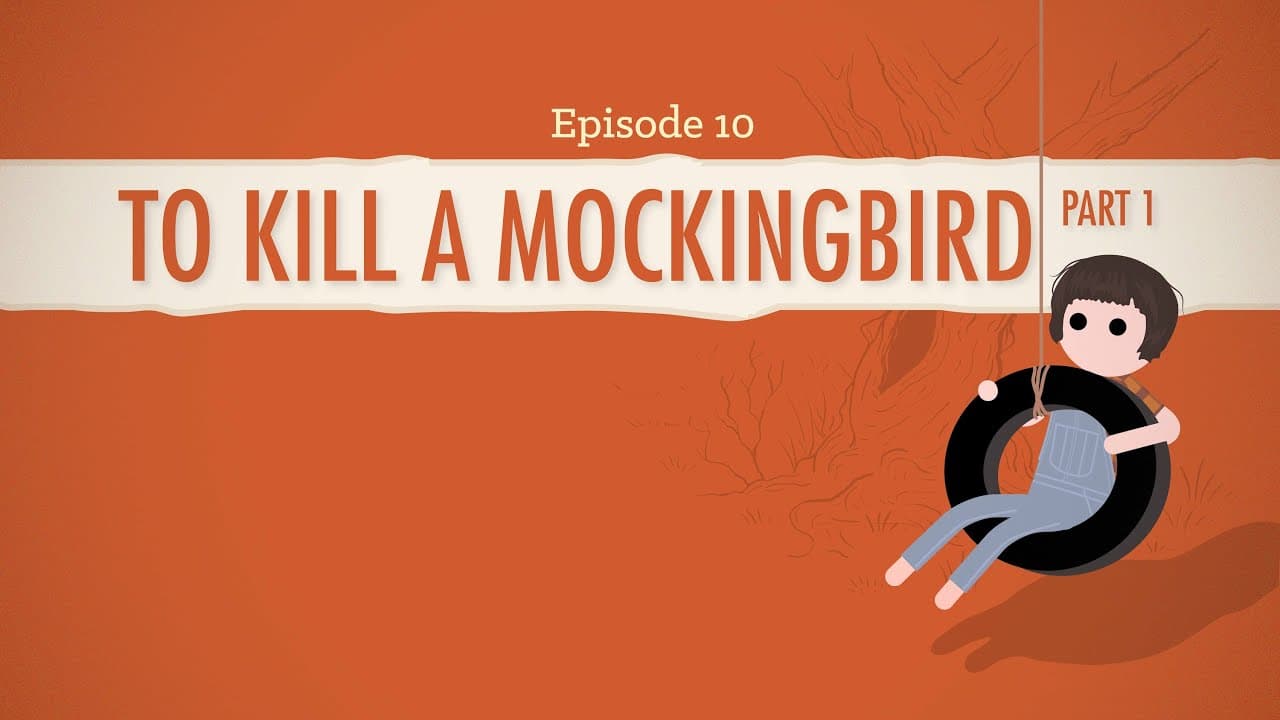
To Kill a Mockingbird, set in Depression-era Alabama, follows Scout Finch as she learns about racial injustice and moral growth through her father, Atticus Finch, who defends a black man accused of raping a white woman. The novel explores themes of empathy and justice, framed within the Southern Gothic and bildungsroman genres.
Transcript
Hi, I’m John Green, this is Crash Course Literature, and today we’re going to talk about To Kill a Mockingbird. So Mockingbird is the rare class of American literature that is both one, relatively easy to read and two, pretty fun to read. I mean, it’s got a cool and somewhat creepy plot that draws you in. There is a young girl, Scout; her brother, ... Read More
Key Insights
- To Kill a Mockingbird is both easy and fun to read, with a compelling plot involving Scout Finch, her brother Jem, and their mysterious neighbor Boo Radley.
- The novel was a literary sensation upon its 1960 release, winning the 1961 Pulitzer Prize and being translated into over 40 languages.
- Harper Lee's childhood parallels that of her main character, Scout Finch, with personal experiences influencing the novel's setting and themes.
- The novel is a Southern Gothic work, using real people instead of archetypes to create dramatic tension and explore societal issues.
- Scout Finch learns empathy and moral lessons from her father, Atticus Finch, who advises understanding others by seeing things from their perspective.
- Scout's experiences expose the performative aspects of gender, challenging societal norms about what it means to be a woman.
- The novel critiques the limitations on women's political rights, suggesting that female jurors could have changed the trial's outcome.
- Harper Lee's straightforward prose provides rich opportunities for reader interpretation and collaboration, enhancing the novel's depth.
Install to Summarize YouTube Videos and Get Transcripts
Explore YouTube Video Summarizer or Get YouTube Transcript Extractor
Questions & Answers
Q: What is the main theme of To Kill a Mockingbird?
The main theme of To Kill a Mockingbird is the exploration of racial injustice and moral growth. The novel highlights the importance of empathy and understanding others' perspectives, as seen through Scout Finch's experiences and her father's defense of a black man accused of rape in a racially prejudiced society.
Q: How does To Kill a Mockingbird address gender roles?
To Kill a Mockingbird addresses gender roles by challenging societal norms through the character of Scout Finch. Scout resists traditional femininity, questioning the performative nature of gender. The novel critiques the limitations placed on women, suggesting that their political rights, such as serving on juries, could influence justice and societal change.
Q: What is the significance of Boo Radley in the novel?
Boo Radley serves as a symbol of misunderstood innocence and the dangers of judging others based on rumors. Initially perceived as a reclusive monster, Boo ultimately reveals his kindness by saving Scout and Jem, embodying the novel's theme of empathy and the importance of understanding others beyond superficial judgments.
Q: Why is To Kill a Mockingbird considered a Southern Gothic novel?
To Kill a Mockingbird is considered a Southern Gothic novel because it uses real people to replace Gothic archetypes, creating dramatic tension while exploring societal issues like racism and decay. The setting of Maycomb, with its decaying buildings and morally corrupt inhabitants, heightens the emotional impact and reflects the novel's critique of Southern culture.
Q: How does the novel depict racial injustice?
The novel depicts racial injustice through the trial of Tom Robinson, a black man falsely accused of raping a white woman. Despite clear evidence of his innocence, the all-white jury convicts him, illustrating the deep-seated racism of the time. This injustice is further highlighted by Atticus Finch's defense and the societal backlash he faces for representing Robinson.
Q: What role does empathy play in To Kill a Mockingbird?
Empathy is a central theme in To Kill a Mockingbird, emphasized through Atticus Finch's advice to Scout about understanding others by seeing from their perspective. This lesson is pivotal in Scout's moral development, as she learns to empathize with Boo Radley and others, challenging the prejudices and misunderstandings prevalent in her community.
Q: How does Harper Lee's personal life influence the novel?
Harper Lee's personal life heavily influences the novel, as many elements mirror her own childhood in Alabama. Her father, like Atticus Finch, was a lawyer who defended black clients, and her friendship with Truman Capote inspired the character of Dill. These autobiographical elements enrich the novel's authenticity and depth, reflecting Lee's insights into Southern life.
Q: What is the significance of the novel's title?
The title 'To Kill a Mockingbird' signifies the destruction of innocence, as mockingbirds symbolize innocence and harmlessness. Within the novel, characters like Tom Robinson and Boo Radley, who embody these qualities, are subject to prejudice and injustice. The title underscores the moral imperative to protect the innocent from harm and injustice.
Summary & Key Takeaways
-
To Kill a Mockingbird is a Southern Gothic and bildungsroman novel set in Depression-era Alabama, exploring themes of racial injustice, empathy, and moral growth. Scout Finch learns from her father, Atticus, who defends a black man accused of raping a white woman, highlighting societal issues of race and gender.
-
The novel's setting and characters draw from Harper Lee's own childhood experiences, with parallels between her life and that of Scout Finch. The story critiques the Jim Crow South's failure to empathize with others and challenges traditional gender roles through Scout's resistance to societal norms.
-
Lee's work is both a commentary on the racism and patriarchy of its time and a call for empathy and understanding. The novel's straightforward prose belies its rich opportunities for reader interpretation, making it a timeless piece of American literature.
Read in Other Languages (beta)
Share This Summary 📚
Summarize YouTube Videos and Get Video Transcripts with 1-Click
Try YouTube Summary with ChatGPT & Claude or YouTube Transcript Generator
Explore More Summaries from CrashCourse 📚



Summarize YouTube Videos and Get Video Transcripts with 1-Click
Try YouTube Summary with ChatGPT & Claude or YouTube Transcript Generator