How to Replace Phone Scrolling With Reading
TL;DR
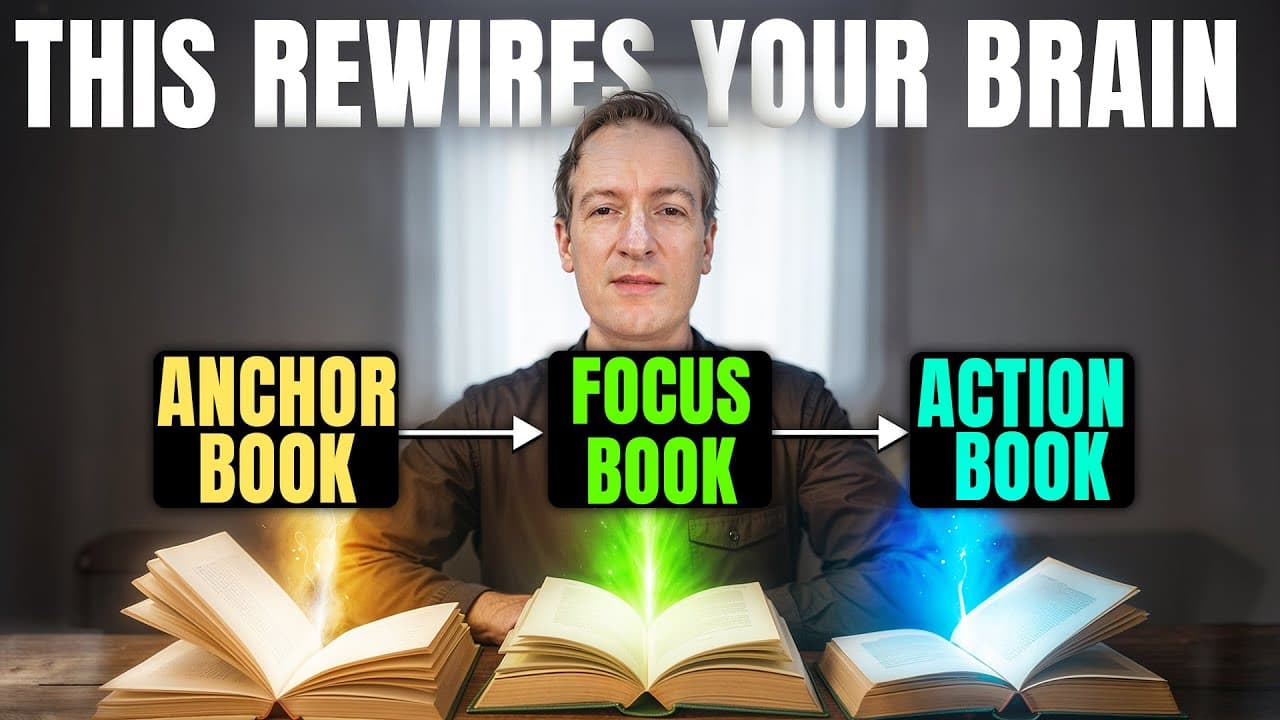
Start with a book about a topic you already find intensely interesting, then let each new author, concept, or reference lead naturally to another book. After reading becomes enjoyable, add accountability, reviews, and a flexible schedule. This sequence redirects novelty-seeking impulses toward books without making reading feel like punishment or deprivation.
Transcript
Have you ever sat down to read a book, but the next thing you know, some notification pops up on your phone, and before you know it, your best intentions to read end up turning into two hours of scrolling instead? Well, even as a published academic who loves learning, I've been there myself. In this video, I'm going to teach you the exact four step... Read More
Key Insights
- Forced phone restriction can make reading feel like deprivation. When rigid schedules and book lists are imposed before reading becomes enjoyable, failure may produce guilt and strengthen a negative association between books, discomfort, and the loss of an easier source of entertainment.
- Social media offers a rapid stream of novelty that can sustain repeated scrolling. The transcript compares this cycle to junk food because it creates temporary pleasure, followed by tiredness, low mood, and renewed cravings rather than the genuine mental recovery the creator initially expected.
- Manufactured interest begins with a small action connected to genuine curiosity. A book, graphic novel, or magazine can establish momentum when its subject already feels compelling, even if the initial motivation seems shallow or does not resemble a conventional academic reading goal.
- A highly interesting topic is the strongest starting point for a reading habit. Instead of choosing material because it appears impressive or useful, readers should identify a subject they repeatedly consume on social media and find a book that explores that same fascination.
- A book thread is a chain in which one reading source leads naturally to another. References to unfamiliar thinkers, bibliography entries, new concepts, or gaps in understanding create novelty and give the reader an immediate reason to continue exploring related material.
- Reading multiple books at once can preserve motivation and intellectual variety. Readers may also queue books sequentially, but the order should remain flexible so they can follow their current curiosity instead of turning an organic thread into another rigid obligation.
- Book threads can strengthen critical thinking by connecting multiple perspectives. Examining a topic through different authors, disciplines, and schools of thought helps readers move beyond a single angle or bias and form conclusions from a more broadly informed perspective.
- Accountability and scheduling work best after reading has become genuinely rewarding. Structure introduced too early can feel burdensome, while a schedule created after an engaging book thread develops is supported by motivation, curiosity, and the calmer feeling the creator associates with reading.
Install to Summarize YouTube Videos and Get Transcripts
Explore YouTube Video Summarizer or Get YouTube Transcript Extractor
Questions & Answers
Q: How can I replace social media scrolling with reading?
Begin with a subject you already find intensely interesting, especially one you repeatedly seek out on social media. Choose any readable format connected to it, including a book, graphic novel, or magazine. Let unfamiliar concepts, authors, and references guide your next selection. Once reading feels rewarding, add a flexible schedule, an accountability practice, and a review system to support consistency.
Q: Why can forcing myself off my phone make reading harder?
Forced restriction can create a sense of deprivation, particularly when it is paired with comprehensive reading lists and rigid schedules. Reading may then become associated with pain, obligation, and the loss of an easier pleasure. If the plan fails, guilt can reinforce that negative association. The suggested alternative is to build genuine interest first and introduce structure only after reading becomes enjoyable.
Q: How do I manufacture interest in reading?
Manufacture interest by taking a small reading action around a topic that already generates strong curiosity. The transcript compares this process to beginning exercise with brief, manageable gym visits that create momentum. Read any format that feels approachable, and allow the pleasure of learning about the subject to reinforce the behavior. Initial interest does not need to appear sophisticated or academically important.
Q: What is a book thread and how do I create one?
A book thread is a sequence of connected reading choices in which one source naturally points toward another. While reading, notice mentioned thinkers, bibliography entries, unfamiliar concepts, old ideas that need review, and questions that arise. Use those signals to select another book. You can read several sources simultaneously or line them up, provided the sequence remains flexible and guided by curiosity.
Q: Should I read multiple books at the same time?
Reading multiple books at once is encouraged as a way to keep a book thread lively, but it is not required. You can instead arrange related books in a tentative sequence. The important principle is flexibility. If a different subject or a recently acquired book feels more compelling on a particular day, following that interest can preserve motivation and prevent reading from becoming a rigid obligation.
Q: How does a book thread improve critical thinking?
A book thread encourages readers to examine one topic through multiple authors, concepts, disciplines, and schools of thought. This reduces dependence on a single angle or bias and supports a more holistic understanding. The transcript presents critical thinking as the ability to understand different perspectives and reach a conclusion from a highly informed position, rather than merely accepting one account.
Q: How can I get books without spending much money?
Research the nearest public library and check whether it carries the books connected to your reading thread. If a desired title is unavailable, ask about special requests or interlibrary loan. The creator notes that library access varies by location, but recommends asking librarians for help because they may be able to locate or request the materials you need.
Q: When should I create a reading schedule and accountability system?
Create a schedule, review process, and accountability system after genuine enjoyment has begun to develop through an engaging book thread. Structuring the habit too early may produce resistance because reading still feels imposed. Once curiosity provides its own motivation, scheduling can support an activity you already want to continue. The order matters: interest and momentum come before formal discipline.
Summary & Key Takeaways
-
Replacing scrolling with reading begins by avoiding forced deprivation. Locking away a phone while imposing rigid book lists can make reading feel painful and create guilt when plans fail. A better approach is to reproduce the interest, novelty, momentum, and rewards that draw attention toward social media, then redirect those impulses toward books.
-
Interest develops through small, enjoyable reading actions. Begin with any accessible format, including a book, graphic novel, or magazine, connected to a topic that already inspires unusually strong curiosity. Repeated pleasure from reading can reinforce the habit, much as short, manageable gym visits can build momentum toward a consistent exercise routine.
-
A book thread forms when one author, concept, bibliography, or unanswered question leads to another resource. Readers can explore several books simultaneously or arrange them sequentially without becoming attached to a fixed order. Once this process becomes enjoyable, accountability, review, and scheduling can provide structure while preserving curiosity and flexibility.
Read in Other Languages (beta)
Share This Summary 📚
Summarize YouTube Videos and Get Video Transcripts with 1-Click
Try YouTube Summary with ChatGPT & Claude or YouTube Transcript Generator
Explore More Summaries from Stephen Petro 📚



Summarize YouTube Videos and Get Video Transcripts with 1-Click
Try YouTube Summary with ChatGPT & Claude or YouTube Transcript Generator