What Makes Humans Predators and Social Beings?
TL;DR
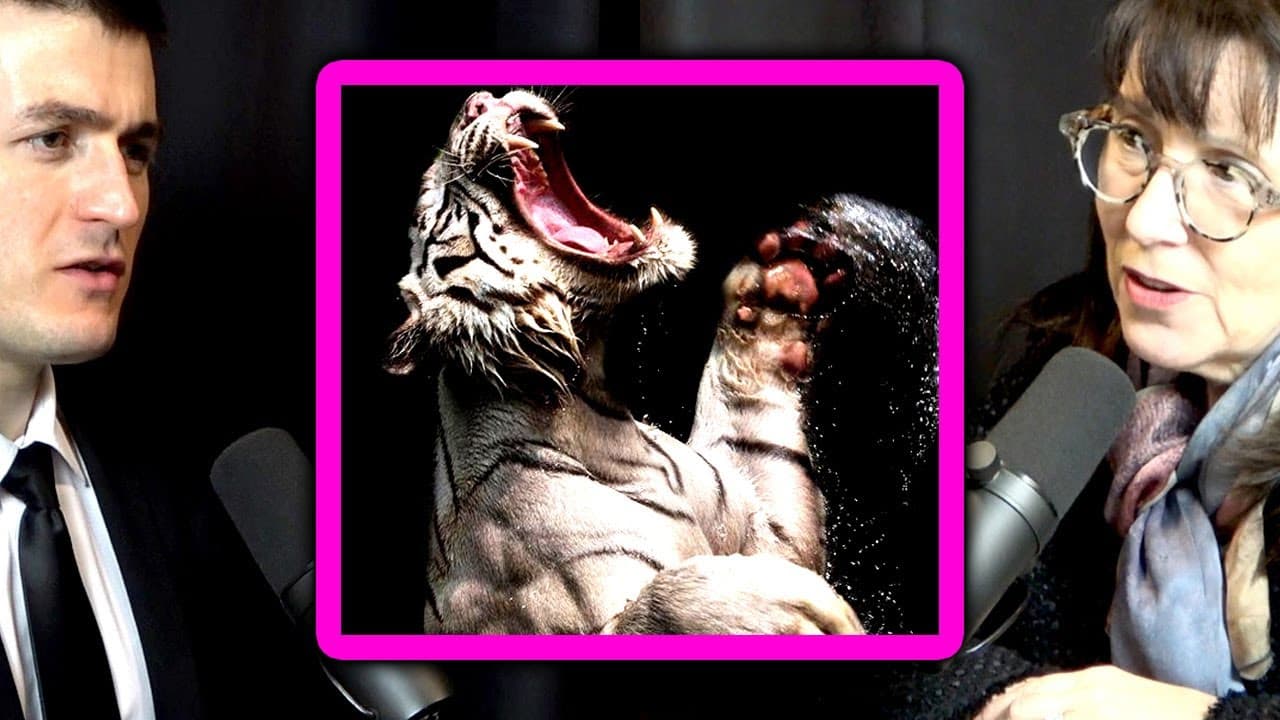
Humans embody both predatory instincts and social behaviors, shaped by historical and cultural contexts. While many view us as violent predators, there's a growing understanding of our complex social nature, which allows for both harm and compassion. This duality is further evidenced in the way humans categorize and interact with others, demonstrating a unique flexibility in social relationships.
Transcript
the other thing that's happening right is that animals are getting bigger yeah because they're and also their niche is getting bigger well this is the just sorry to take a tiny tangent on the niche thing is uh it seems like the niche is getting bigger but not just bigger like more complicated like shaped in weird ways so like predation seems to cre... Read More
Key Insights
- 🌥️ Animals are adapting to larger niches and increasing in size to thrive in diverse environments.
- 🤯 Predation has played a role in the development of the theory of mind and the understanding of other creatures.
- 🫵 Shifts in human perception have moved from viewing humans as primal predators to recognizing their social nature.
- 👥 Humans exhibit both helpful and harmful behaviors, flexibly extending assistance or causing harm based on the definition of their group.
- 😫 The ability to categorize others based on abstract concepts sets humans apart from other animals.
- 😟 Animals demonstrate support and regulation of each other's nervous systems as a means of survival.
- ❓ Humans possess a unique blend of predatory instincts and social tendencies.
- 🎙️ More videos with Lisa Feldman Barrett:
Install to Summarize YouTube Videos and Get Transcripts
Explore YouTube Video Summarizer or Get YouTube Transcript Extractor
Questions & Answers
Q: How does predation affect the development of animals?
Predation not only influences the size of animals but also shapes their ability to operate in specific environments. Furthermore, the theory of mind, which aids in understanding other creatures, may have emerged as a result of selective pressure from predation.
Q: Can humans be categorized solely as predators or predominantly social beings?
Humans exhibit both predator-like behaviors and social tendencies. While they can be violent, they also have the capacity for helpfulness and cooperation. Humans are unique in their ability to extend help based on abstract concepts rather than just physical relationships.
Q: How do animals support and help one another?
Animals, such as rodents, have been observed signaling safety and performing acts of generosity towards their related or familiar conspecifics. These behaviors are influenced by physical relationships and support the survival and well-being of their group members.
Q: Do humans have inherent essences?
Humans do not possess fixed essences. They showcase flexibility in their behaviors, including both helpful and harmful actions. Humans have the ability to categorize others based on non-physical factors, such as shared ideas, and are more likely to provide assistance to those within their defined group.
Summary & Key Takeaways
-
Animals are growing larger and adapting to carve out more intricate niches in their environments.
-
The theory of mind, or the ability to understand the inner lives of other creatures, may have evolved under the pressure of predation.
-
Humans have historically been seen as predator-like beings, but societal and cultural shifts have emphasized the role of social nature.
Read in Other Languages (beta)
Share This Summary 📚
Summarize YouTube Videos and Get Video Transcripts with 1-Click
Try YouTube Summary with ChatGPT & Claude or YouTube Transcript Generator
Explore More Summaries from Lex Clips 📚




Summarize YouTube Videos and Get Video Transcripts with 1-Click
Try YouTube Summary with ChatGPT & Claude or YouTube Transcript Generator