What Is the Anthropocene Era?
TL;DR
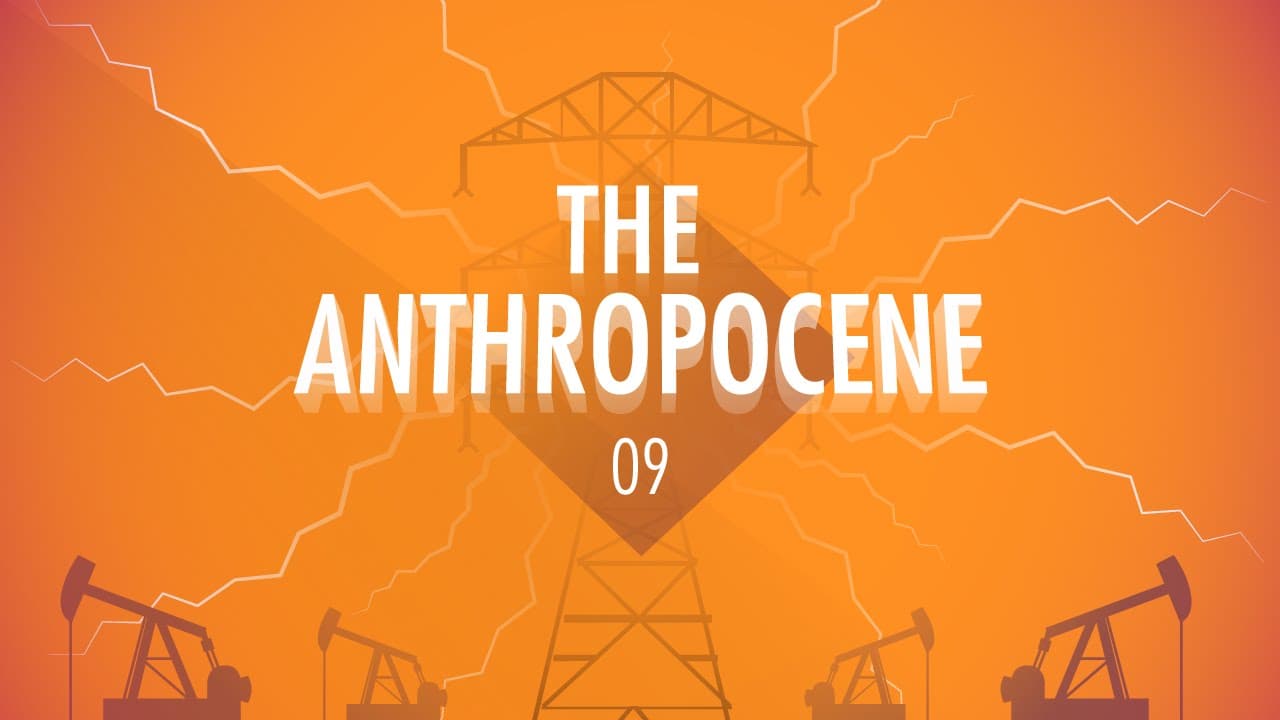
The Anthropocene is an unofficial geological era where human activity significantly impacts the Earth's biosphere. This period has seen unprecedented technological advancements and population growth, but also environmental challenges and social inequalities. The future of humanity depends on navigating these complexities, with potential scenarios ranging from technological salvation to societal collapse.
Transcript
Hi, I'm John Green, this is Crash Course Big History and today we're going to talk about the Anthropocene. Mr. Green! Mr. Green! Anthropocene? What does that even mean? That sounds like gibberish. No, Me From the Past, your tenth grade essays were gibberish. The Anthropocene is a word derived from the Greek word for human. Like you know how anthrop... Read More
Key Insights
- The Anthropocene is characterized by significant human influence over the Earth's biosphere, despite being unofficial.
- Technological and scientific advancements have accelerated exponentially since the 1800s, contributing to rising complexity.
- The global population has grown to seven billion, with significant impacts on resources and the environment.
- Economic development has lifted millions out of poverty but widened the wealth gap and environmental degradation.
- Climate change and resource scarcity are major challenges for sustaining future population growth.
- Potential future scenarios include technological breakthroughs, societal collapse, or a controlled decline in complexity.
- Education and reducing poverty are crucial for harnessing global innovative potential and collective learning.
- The 21st century presents significant risks but also opportunities for humanity's survival and progress.
Install to Summarize YouTube Videos and Get Transcripts
Explore YouTube Video Summarizer or Get YouTube Transcript Extractor
Questions & Answers
Q: What is the Anthropocene era?
The Anthropocene is an unofficial geological era characterized by significant human influence on the Earth's biosphere. It marks a period where technological advancements and population growth have accelerated, impacting the environment and society. Although not officially recognized by geologists, the concept highlights humanity's profound impact on the planet.
Q: How has human activity affected the Earth's environment during the Anthropocene?
During the Anthropocene, human activity has led to environmental degradation, including climate change, biodiversity loss, and resource depletion. The reliance on fossil fuels and non-renewable resources has contributed to pollution and habitat destruction, threatening ecosystems and accelerating species extinction rates.
Q: What are the key technological advancements of the Anthropocene?
Key technological advancements of the Anthropocene include the discovery of the Higgs Boson particle, the development of electric vehicles, and the proliferation of smartphones. These innovations have transformed communication, transportation, and scientific understanding, driving exponential growth in collective learning and global connectivity.
Q: How has the global population changed during the Anthropocene?
The global population has grown exponentially during the Anthropocene, reaching seven billion people. This growth has been driven by advancements in agriculture, medicine, and industrialization, which have reduced mortality rates and improved living standards. However, it also poses challenges for resource management and environmental sustainability.
Q: What are the potential future scenarios for humanity in the Anthropocene?
Potential future scenarios for humanity in the Anthropocene include technological breakthroughs that address environmental and social challenges, societal collapse due to resource scarcity and conflicts, or a controlled decline in complexity leading to simpler living standards. The outcome depends on how effectively humanity navigates current and future challenges.
Q: What role does education play in the Anthropocene?
Education plays a crucial role in the Anthropocene by fostering innovation and collective learning. Access to education empowers individuals to contribute to technological advancements and address global challenges. Reducing poverty and improving education are essential for harnessing the full potential of the global population and ensuring sustainable development.
Q: What are the main challenges of the Anthropocene?
The main challenges of the Anthropocene include environmental degradation, resource scarcity, social inequalities, and geopolitical tensions. Climate change, driven by fossil fuel consumption and deforestation, poses a significant threat to ecosystems and human societies. Addressing these challenges requires global cooperation and innovative solutions.
Q: How has economic development impacted global inequality during the Anthropocene?
Economic development during the Anthropocene has lifted millions out of poverty but has also widened the wealth gap. While manufacturing jobs have improved living standards for many, they often come with poor working conditions. The disparity between wealthy and impoverished regions has increased, highlighting the need for equitable and sustainable economic policies.
Summary & Key Takeaways
-
The Anthropocene is an era marked by human impact on the planet, characterized by rapid technological advancements and increased global connectivity. However, these developments come with challenges such as environmental degradation and social inequality. The future of humanity hinges on addressing these issues, with potential outcomes ranging from technological solutions to societal decline.
-
Since the 1800s, humanity has experienced exponential growth in population and technological advancements, leading to increased complexity and global interconnectivity. While these changes have improved living standards for many, they have also exacerbated environmental issues and widened the wealth gap. Navigating these challenges is crucial for future prosperity.
-
The Anthropocene presents a paradox of progress and peril, with humanity's advancements offering both solutions and threats to our survival. Addressing climate change, resource scarcity, and social inequalities is essential for sustaining future growth. The 21st century is a pivotal period, with potential for both significant risks and transformative opportunities.
Read in Other Languages (beta)
Share This Summary 📚
Summarize YouTube Videos and Get Video Transcripts with 1-Click
Try YouTube Summary with ChatGPT & Claude or YouTube Transcript Generator
Explore More Summaries from CrashCourse 📚



Summarize YouTube Videos and Get Video Transcripts with 1-Click
Try YouTube Summary with ChatGPT & Claude or YouTube Transcript Generator