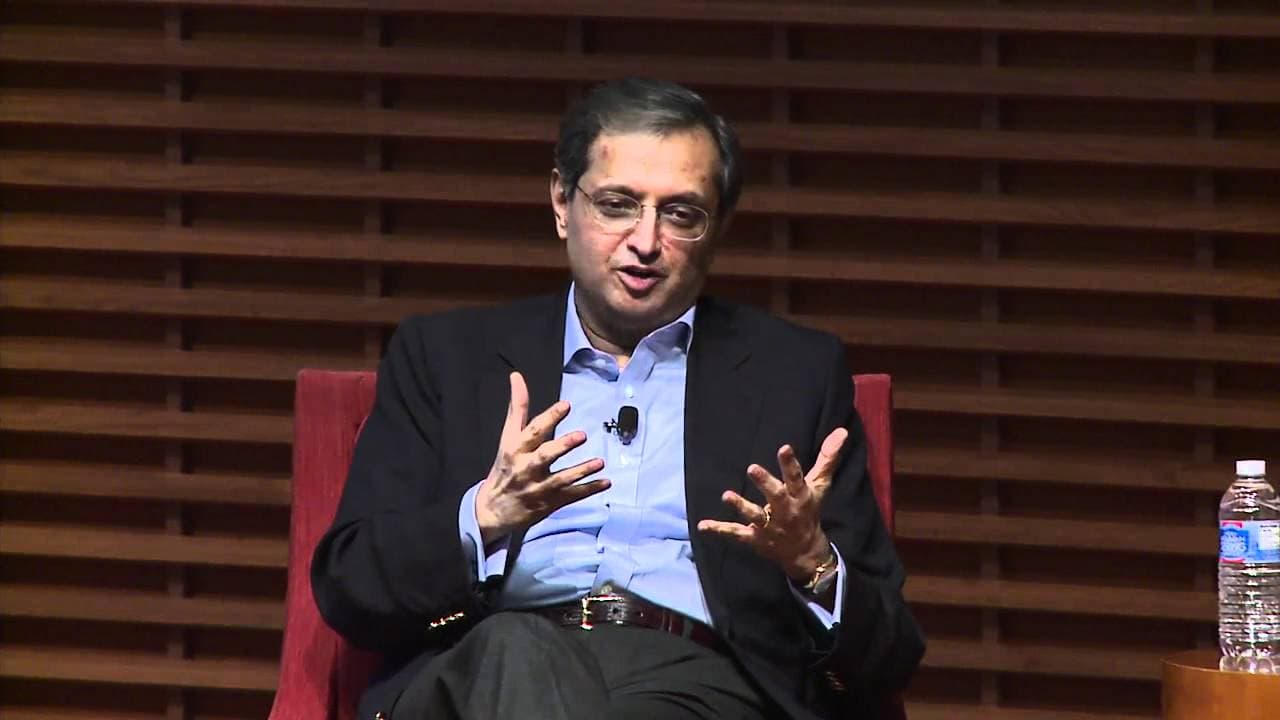
Citigroup CEO: How I Got My Start
TL;DR
Vikram Pandit's career journey began in engineering, but he shifted to finance after discovering a passion for economics and markets. He emphasizes the importance of aligning personal interests with industry growth and choosing workplaces with shared values. Transitioning from an individual contributor to a manager was a crucial change, highlighting the need to nurture and support the talent of others for successful leadership.
Transcript
Read and summarize the transcript of this video on Glasp Reader (beta).
Key Insights
- Vikram Pandit initially pursued engineering due to societal expectations in India but later found his passion in business and economics.
- His career path was not meticulously planned; instead, he followed his interests, which eventually led him to a successful career in finance.
- Pandit emphasizes the importance of passion in one's work and suggests aligning it with growing industries for better opportunities.
- He transitioned from being an individual contributor to a manager, which required a significant shift in mindset and skills.
- Pandit highlights the significance of working with companies and people who share your values and with whom you enjoy collaborating.
- He advises focusing on real-world problems and continuously learning to stay engaged and successful in one's career.
- Pandit learned from a professor that identifying and following one's passion is crucial for career satisfaction and success.
- The transition from individual success to managing others' success is challenging but essential for career growth in leadership roles.
Install to Summarize YouTube Videos and Get Transcripts
Explore YouTube Video Summarizer or Get YouTube Transcript Extractor
Questions & Answers
Q: What influenced Vikram Pandit's decision to initially pursue engineering?
Vikram Pandit was influenced by societal expectations in India, where careers in engineering and medicine were highly regarded. As a result, he chose to pursue engineering, even though he later realized that his true interests lay in business and economics, leading him to a career in finance.
Q: How did Vikram Pandit transition from engineering to finance?
After starting in engineering, Vikram Pandit realized his interest in business and economics. He pursued business school, where he enjoyed studying markets, public policy, and economic policy. This shift in interest led him to a career in finance, starting with a position at Morgan Stanley.
Q: What does Vikram Pandit consider crucial for career success?
Vikram Pandit believes that passion for one's work is crucial for career success. He advises aligning personal interests with growing industries and working with companies and people who share your values. Continuous learning and focusing on real-world problems are also essential for staying engaged and successful.
Q: What was a significant career transition for Vikram Pandit?
A significant transition in Vikram Pandit's career was moving from being an individual contributor to a managerial role. This required a shift in mindset from focusing on personal success to managing and nurturing others' success, which he found challenging but essential for his growth in leadership.
Q: What advice did Vikram Pandit receive from a professor?
Vikram Pandit received advice from a professor to identify and follow his passion. The professor emphasized that passion is key to career satisfaction and success, and if possible, aligning it with a growth industry can provide better opportunities and fulfillment in one's career.
Q: Why does Vikram Pandit emphasize working with value-driven organizations?
Vikram Pandit emphasizes working with value-driven organizations because aligning with companies and people who share your values leads to a more fulfilling work environment. It enhances collaboration and satisfaction, which are important for long-term career success and personal happiness.
Q: How does Vikram Pandit view the role of continuous learning in a career?
Vikram Pandit views continuous learning as essential for career success. He believes that staying engaged with real-world problems and constantly learning new things keeps one's work exciting and relevant, which is crucial for maintaining passion and achieving success in any field.
Q: What does Vikram Pandit find exciting about his work in finance?
Vikram Pandit finds the real-time decision-making and the dynamic nature of markets exciting in his work in finance. He enjoys the challenge of understanding economic and public policy and how these factors influence financial markets, which keeps his work engaging and fulfilling.
Summary
In this video, the speaker reflects on their career journey and how their upbringing and cultural expectations played a role in shaping their career choices. They discuss their transition from engineering to business school and their passion for economics and real-world problem-solving. They also highlight the importance of being passionate about the subject matter and working with like-minded individuals. The speaker shares the key advice they received from one of their professors, which emphasized pursuing one's passion, exploring growth industries, and aligning with companies and people who share similar values. The most significant career decision the speaker had to make was transitioning from being an individual producer to becoming a manager, as this required a shift in mindset and a focus on helping others succeed.
Questions & Answers
Q: How did the speaker's upbringing and cultural expectations influence their career choices?
Growing up culture had a significant impact on the speaker's career choices. They explain that in India, there was a strong expectation to either become a doctor or an engineer. Facing this pressure, the speaker decided to become an engineer, even though they didn't consider themselves particularly skilled in that field. Later on, they also pondered the possibility of becoming a banker. Thus, the speaker's upbringing and cultural expectations guided their initial career choices.
Q: What subjects did the speaker enjoy studying during their education?
The speaker enjoyed studying economics and business during their education. They found economics particularly fascinating, as it delved into topics like markets, decision-making processes, real-time public policy, and economic policy. They express their passion for understanding these subjects and how they shape various aspects of society and the business world.
Q: How did the speaker's career journey lead them to Morgan Stanley?
The speaker's career journey eventually led them to Morgan Stanley, a financial institution. They mention that Morgan Stanley was relatively small at the time, with around 2500 people, similar in size to some smaller private equity funds today. The speaker found working at Morgan Stanley enjoyable because it provided them with the freedom and ability to pursue their interests. They grew both personally and professionally during their time there.
Q: Did the speaker's career path follow a planned trajectory?
No, the speaker did not follow a planned trajectory in their career. They mention that their journey was not something that could be easily mapped out or predicted. They emphasize that they never tried to manage their career or actively plan for the future. Rather, they focused on following their passion and making decisions based on their interests and values.
Q: What advice did the speaker receive from one of their professors?
One of the speaker's professors imparted three simple rules to guide their career choices. The first rule was to identify and pursue what they were genuinely passionate about. The second rule was to explore industries that were experiencing growth and try to develop passion for those fields. Lastly, the professor advised the speaker to seek out companies and individuals with the right values and with whom they enjoyed working.
Q: What was the most important career decision the speaker had to make?
The most important career decision the speaker had to make was transitioning from being an individual producer to becoming a manager. They mention that being good at a particular task or profession is completely different from deriving enjoyment and fulfillment as a manager by seeing others succeed. This transition required a shift in mindset and the ability to manage and nurture talented individuals.
Takeaways
The speaker's journey underscores the influence of cultural expectations on career choices and the importance of following one's passion. They highlight the significance of working in growth industries and aligning with like-minded individuals. Their experience also emphasizes the difficulty of transitioning from an individual contributor to a managerial role, indicating the need for self-reflection and a focus on nurturing and managing talent. Ultimately, the video encourages viewers to prioritize their passions and make career decisions that align with their values and bring them fulfillment.
Summary & Key Takeaways
-
Vikram Pandit shares his career journey from engineering to finance, highlighting the importance of passion and adaptability in one's career. He emphasizes the need to align personal interests with industry growth and values-driven organizations.
-
Pandit discusses the challenges of transitioning from an individual contributor to a managerial role, focusing on nurturing and managing talent. He stresses the importance of enjoying the subject matter and continuously learning for career success.
-
Drawing from personal experiences and advice from mentors, Pandit underscores the significance of following one's passion and working with people who share similar values, ultimately leading to a fulfilling and successful career.
Read in Other Languages (beta)
Share This Summary 📚
Summarize YouTube Videos and Get Video Transcripts with 1-Click
Try YouTube Summary with ChatGPT & Claude or YouTube Transcript Generator
Explore More Summaries from Stanford Graduate School of Business 📚

Summarize YouTube Videos and Get Video Transcripts with 1-Click
Try YouTube Summary with ChatGPT & Claude or YouTube Transcript Generator