Why Does Oliver Stone Say Nuclear Power Is Safer Than People Fear?
TL;DR
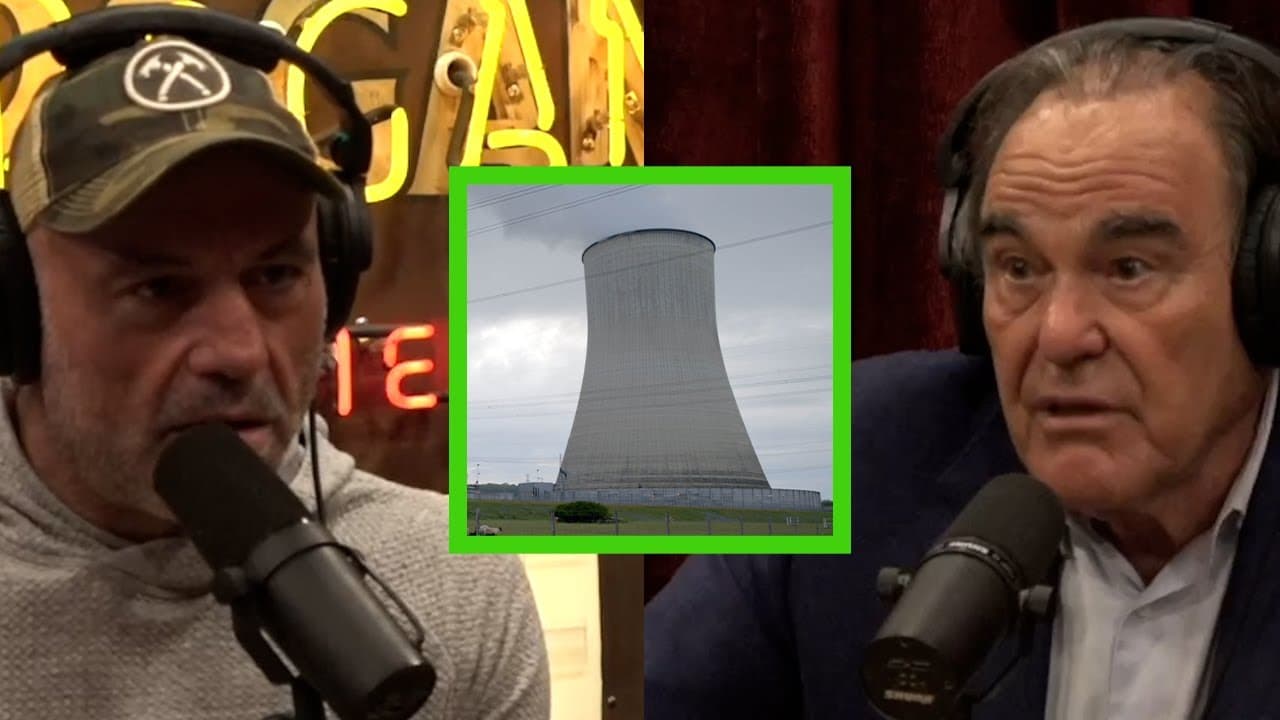
Oliver Stone argues that nuclear power is safer than its frightening public image suggests. In his documentary "Nuclear Now," he examines Three Mile Island, Chernobyl and Fukushima, noting that Three Mile Island's containment structure prevented a radiation release and that nobody in Japan died from Fukushima radiation. Read on to see how war, Hollywood and anti-nuclear activism shaped public fear.
Transcript
The Joe Rogan Experience I'm really glad how you covered it in this uh documentary about Three Mile Island and Chernobyl and Fukushima we have these ideas in our mind about the dangers of nuclear power and I love the analogy that you made in the film about how driving a car is not scary but it's dangerous flying in a plane feels scary but it's far ... Read More
Key Insights
- ✊ Nuclear power is safer than commonly perceived, with minimal deaths and accidents compared to other energy sources.
- 😨 Hollywood and media portrayals have perpetuated fear and misinformation about nuclear power.
- 🛟 The accidents at Three Mile Island, Chernobyl, and Fukushima had minimal impact on human lives when compared to the benefits of nuclear energy.
- 🍉 Nuclear waste is manageable, with containment structures and long-term burial ensuring minimal environmental impact.
- 🙈 The global adoption and expansion of nuclear power, as seen in China and Russia, can contribute significantly to addressing climate change.
- ✊ The stigma against nuclear power needs to be overcome through education and accurate information.
- ✊ Nuclear energy does not require extensive storage or backup systems, making it a reliable and consistent source of power.
Install to Summarize YouTube Videos and Get Transcripts
Explore YouTube Video Summarizer or Get YouTube Transcript Extractor
Questions & Answers
Q: Why does Oliver Stone believe nuclear power is safer than people think?
Stone compares nuclear power with flying, which can feel frightening despite being safer than driving. He says the data on deaths from coal each year and total deaths from nuclear power challenged his previous assumptions.
Q: What is Oliver Stone's documentary "Nuclear Now" about?
"Nuclear Now" investigates nuclear power by tracing its origins and examining its risks, accidents and public reputation. Stone says he made the film because he had supported anti-nuclear ideas in the 70s and 80s without being properly educated about the technology.
Q: What happened at Three Mile Island according to Oliver Stone?
The reactor at Three Mile Island melted down, but Stone says nobody was hurt. He explains that the containment structure worked and prevented a release of radiation.
Q: Did anyone die from radiation at Fukushima?
Stone says nobody in Japan died from radiation released at Fukushima. He distinguishes this from the fifteen to twenty thousand people who died because of the tsunami and earthquake.
Q: Why did the Fukushima nuclear plant fail?
Stone says the tsunami produced a wave that was a hundred feet tall and overwhelmed a badly built wall. The generators below the water level were flooded, while other reactors exposed to the same earthquake and tsunami did not suffer the same outcome.
Q: How does Hollywood influence fear of nuclear power?
Stone says films and stories have repeatedly linked radiation with monsters, horror and war. He cites "The China Syndrome," "Silkwood" and HBO's "Chernobyl" as portrayals that contributed to an alarmist or fictionalized public image.
Q: Is a nuclear power plant similar to a nuclear bomb?
Stone says nuclear energy and nuclear bombs require different configurations. He explains that building a bomb is difficult, can take years and requires scientists to enrich plutonium, yet people still associate power plants with war.
Q: Can older nuclear reactors still operate?
Stone says reactors built 60 or 70 years ago are still functioning as legacy reactors. He adds that newer generations of power plants benefit from improving technology and could avoid the failures that occurred at Fukushima.
Summary & Key Takeaways
-
Definition: "Nuclear Now" examines nuclear power's origins, accidents, risks and reputation.
-
Who: Oliver Stone says he supported anti-nuclear ideas before educating himself about nuclear energy.
-
Compare: Flying feels frightening but is safer than driving, an analogy Stone applies to nuclear power.
-
Definition: Nuclear power plants use configurations that do not exist in nuclear bombs.
-
Number: Stone says he followed anti-nuclear ideas during the 70s and 80s.
-
When: Horror films in the 1950s helped associate radioactivity with monsters.
-
Definition: Three Mile Island's reactor melted down, but its containment structure prevented radiation from escaping and nobody was hurt.
-
Number: Stone says nobody in Japan died from Fukushima radiation, while fifteen to twenty thousand people died from the tsunami and earthquake.
-
Number: The Fukushima tsunami wave was a hundred feet tall and flooded generators beneath the water.
-
Number: Legacy nuclear reactors built 60 or 70 years ago are still functioning, according to the discussion.
Read in Other Languages (beta)
Share This Summary 📚
Summarize YouTube Videos and Get Video Transcripts with 1-Click
Try YouTube Summary with ChatGPT & Claude or YouTube Transcript Generator
Explore More Summaries from PowerfulJRE 📚




Summarize YouTube Videos and Get Video Transcripts with 1-Click
Try YouTube Summary with ChatGPT & Claude or YouTube Transcript Generator