Mark Zuckerberg Answers to Facebook's Moderation of Controversial Content
TL;DR
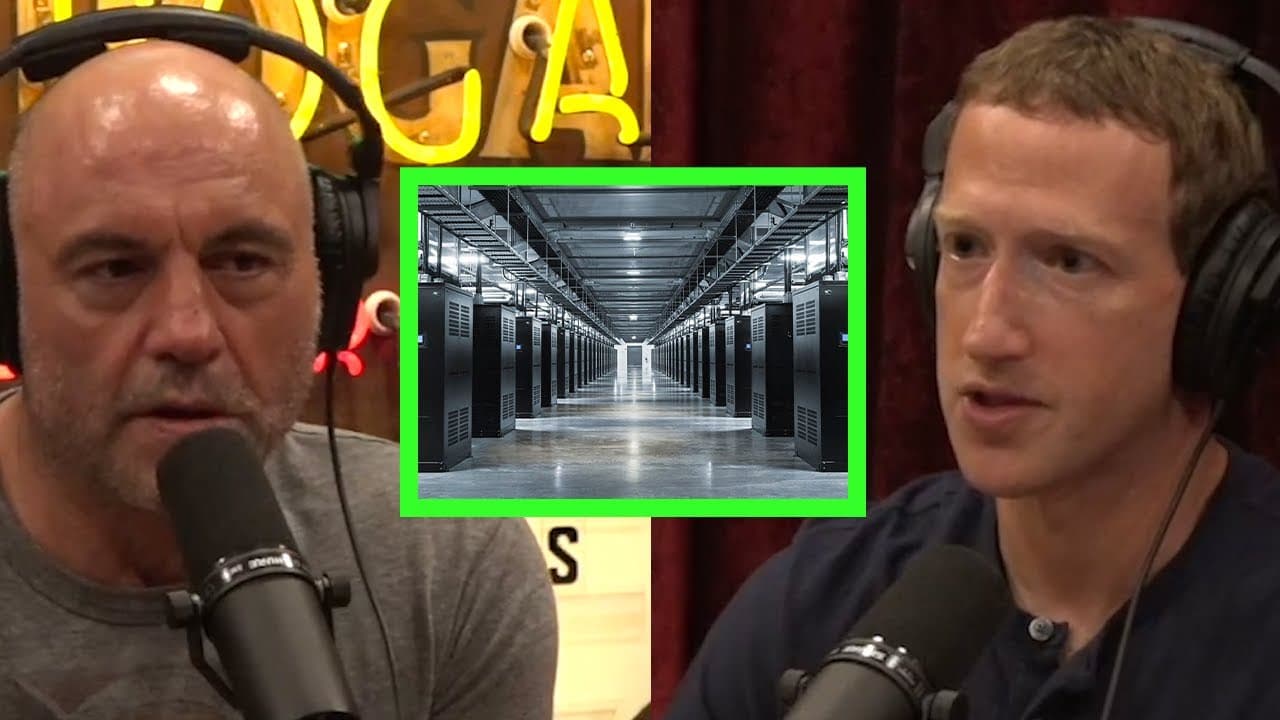
Facebook moderates controversial content by weighing the removal of bad actors against the risk of suppressing genuine expression, while allowing an independent oversight board to make final binding decisions on appealed cases. For large pages, it also keeps administrators’ identities on file and examines signals such as server traffic and IP addresses. Read on to understand how this framework applies to political pages, disputed news, safety, privacy, and human rights.
Transcript
the jurogan experience when we take down something that that we're not supposed to i mean that that is like i mean that's the worst i mean that's like discern like how like say like these christian facebook pages i i don't know how they found out that 19 of 20 were fake but if someone just says i am bob smith and they post as bob smith and they hav... Read More
Key Insights
- 🕵️ Authenticating social media users requires multiple signals and verification processes, but it is challenging to detect fake accounts accurately.
- 🧑🏭 Content moderation decisions involve balancing capturing bad actors and minimizing the removal of genuine content, posing difficult trade-offs.
- 😤 Facebook's approach to content moderation includes separation of powers, where an independent oversight board makes final decisions rather than internal teams or the CEO.
- 😑 The handling of controversial content, such as the Hunter Biden laptop story, presents challenges as platforms must navigate between preventing misinformation and allowing free expression.
- 🆘 The establishment of independent governance and involvement of external entities in decision-making can help mitigate biases and improve content moderation practices.
- 🇺🇸 The United States experiences higher polarization on social media compared to other countries, making content moderation more challenging.
Install to Summarize YouTube Videos and Get Transcripts
Explore YouTube Video Summarizer or Get YouTube Transcript Extractor
Questions & Answers
Q: How does Facebook moderate controversial content while protecting free expression?
Facebook treats moderation as a trade-off between catching more bad actors and accidentally removing good actors or genuine content. Its independent oversight board prioritizes free expression while also considering safety, privacy, and other human rights issues.
Q: How does Facebook determine whether a large page is authentic?
Facebook uses multiple signals and tries to identify the administrator of a large page. The administrator may remain anonymous publicly, but Facebook keeps an identity on file to verify behind the scenes that the person is real.
Q: Can someone run an anonymous Facebook page?
Yes, Zuckerberg says people should be able to operate anonymous pages without publicly revealing who they are. Facebook still wants an identity for the administrator on file so it can confirm that a real person is behind the page.
Q: How does Facebook assess where a political page or advertisement originates?
Facebook can examine where server traffic comes from and whether an IP address points to another country, such as Romania. For election advertising, it may also consider whether the advertiser is a valid citizen or is located where applicable laws require.
Q: Why can’t AI perfectly moderate Facebook content?
Zuckerberg says there will not be a perfect AI system for these decisions because moderation involves value judgments. A more aggressive system catches more bad actors but can remove good actors, while a more lenient system preserves more legitimate content but tolerates more bad actors.
Q: What does Facebook’s independent oversight board do?
People in Facebook’s community can appeal cases to the independent oversight board when they believe the company made the wrong decision. The board makes the final binding decision rather than leaving that authority solely with an internal team or Zuckerberg.
Q: What values guide Facebook’s oversight board?
The board’s paramount value is free expression, according to Zuckerberg. It balances that principle against possible harm involving safety, privacy, and other human rights issues.
Q: How did Facebook handle the Hunter Biden laptop story differently from Twitter?
Facebook did not ban users from sharing the story. It sent the matter to third-party fact-checkers and reduced the story’s distribution in the news feed while it was being assessed, so it remained shareable but reached fewer people.
Summary
In this video, Mark Zuckerberg discusses the challenges of identifying and addressing fake accounts and misinformation on social media platforms like Facebook. He emphasizes the importance of discerning whether a page or account is authentic and highlights the various signals they use, such as verifying the page admin's identity and examining the country of origin for political content. Zuckerberg also addresses the trade-offs involved in content moderation and the difficulty of creating a perfect AI system. He mentions the establishment of an independent oversight board to handle appeals and decision-making related to content moderation. The conversation also delves into the controversy surrounding the handling of the Hunter Biden laptop story during the election and the challenge of making decisions about what content should be restricted or distributed. The difficulty of dealing with polarizing issues and the need for balanced governance principles are also discussed.
Questions & Answers
Q: How do you discern if a page or account is authentic?
Zuckerberg explains that for large pages, they try to know the identity of the admin without necessarily requiring them to be public. They want to have an identity on file to ensure the person is real. They also consider the country of origin for political content, examining the IP address to verify if the ad or content is coming from a valid citizen or place.
Q: How does Facebook estimate the prevalence of fake accounts and bots on the platform?
Zuckerberg mentions that they applied an algorithm to a sample of 100 random Twitter pages to estimate the overall prevalence of bots. However, he acknowledges that discerning the authenticity of individual pages or accounts is more challenging and involves multiple signals and considerations.
Q: What are the trade-offs involved in content moderation?
Zuckerberg highlights that content moderation entails difficult trade-offs. One option is to be overly aggressive in capturing bad actors, but this could potentially result in mistakenly targeting some good actors. On the other hand, being more lenient may tolerate more bad actors but avoids mistakenly taking down good content. These trade-offs revolve around the values people prioritize and the complexity of creating a perfect AI system.
Q: How does the oversight board work in Facebook's content moderation decisions?
Zuckerberg explains that they established an independent oversight board that consists of people who value free expression but also consider factors like safety, privacy, and human rights. This board allows the Facebook community to appeal decisions they believe were wrong. Ultimately, the oversight board has the final binding decision-making power, making it a more legitimate form of governance rather than concentrating decision-making within a single team or individual.
Q: How did Facebook handle the controversial Hunter Biden laptop story during the election?
Zuckerberg contrasts Facebook's approach with Twitter's. He mentions that the FBI alerted them about a potential dump of information similar to the Russian propaganda during the 2016 election. Rather than completely banning the Hunter Biden story, Facebook reduced its distribution and implemented third-party fact-checking since they didn't want to decide what's true or false. The story was still shareable but experienced decreased visibility in the news feed.
Q: What was the reasoning behind reducing the distribution of the Hunter Biden laptop story?
Zuckerberg explains that the distribution was decreased during fact-checking because the story had been reported as potentially containing misinformation. However, during the evaluation period, it turned out that no one could definitively declare it false. While he acknowledges it sucks to have restricted something that later proved to be genuine, he likens it to being accused in a criminal trial but ultimately being proven innocent. It's a challenging balancing act and a process that tries to find the middle ground.
Q: How does Facebook handle controversial issues that arise on the platform?
Zuckerberg acknowledges the difficulty of navigating controversies and making decisions that please everyone. He emphasizes the importance of establishing balanced governance principles rather than having centralized decision-making by a single team or individual. The creation of the independent oversight board and collaboration with third-party fact-checking organizations are examples of efforts to avoid becoming the sole authority on determining what is true or false.
Q: How does polarization on social media platforms like Facebook differ in the U.S. compared to other countries?
Zuckerberg notes that the U.S. experiences higher levels of polarization compared to many other countries, despite the prominence of social media globally. He states that while social media plays a role in polarization, it may not be the sole factor. He believes establishing independent governance and separating decision-making powers can help navigate polarizing issues effectively.
Q: What challenges do polarizing issues pose on social media platforms?
Zuckerberg acknowledges that discussions around polarizing issues like climate change, COVID-19, or foreign policy can trouble social media platforms. Navigating these issues becomes challenging, especially when there is pressure to take a specific stance or suppress information. He agrees that the decision-making in such situations is difficult, and it is hard to determine the "right" path to take.
Q: How does Mark Zuckerberg view his role in governing content on Facebook?
Zuckerberg mentions that he didn't initially get involved in content moderation to judge what is deemed appropriate. His primary focus was designing technology that connects people. However, he recognizes the need to be involved in content governance due to his position as the head of the company. To prevent centralization of decision-making, he pioneers the establishment of independent forms of governance, such as the oversight board and collaboration with external organizations.
Takeaways
Mark Zuckerberg discusses the challenges of authenticating pages and accounts, combating fake news, and balancing content moderation on platforms like Facebook. He highlights the difficulty of creating a perfect AI system and the trade-offs involved in content moderation decisions. Zuckerberg emphasizes the importance of establishing balanced governance principles through independent oversight boards and collaboration with third-party fact-checkers. He acknowledges the polarization in the U.S. and worldwide and aims for a more legitimate form of governance, preventing centralized decision-making and acting as the "ministry of truth." Controversies will continue to arise, requiring ongoing efforts to find the right balance in content moderation and decision-making.
Summary & Key Takeaways
-
The prevalence of fake accounts and bots on social media platforms raises concerns about distinguishing real from fake users.
-
Facebook uses various signals to determine the authenticity of large pages, including verifying the identity of administrators and considering the origin country.
-
Content moderation involves difficult trade-offs between capturing bad actors and preserving free expression, with no perfect AI system available.
Read in Other Languages (beta)
Share This Summary 📚
Summarize YouTube Videos and Get Video Transcripts with 1-Click
Try YouTube Summary with ChatGPT & Claude or YouTube Transcript Generator
Explore More Summaries from PowerfulJRE 📚


Summarize YouTube Videos and Get Video Transcripts with 1-Click
Try YouTube Summary with ChatGPT & Claude or YouTube Transcript Generator