What Is Greenwashing in the Food Industry?
TL;DR
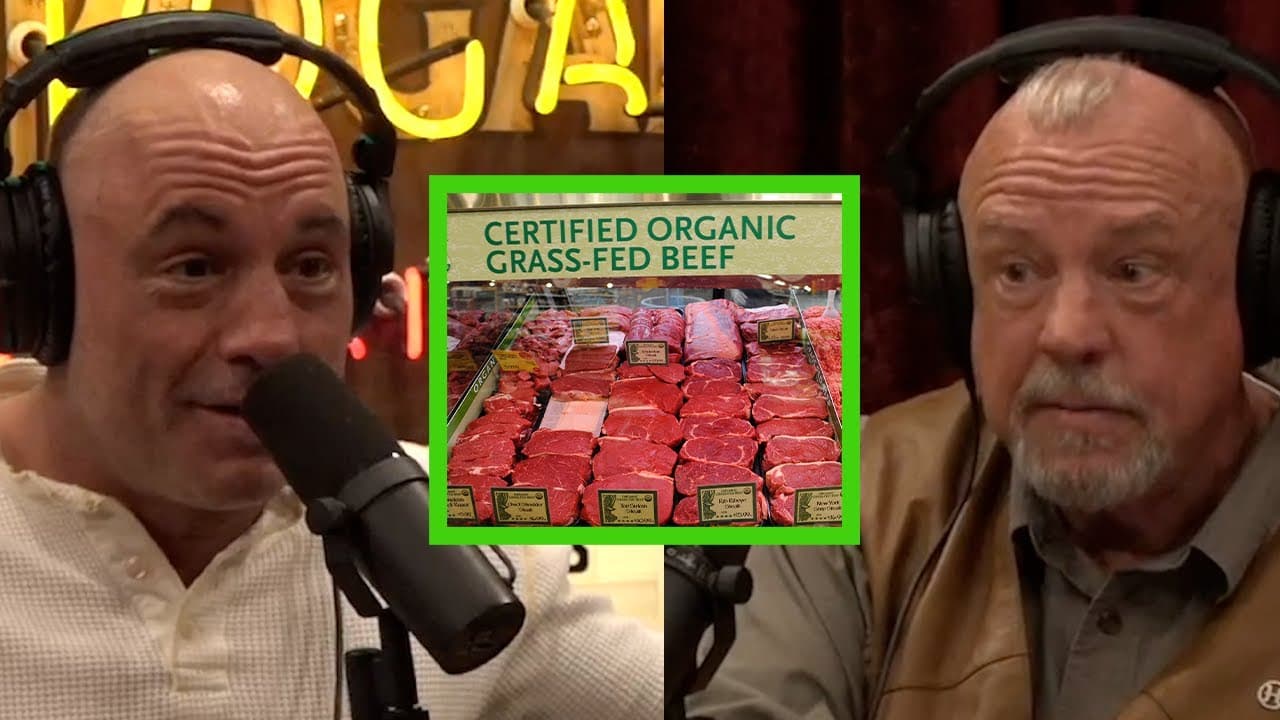
Greenwashing in the food industry refers to misleading marketing practices that make products appear healthier or more sustainable than they are. Whole Foods, once a champion of quality, now faces criticism for its association with vague labeling and animal welfare standards that may not reflect the reality of its sourcing practices.
Transcript
The Joe Rogan Experience so I take this off and I it's a Whole Foods Market is continuously my biggest customer they used to be my virtually my only customer but my relationship with Whole Foods has been cooling for a decade and eventually I won't be in there anymore uh I I will will Harris me sold Whole Foods Market the first pound of American gra... Read More
Key Insights
- Greenwashing is a marketing tactic that misleads consumers about the environmental benefits of a product. It creates the illusion that a product is more sustainable than it actually is.
- Whole Foods Market was initially a pioneer in promoting grass-fed beef but has shifted its focus, leading to concerns about the quality of its meat sourcing.
- The Global Animal Partnership, funded by Whole Foods, has a five-step animal welfare rating system that has been criticized for allowing companies to remain at lower welfare standards indefinitely.
- Despite the existence of a rating system, many products at Whole Foods do not meet the highest animal welfare standards, leading to consumer confusion.
- The perception of Whole Foods has changed from a health-focused retailer to one that prioritizes corporate profitability, contributing to greenwashing.
- Will Harris, a regenerative farmer, emphasizes that the true quality of meat is often obscured by vague marketing and labeling.
- The co-evolution of industrial farming and big food companies has resulted in a system where small producers struggle to compete with large corporations.
- Harris prefers working with other grocery chains that maintain transparency and do not engage in greenwashing tactics.
Install to Summarize YouTube Videos and Get Transcripts
Explore YouTube Video Summarizer or Get YouTube Transcript Extractor
Questions & Answers
Q: What is greenwashing and how does it affect consumers?
Greenwashing is the practice of companies misleading consumers about the environmental benefits of their products. It affects consumers by creating false perceptions of sustainability, leading them to believe they are making eco-friendly choices when, in reality, the products may not be significantly better for the environment. This can result in consumers supporting brands that do not align with their values, ultimately undermining genuine efforts towards sustainability.
Q: How has Whole Foods changed over the years?
Whole Foods has transformed from a retailer focused on high-quality, health-conscious products to one that prioritizes corporate profitability. This shift has led to criticisms regarding their meat sourcing practices and the effectiveness of their animal welfare ratings. The company now faces challenges related to transparency and consumer trust, as many perceive it to be engaging in greenwashing.
Q: What is the Global Animal Partnership and its significance?
The Global Animal Partnership is a non-profit organization that developed a five-step animal welfare rating system for meat products sold at retailers like Whole Foods. Its significance lies in its attempt to improve animal welfare standards in the food industry. However, critics argue that the system allows companies to remain at low welfare standards without genuine improvement, contributing to consumer confusion about the quality of meat products.
Q: What are the implications of industrial farming on small producers?
Industrial farming has significant implications for small producers, as it creates a market dominated by large corporations that can control supply chains and pricing. Small farmers often struggle to compete against these giants, which can lead to a loss of diversity in farming practices and a decrease in the availability of high-quality, sustainably produced food. This situation undermines the efforts of smaller, regenerative farms that prioritize animal welfare and environmental sustainability.
Q: How does Will Harris perceive his relationship with Whole Foods?
Will Harris expresses a sense of disillusionment with Whole Foods, stating that he feels used as a marketing tool rather than a valued supplier. He appreciates the transparency and commitment of other grocery chains he works with, which do not engage in greenwashing tactics. Harris's concerns highlight a broader issue within the industry regarding the authenticity of marketing claims and the true sourcing of food products.
Q: What are the challenges faced by consumers when shopping at Whole Foods?
Consumers face several challenges when shopping at Whole Foods, primarily related to understanding the true quality and sourcing of products. Vague labeling and greenwashing practices can lead to confusion about the actual welfare standards of meat and other products. This lack of clarity makes it difficult for consumers to make informed decisions that align with their values regarding health and sustainability.
Q: What steps can consumers take to avoid greenwashing in their purchases?
To avoid greenwashing, consumers can research brands and products before making purchases, looking for certifications and transparent labeling that clearly outline sourcing and production practices. Engaging with local farmers and supporting smaller, transparent producers can also help ensure that purchases align with personal values regarding sustainability and animal welfare. Additionally, educating oneself about industry practices can empower consumers to make more informed choices.
Q: Why is transparency important in the food industry?
Transparency in the food industry is crucial for building consumer trust and ensuring that products meet the ethical and quality standards that consumers expect. When companies are open about their sourcing, production practices, and animal welfare standards, it allows consumers to make informed choices that align with their values. Lack of transparency can lead to skepticism and distrust, particularly in an era where greenwashing is prevalent.
Summary & Key Takeaways
-
Greenwashing is prevalent in the food industry, particularly with large retailers like Whole Foods, which have shifted their focus from quality to profits. Misleading marketing practices create confusion about product standards and sourcing.
-
The Global Animal Partnership's rating system, while well-intentioned, has allowed many companies to avoid accountability for animal welfare, leading to consumer distrust.
-
Will Harris, a regenerative farmer, critiques the current state of Whole Foods, asserting that their practices do not reflect the high standards they once stood for, emphasizing the need for genuine commitment to quality.
Read in Other Languages (beta)
Share This Summary 📚
Summarize YouTube Videos and Get Video Transcripts with 1-Click
Try YouTube Summary with ChatGPT & Claude or YouTube Transcript Generator
Explore More Summaries from PowerfulJRE 📚





Summarize YouTube Videos and Get Video Transcripts with 1-Click
Try YouTube Summary with ChatGPT & Claude or YouTube Transcript Generator