What Is Speciation and How Do New Species Form?
TL;DR
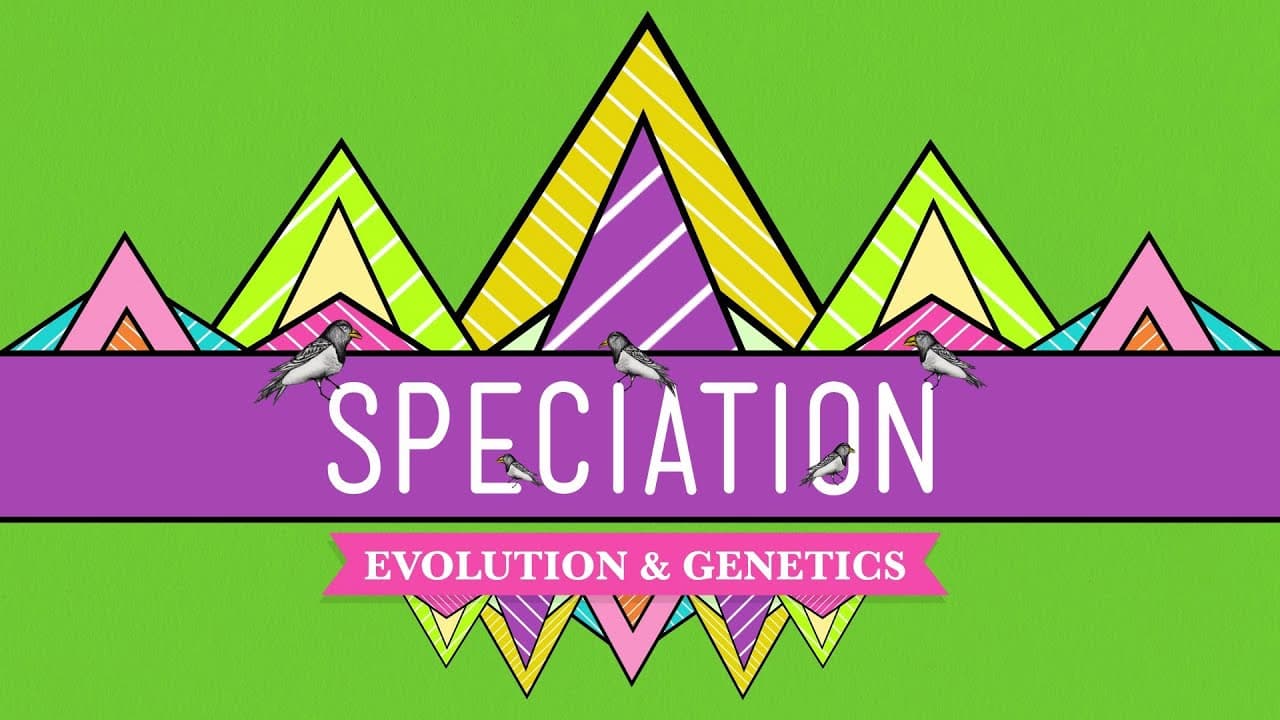
Speciation is the process through which new species arise, primarily requiring reproductive isolation between populations. This can occur through allopatric speciation, where geographic barriers prevent interbreeding, or sympatric speciation, where species evolve separately without physical separations. Key examples include finches and ligers, illustrating the dynamic nature of evolution driven by natural selection.
Transcript
You and me? We've got some stuff in common. More in common than, say, you and my dogs Lemon and Abby here. For starters, you and I are probably the same species. And Lemon and Abby are dogs, which is a different species. As you may have guessed by now, this video is going to be about species! But at the very end, we're going to talk about dogs. So ... Read More
Key Insights
- Speciation is the process through which new species arise, often requiring reproductive isolation between populations.
- Humans belong to the species Homo Sapiens, distinct from other primates like chimps and bonobos.
- Species are defined by their ability to interbreed and produce fertile offspring, a concept illustrated by the sterile liger.
- Reproductive isolation can be post-zygotic, where hybrids like mules are sterile, or pre-zygotic, involving behavioral or geographic barriers.
- Allopatric speciation occurs when populations are geographically isolated, leading to divergent evolution due to different environmental pressures.
- Sympatric speciation can happen without geographic isolation, as shown by the rapid evolution of finches on Daphne Major.
- Artificial selection in dog breeding demonstrates how humans can influence the traits of a species, akin to natural selection.
- Reproductive isolation eventually halts gene flow, potentially resulting in populations becoming distinct species over time.
Install to Summarize YouTube Videos and Get Transcripts
Explore YouTube Video Summarizer or Get YouTube Transcript Extractor
Questions & Answers
Q: What defines a species in biological terms?
A species is defined as a group of organisms that can interbreed and produce fertile offspring. This definition emphasizes the ability of members within a species to reproduce successfully, ensuring the continuation of their genetic lineage. The concept is illustrated by the example of ligers, which result from cross-breeding lions and tigers but are sterile, highlighting the importance of fertility in defining species boundaries.
Q: How does reproductive isolation contribute to speciation?
Reproductive isolation is a key factor in speciation, as it prevents gene flow between populations, allowing them to evolve independently. This isolation can be pre-zygotic, occurring before fertilization due to behavioral or geographic barriers, or post-zygotic, where hybrid offspring are sterile or non-viable. Over time, these isolated populations may accumulate genetic differences, eventually leading to the emergence of new species.
Q: What is the difference between allopatric and sympatric speciation?
Allopatric speciation occurs when populations are geographically isolated, leading to evolutionary divergence due to different environmental pressures. In contrast, sympatric speciation happens without geographic separation, often through reproductive isolation mechanisms like behavioral changes or genetic mutations. Both processes result in the formation of new species, but they differ in the initial conditions that isolate the populations.
Q: Can you provide an example of sympatric speciation?
An example of sympatric speciation is the evolution of finches on Daphne Major in the Galapagos Islands, studied by Peter and Rosemary Grant. Despite living in the same geographic area, a hybrid finch population became reproductively isolated from local finches due to distinct song patterns and mating behaviors. Over generations, these hybrids mated exclusively among themselves, leading to the emergence of a new species without geographic separation.
Q: What role does artificial selection play in the evolution of species?
Artificial selection, as seen in dog breeding, involves humans selectively breeding animals for specific traits, influencing the evolution of a species. Unlike natural selection, where environmental pressures determine trait propagation, artificial selection is driven by human preferences. This process can lead to significant phenotypic diversity within a species, as demonstrated by the wide variety of dog breeds, each with unique characteristics and functions.
Q: How does natural selection contribute to allopatric speciation?
In allopatric speciation, natural selection acts on geographically isolated populations, driving evolutionary changes based on local environmental conditions. For instance, if one side of a geographic barrier is colder, animals may evolve thicker coats, while those on the warmer side might develop sweat glands. Over time, these adaptations can lead to significant genetic divergence, eventually resulting in the formation of distinct species unable to interbreed.
Q: What are pre-zygotic and post-zygotic isolation mechanisms?
Pre-zygotic isolation mechanisms prevent fertilization from occurring, such as when species develop different mating behaviors or are separated by geographic barriers. Post-zygotic isolation occurs after fertilization, where hybrid offspring are either sterile, like mules, or non-viable. Both types of isolation are crucial for speciation, as they prevent gene flow between populations, allowing them to evolve independently and potentially become distinct species over time.
Q: How did Darwin's observations contribute to our understanding of speciation?
Darwin's observations of finches on the Galapagos Islands provided early evidence for speciation through natural selection. He noted that finches on different islands had distinct traits suited to their environments, suggesting divergent evolution from a common ancestor. This led to the concept of allopatric speciation, where geographic isolation results in the formation of new species. Darwin's work laid the foundation for understanding how environmental pressures drive evolutionary change.
Summary & Key Takeaways
-
This video explains speciation, the evolutionary process where new species arise, using examples like finches, ligers, mules, and dogs. It covers key concepts such as reproductive isolation, both post-zygotic and pre-zygotic, and different types of speciation, including allopatric and sympatric.
-
Allopatric speciation involves geographic isolation leading to divergent evolution, while sympatric speciation can occur without physical barriers, as demonstrated by the rapid evolution of finches on Daphne Major. The video also explores artificial selection in dog breeding, showcasing human influence on species traits.
-
Reproductive isolation is crucial for speciation, preventing gene flow between populations. This can result from geographic, behavioral, or genetic factors. Over time, isolated populations may evolve into distinct species, illustrating the dynamic nature of evolution driven by natural selection and environmental pressures.
Read in Other Languages (beta)
Share This Summary 📚
Summarize YouTube Videos and Get Video Transcripts with 1-Click
Try YouTube Summary with ChatGPT & Claude or YouTube Transcript Generator
Explore More Summaries from CrashCourse 📚




Summarize YouTube Videos and Get Video Transcripts with 1-Click
Try YouTube Summary with ChatGPT & Claude or YouTube Transcript Generator