What Are the Different Programming Languages and Their Uses?
TL;DR
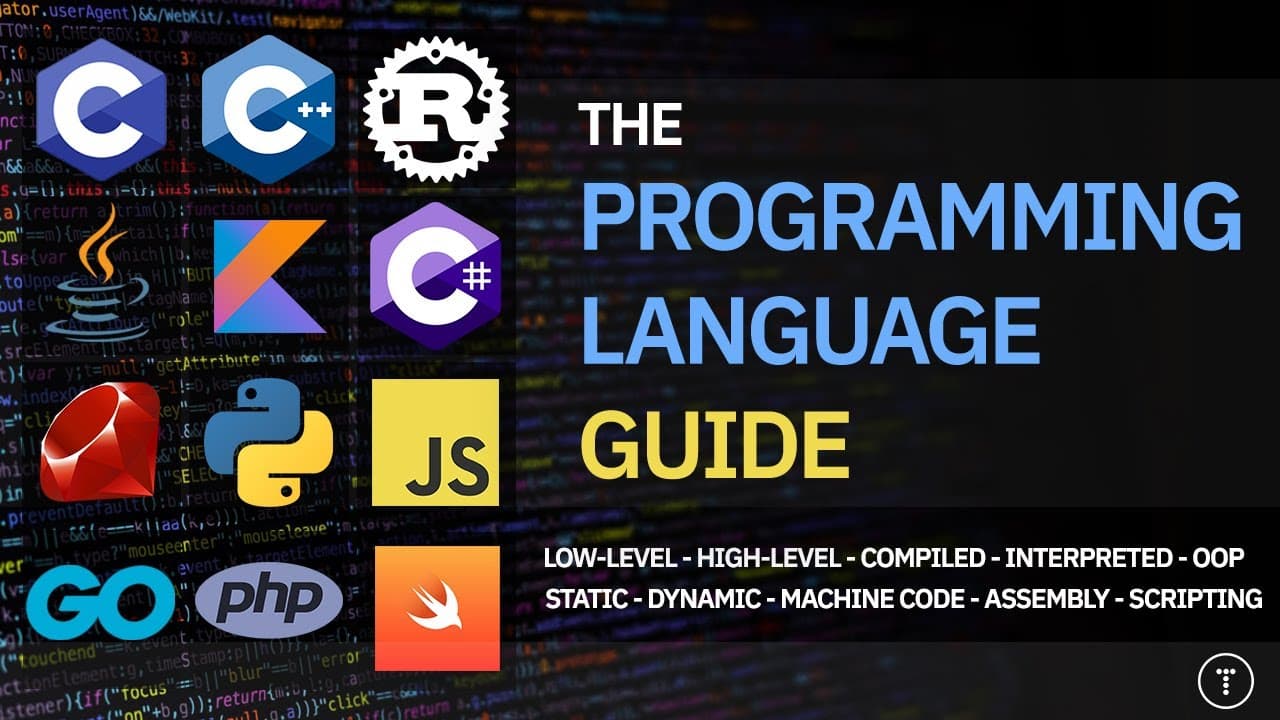
Programming languages are broadly categorized into low-level and high-level, as well as compiled and interpreted. Low-level languages like C and C++ interact closely with hardware, while high-level languages like Python prioritize ease of development. Understanding these distinctions is crucial for selecting the right language for tasks in web development, mobile app development, or system programming.
Transcript
Read and summarize the transcript of this video on Glasp Reader (beta).
Key Insights
- Programming languages are categorized as low-level or high-level based on their abstraction from machine code. Low-level languages like assembly interact closely with hardware, whereas high-level languages like Python offer more abstraction.
- Compiled languages, such as C, require a compiler to convert source code into machine code, which the CPU executes. This process often results in faster runtime performance compared to interpreted languages.
- Interpreted languages like Python and JavaScript are generally easier to learn and allow rapid development, but they may not match the runtime speed of compiled languages due to their higher level of abstraction.
- C++ is an extension of C that introduces object-oriented programming features, making it suitable for complex applications like game development and operating systems.
- Java is a versatile, high-level language known for its 'write once, run anywhere' capability, making it popular for web servers, enterprise applications, and Android app development.
- Dynamic typing in languages like JavaScript and Python allows variables to change types at runtime, offering flexibility but potentially leading to runtime errors. In contrast, static typing in languages like Java and C# provides more robustness by enforcing type constraints at compile time.
- Rust offers memory safety without a garbage collector, making it ideal for performance-critical applications such as game engines and operating systems, while also supporting WebAssembly for high-performance web applications.
- JavaScript, the language of the web, is essential for front-end development and, with Node.js, extends to backend development, providing a unified language for full-stack development.
Install to Summarize YouTube Videos and Get Transcripts
Explore YouTube Video Summarizer or Get YouTube Transcript Extractor
Questions & Answers
Q: What is the difference between low-level and high-level programming languages?
Low-level programming languages, like assembly, are closer to machine code and provide direct interaction with hardware, offering high performance but requiring detailed management of system resources. High-level languages, like Python, provide more abstraction, making them easier to learn and use, but they may sacrifice some performance for ease of use.
Q: How do compiled languages differ from interpreted languages?
Compiled languages, such as C, are translated into machine code using a compiler before execution, which often results in faster runtime performance. Interpreted languages, like Python, are executed by an interpreter, translating code line-by-line at runtime, allowing for easier debugging and faster development cycles but potentially slower execution.
Q: What are the benefits of using statically typed languages?
Statically typed languages, such as Java and C#, perform type checking at compile time, which can prevent type-related errors and improve code robustness. This ensures that variables are used consistently with their defined types, reducing runtime errors and making the code easier to maintain and refactor.
Q: Why is Java considered a 'write once, run anywhere' language?
Java is considered 'write once, run anywhere' because its compiled bytecode can run on any platform with a Java Virtual Machine (JVM), eliminating the need for recompilation. This cross-platform compatibility makes Java a popular choice for developing applications that need to run on various operating systems without modification.
Q: What makes Rust a suitable choice for systems programming?
Rust is a suitable choice for systems programming due to its focus on memory safety without a garbage collector, allowing for efficient memory management and high performance. It provides features like ownership and borrowing to prevent memory leaks and data races, making it ideal for building performance-critical applications like operating systems and game engines.
Q: How does JavaScript's role in web development differ from other languages?
JavaScript is the primary language for client-side web development, enabling dynamic and interactive web pages. With Node.js, JavaScript extends to server-side development, allowing developers to use a single language for full-stack development. Its widespread use in web browsers makes it essential for building modern web applications.
Q: What are the advantages of using Python for data science and machine learning?
Python is favored for data science and machine learning due to its simplicity, readability, and extensive library ecosystem, including libraries like NumPy, pandas, and TensorFlow. These libraries provide powerful tools for data analysis, manipulation, and machine learning, enabling developers to build complex models with relatively less code and effort.
Q: Why is PHP still popular for web development despite criticism?
PHP remains popular for web development due to its ease of use, extensive documentation, and ability to embed directly within HTML, making it practical for quickly adding functionality to web pages. Its large community and numerous frameworks, like Laravel, support rapid development, especially for small businesses and freelancers looking to deploy projects quickly.
Summary & Key Takeaways
-
This video provides an in-depth analysis of programming languages, focusing on their categorization as low-level or high-level, compiled or interpreted, and statically or dynamically typed. It offers insights into the strengths and applications of languages like C, Java, Python, and JavaScript.
-
Languages like C and C++ offer low-level access to hardware, making them suitable for system-level programming, while high-level languages like Python and JavaScript prioritize ease of use and rapid development for applications ranging from web development to data science.
-
Understanding the differences between compiled and interpreted languages, as well as static versus dynamic typing, is crucial for selecting the right programming language for specific tasks, whether it's for building web applications, mobile apps, or complex systems.
Read in Other Languages (beta)
Share This Summary 📚
Summarize YouTube Videos and Get Video Transcripts with 1-Click
Try YouTube Summary with ChatGPT & Claude or YouTube Transcript Generator
Explore More Summaries from Traversy Media 📚



Summarize YouTube Videos and Get Video Transcripts with 1-Click
Try YouTube Summary with ChatGPT & Claude or YouTube Transcript Generator