How Does Security Make Human Society Possible?

TL;DR
Security makes human society possible by enabling people to trust non-kin and cooperate despite the presence of a dishonest minority. Every security decision involves trade-offs between costs, benefits, risks, and rewards, but human judgments are subjective and shaped by emotion, cognitive biases, competing values, externalities, and incomplete information.
Transcript
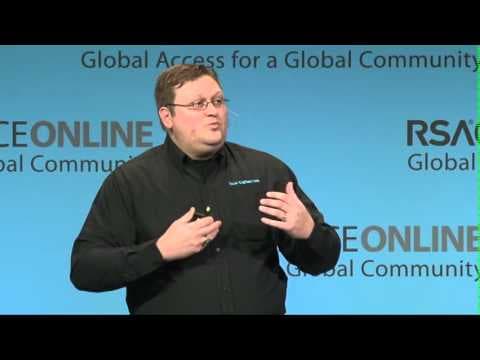
Hi, good morning. Thanks for, uh, thanks for coming. Thanks for showing up as to what, uh, I guess was billed as an experimental talk and, and is an experimental talk. Uh, I'm writing a new book a-and that's what I wanna talk about. Uh, I've written a lot, and a lot of people have written about the, uh, the how of security. I mean, the bookstore is... Read More
Key Insights
- Security is a fundamental property of life because survival requires organisms to respond to environmental danger, predation, and parasites. Natural selection has produced many defenses, including teeth, claws, escape, injury feigning, playing dead, schooling, burrows, mimicry, shells, tools, and intelligence.
- An evolutionary security arms race occurs when attackers and defenders continually adapt to each other. A defense against a fixed environmental condition may reach a stable endpoint, while a defense against an adaptive adversary creates pressure for repeated improvements on both sides.
- Sexual reproduction is presented as security against parasites despite being less efficient than asexual reproduction. The argument illustrates how a biological process that appears costly can persist because its security benefits improve resistance within an ongoing evolutionary struggle.
- Human intelligence is described as a defense against other intelligent humans. Machiavellian intelligence theory and the social brain hypothesis connect expanding intelligence to social competition, where anticipating and outsmarting other people provides an advantage against deception, aggression, and retaliation.
- Trust among non-kin is essential for society because intelligence alone cannot produce civilization when nearby strangers are treated as enemies. The ability to cooperate with unrelated people distinguishes human social organization and makes large, functioning societies possible.
- Security is a trade-off that balances costs and benefits for both defenders and attackers. Decisions such as adding protection, accepting inconvenience, or pursuing an attack depend on perceived risk, expected reward, and the costs assigned to success or failure.
- Human security trade-offs are subjective because perceived risks and costs can differ from actual ones. People also value privacy, time, and other interests differently, while some relevant costs and benefits remain unknowable because sufficient information is unavailable.
- Security judgments are shaped by cognitive and emotional biases. Fear, prospect theory, the affect heuristic, availability, confirmation bias, and group decision-making can distort probability estimates, magnify emotionally charged dangers, and encourage people to accept evidence that reinforces existing beliefs.
Install to Summarize YouTube Videos and Get Transcripts
Explore YouTube Video Summarizer or Get YouTube Transcript Extractor
Questions & Answers
Q: Why is security necessary for human society?
Security is necessary because society depends on people trusting and cooperating with non-kin despite the possibility of deception, aggression, or free riding. Intelligence by itself cannot create a functioning society if strangers cannot safely interact. Societal security supports adherence to the social contract and protects cooperation from the dishonest minority that might exploit it.
Q: What is the difference between direct and societal security?
Direct security has distinct attackers and defenders, such as a predator pursuing prey or one person attacking another. Societal security involves members of the same community, who collectively benefit from cooperation but may also violate its rules. In that setting, attackers and defenders belong to the same society, and security discourages free riders from exploiting the social contract.
Q: How do evolutionary security arms races work?
An evolutionary security arms race begins when an attacker and defender can each adapt to the other. A polar bear's protection from cold can approach an endpoint because the climate does not strategically respond. Seals, however, can improve their evasion as polar bears improve their hunting, producing continuing pressure for both sides to develop new capabilities.
Q: How did intelligence change security among primates and humans?
Intelligence made social conflict more strategic because intelligent rivals could anticipate actions, deceive opponents, and seek revenge later. The talk connects this pressure to Machiavellian intelligence theory and the social brain hypothesis, which propose that humans became smarter partly because they competed with other humans. Intelligence therefore became both a security defense and part of an escalating social threat.
Q: Why is trust between non-kin important?
Trust between non-kin allows unrelated people to remain near one another, cooperate, and build social institutions without constant violence. The talk treats this capacity as unusually human and fundamental to civilization. A large neocortex is insufficient for society if every nearby person is viewed only as a rival who must be attacked, dominated, or killed.
Q: Why are security decisions considered trade-offs?
Security decisions balance protective benefits against costs such as time, effort, inconvenience, or other valued interests. Attackers make similar comparisons between risks and potential rewards. These choices may be conscious, such as deciding whether to double-lock a hotel door, or evolutionary, such as whether a thicker shell offers greater survival value than another defensive adaptation.
Q: Why do perceived and actual security risks differ?
Human risk assessments are subjective and influenced by emotion, incomplete information, and differing personal values. The amygdala produces fear-based reactions, while the neocortex supports more deliberate reasoning. Even deliberate judgments remain vulnerable to heuristics that distort probability and cost, so the danger people feel may not match the danger that actually exists.
Q: How do cognitive biases affect security policy?
Cognitive biases can distort which threats receive attention and how evidence is evaluated. The availability heuristic makes easily recalled events seem more probable, while the affect heuristic magnifies risks associated with emotionally negative ideas. Confirmation bias encourages acceptance of information supporting existing beliefs. Group decision-making can further shape choices that are made collectively rather than in isolation.
Summary & Key Takeaways
-
Security is as old as life because organisms must survive predation, parasites, and environmental threats. Evolution has produced defenses such as claws, shells, mimicry, group protection, tools, and intelligence. When attackers and defenders adapt to each other, their competing improvements create an evolutionary security arms race.
-
Human intelligence may have developed partly through competition with other humans. As people became better at anticipating, deceiving, and retaliating against rivals, intelligence and murderous behavior reinforced each other. Society nevertheless required humans to overcome this danger by developing enough trust to cooperate with non-kin rather than treating every stranger as an enemy.
-
Security decisions are trade-offs involving costs, benefits, risks, and rewards for defenders and attackers alike. Human evaluations of those trade-offs are subjective because perceived risks differ from actual risks, values vary, information may be unavailable, and decisions occur within broader negotiations shaped by emotions, externalities, biases, and group dynamics.
Read in Other Languages (beta)
Share This Summary 📚
Summarize YouTube Videos and Get Video Transcripts with 1-Click
Try YouTube Summary with ChatGPT & Claude or YouTube Transcript Generator
Explore More Summaries from RSAC Cybersecurity 📚

Summarize YouTube Videos and Get Video Transcripts with 1-Click
Try YouTube Summary with ChatGPT & Claude or YouTube Transcript Generator