Who Was the Greater Genius: Newton or Einstein?
TL;DR
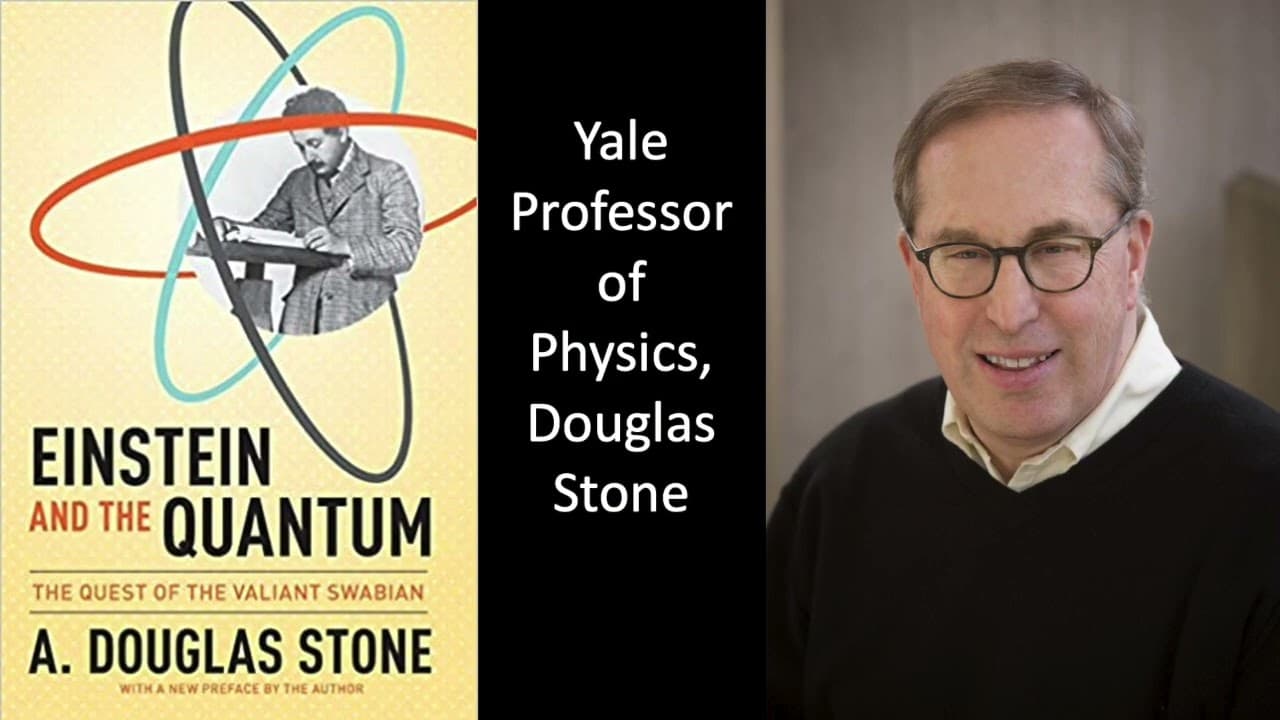
Isaac Newton is widely regarded as the greater genius compared to Albert Einstein, with a poll showing public support at 51% for Newton and 39% for Einstein among scientists. Newton's contributions laid the foundation for modern science during a less scientific era, while Einstein advanced the understanding of quantum physics. Historical patterns suggest that ages of genius have shifted geographically, moving from East to West over centuries.
Transcript
thank you on the screen you see the outside of the Royal Society of Science in the center of London for centuries it has served as something of a genius club for scientists indeed its history goes back to the year 1660. over the centuries the members of the Royal Society have included Isaac Newton Benjamin Franklin Michael Faraday James Clerk Maxwe... Read More
Key Insights
- 😃 The Royal Society of Science conducted a contest to determine whether Newton or Einstein made a bigger overall contribution to science.
- 🇨🇫 Newton was favored by both the general public and scientists, although the margin was closer among the general public.
- 🤕 Newton's contributions led to the transition from superstition to the modern scientific world, while Einstein made significant advancements in the age of quantum physics.
- 🥰 Throughout history, various regions and time periods have experienced golden ages of genius in different fields, such as ancient Athens for philosophy, Renaissance Florence for art, and 20th-century New York for art.
- 🤱 Genius seems to have moved from east to west over the centuries, from China and India to the near east, Europe, and finally to the United States and Silicon Valley.
Install to Summarize YouTube Videos and Get Transcripts
Explore YouTube Video Summarizer or Get YouTube Transcript Extractor
Questions & Answers
Q: How did the Royal Society of Science determine who was the greater genius, Newton or Einstein?
The Royal Society conducted a poll among 1300 members of the general public and 345 living member scientists. The results showed that while the general public had a slight preference for Newton, scientists overwhelmingly favored him.
Q: Why did Newton receive more support from scientists?
Supporters of Newton argued that he lived in a less scientific age and had to overcome superstition and religious dogma. Newton's work in leading the transition to the Enlightenment or Age of Reason was seen as a significant contribution.
Q: What were some of Newton's contributions to science?
Newton provided the laws of motion, the law of gravity, a theory of light and color, a method to measure acceleration, and the development of calculus.
Q: What were some of Einstein's contributions to science?
Einstein's contributions include the theory of relativity, the understanding of light as photons, the famous equation E=mc², theories about black holes, the creation of the universe, and parallel universes.
Summary & Key Takeaways
-
The Royal Society of Science conducted a contest to determine if Newton or Einstein had a bigger contribution to science based on the knowledge during their respective times.
-
The general public thought Newton made a larger contribution by a small margin, while scientists strongly favored Newton.
-
Both Newton and Einstein played crucial roles in scientific progress, with Newton leading the transition to the modern scientific world and Einstein initiating the age of quantum physics.
Read in Other Languages (beta)
Share This Summary 📚
Summarize YouTube Videos and Get Video Transcripts with 1-Click
Try YouTube Summary with ChatGPT & Claude or YouTube Transcript Generator
Explore More Summaries from YaleCourses 📚

Summarize YouTube Videos and Get Video Transcripts with 1-Click
Try YouTube Summary with ChatGPT & Claude or YouTube Transcript Generator