What Are Bed Bugs and How Do You Get Rid of Them?

72.4M views
•
March 4, 2023
by
Mark Rober
YouTube video player
What Are Bed Bugs and How Do You Get Rid of Them?

TL;DR

Bed bugs are easier to eliminate than their reputation suggests, as long as you ignore common online remedies and follow simple proven steps. They do not carry or transmit any diseases, can survive three to six months without feeding, and about half of all people show no reaction at all to their bites. Ultrasonic repellers, dryer sheets, moth balls, baking soda, and essential oils were all put to the test in a lab.

Transcript

  • This is me subjecting my body to science. Oh my gosh. By letting a bedbug eat me. That's my blood! Because for four years now, I've been wanting to make this exact video taking a deep dive into the fascinating world of bedbugs. There's a lot of fear and miss out there regarding dealing with bedbugs. And today we're going to debunk nearly all of t... Read More

Key Insights

  • Bed bugs do not carry or transmit any diseases, which works as an evolutionary advantage for them because governments do not fund research to eradicate a pest that poses no widespread health threat, leaving them to coexist with humans largely unchallenged.
  • Bed bugs can survive three to six months without feeding because blood is a highly nutritious material, allowing them to enter a resting stage. In a relatively cold environment, that survival window stretches to as long as 300 days without eating anything.
  • Bed bug antennae provide two senses humans lack: detection of body heat and of carbon dioxide exhaled by a potential host. Breathing warm air onto a dish of bed bugs visibly excites them because it signals a meal is nearby.
  • Half of all people have no reaction whatsoever to a bed bug bite, while the other 50 percent react to the insect's saliva with visible marks that appear by morning. Eleven bugs fed on one arm produced only a single noticeable prick.
  • Bed bugs are attracted to vertical objects because humans generally sleep at the highest elevation in a room. The insect's strategy is to climb any vertical surface it encounters until it finds a warm-blooded meal at the top, which is why bed posts matter.
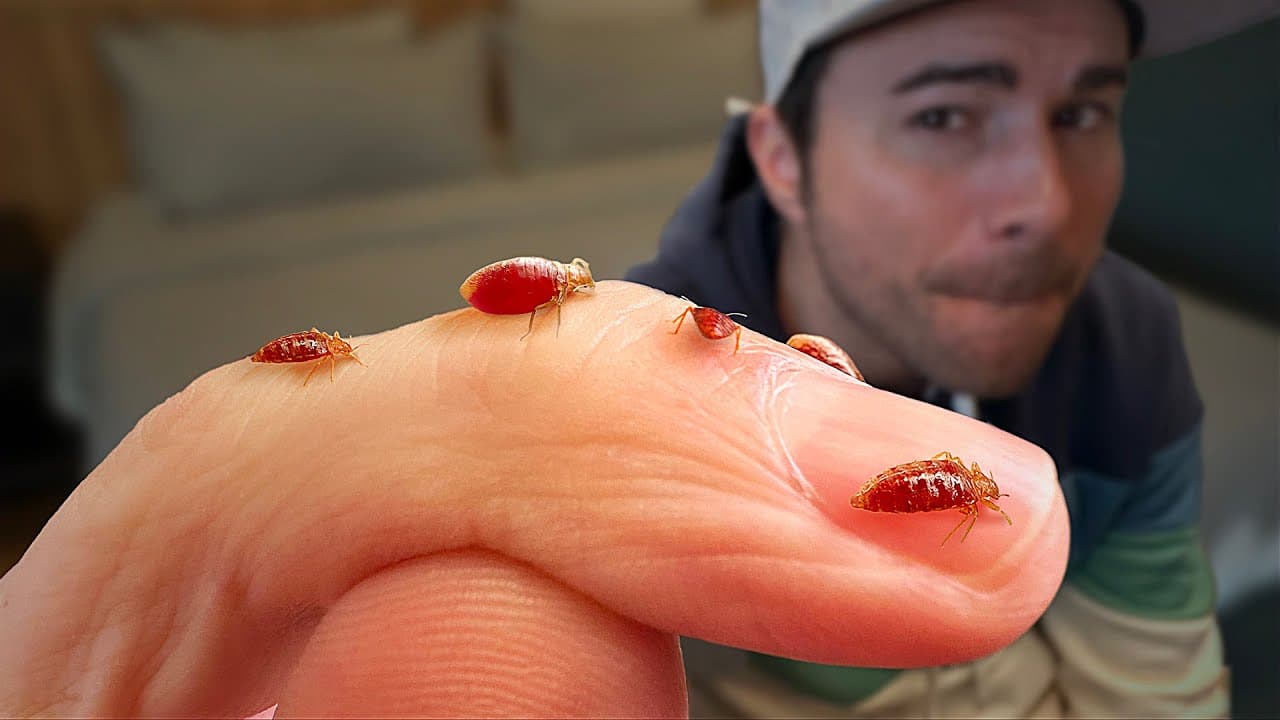
  • A hungry bed bug is noticeably flat, and a fed one turns rounded and red. Average feeding time is about five to 10 minutes, and a fed bug moves slowly afterward because it is bigger and fatter.
  • Bed bugs pass through five stages of growth between egg and full grown adult, a process that takes a few months. Ideally they like to feed about once a week, and their total lifespan runs from three months to a year.
  • People with bad infestations can receive thousands of bites in a single night, according to Dr. Wong. Because the bite itself is nearly imperceptible, a heavily bitten sleeper may never feel the feeding happening.

Install to Summarize YouTube Videos and Get Transcripts

Explore YouTube Video Summarizer or Get YouTube Transcript Extractor

Questions & Answers

Q: Do bed bugs carry diseases?

No. Bed bugs do not actually carry or transmit any diseases. Dr. Wong of the Rutgers urban entomology lab confirms this directly during the on-camera feeding demonstration. This turns out to be an evolutionary advantage for the insect in the world of coexisting with humans, because government funding does not really support research to eradicate them: since they pose no widespread health threat, there is little institutional pressure to wipe them out. The harm from bed bugs is confined to the bites themselves and the reaction some people have to the saliva.

Q: How long can bed bugs live without feeding?

Three to six months under normal conditions. Dr. Wong explains that blood is a highly nutritious material, so after a meal a bed bug can enter a resting stage and simply wait. If the environment is relatively cold, that window extends much further: up to 300 days without eating anything at all. This is why leaving a room empty for a few weeks is not a reliable way to starve out an infestation. Ideally bed bugs prefer to feed about once a week, but they are built to tolerate long gaps.

Q: How do bed bugs find you in the dark?

Through senses located on their antennae. Humans have five senses, but bed bugs have two extra ones that let them detect body heat and the carbon dioxide breathed out by a potential host. Once they get close, they use their sense of smell, also on the antennae, to lock down the exact final position of the person. The effect is demonstrated in the lab: exhaling warm breath onto a dish of bed bugs makes them visibly excited and active, because the heat and carbon dioxide together signal that a meal has arrived.

Q: What does a bed bug bite feel like and will I notice it?

Often nothing at all. During the video, eleven bed bugs fed on a bare arm for about ten minutes, and only one of the eleven produced a tiny noticeable prick. Half of all people have no reaction to a bed bug bite. The other 50 percent of the population will have some kind of reaction to the insect's saliva that shows up as visible marks in the morning. Because the feeding itself is nearly imperceptible, bed bugs are a tricky parasite: people with bad infestations can get thousands of bites in a single night without waking.

Q: How long does a bed bug take to feed?

Average feeding time is about five to 10 minutes. In the filmed demonstration, a single bed bug placed on a bare arm fed for nine minutes before finishing. During that time the insect visibly changes: it starts flat and brown, its rear end lifts into the air as it draws blood, and it swells and turns red. Afterward it moves slowly rather than scurrying away, because it is now bigger and fatter. Side by side with unfed bugs of similar age, the difference in size and color is striking.

Q: Why do bed bugs climb up bed posts?

Because vertical objects lead to hosts. Dr. Wong explains that bed bugs are attracted to vertical objects for a simple reason: humans generally sleep at the highest elevation in any given room. So the insect's logic is to crawl up any vertical object it encounters until it eventually finds a warm-blooded meal at the top. The lab tested this by placing a vertical post in one trap tray and leaving an identical tray without one, with an attractant in both. The hypothesis was that the tray with the post would collect more bed bugs.

Q: Do ultrasonic pest repellers work on bed bugs?

That is exactly what the lab experiment was designed to determine. The setup used two dishes bed bugs could climb into but not escape from, each holding a vial of a scent that smells like a human to them. One dish sat in a corner with an ultrasonic pest repeller, the other was a control. After 24 hours, the bed bugs in each dish would be counted. Far more in the control dish would mean the device does something; equal numbers in both would mean it is nothing more than a gimmick to steal your money.

Q: What home remedies for bed bugs were tested in the lab?

Using the same trap-and-count setup as the ultrasonic repeller test, the team investigated several supposed remedies commonly found online: dryer sheets, moth balls, baking soda, and essential oils. Beyond those six tests, they also ran residual effects tests by treating surfaces with three products sold at the local hardware store specifically marketed to kill bed bugs, and set off a fogger spray designed for bed bugs in a room containing three dishes of exposed bed bugs placed at different spots. All the trays were then sealed in the bed bug vault behind a heavy wooden door for the experiment to run.

Summary & Key Takeaways

  • A visit to the urban entomology lab at Rutgers University, home to more than 20,000 bed bugs in incubators, sets up a series of experiments with Dr. Wong, described in the video as the world's foremost bed bug expert. The goal is to test the remedies people commonly find online and swear will get rid of bed bugs.

  • Bed bugs mature from egg to adult male or female over a few months, passing through five stages of growth. Their antennae give them two extra senses beyond the human five, letting them detect body heat and exhaled carbon dioxide, then smell is used at close range to pinpoint the exact position of a host.

  • Feeding is demonstrated firsthand: a single bed bug fed for nine minutes on a bare arm, then eleven more were placed on the same arm at once. Average feeding time runs about five to 10 minutes, and the fed bugs turn from flat and brown to swollen and red, visibly different from unfed bugs of similar age.

  • The lab tests use dishes bed bugs can climb into but not out of, each baited with a scent that smells human to them. One dish sits next to an ultrasonic pest repeller and one is a control. After 24 hours the counts in each are compared: similar numbers would mean the device is a gimmick.

  • Additional setups test dryer sheets, moth balls, baking soda, essential oils, a vertical post mimicking a bed post, three hardware store residual products, and a fogger spray released in a room with three dishes of exposed bed bugs at different spots.


Read in Other Languages (beta)

Share This Summary 📚

Explore More Summaries from Mark Rober 📚