How to Visualize Germ Spread With Glo Germ

TL;DR
Glo Germ powder and a black light can reveal how invisible contamination moves from a few hands to classmates, desks, phones, faces, and other shared surfaces. The experiment shows why deliberate 20-second handwashing, cleaning frequently touched objects, avoiding face touching, replacing handshakes with fist bumps, and practicing social distancing can reduce transmission.
Transcript
- I've always thought if we could somehow just see the germs around us, everyone will be a lot more careful and we'd get sick way less. Unfortunately, that's still not possible. So I did the next best thing by running a daylong experiment in this third-grade classroom. I found this powder called Glo Germ. And just like real germs, when it's on your... Read More
Key Insights
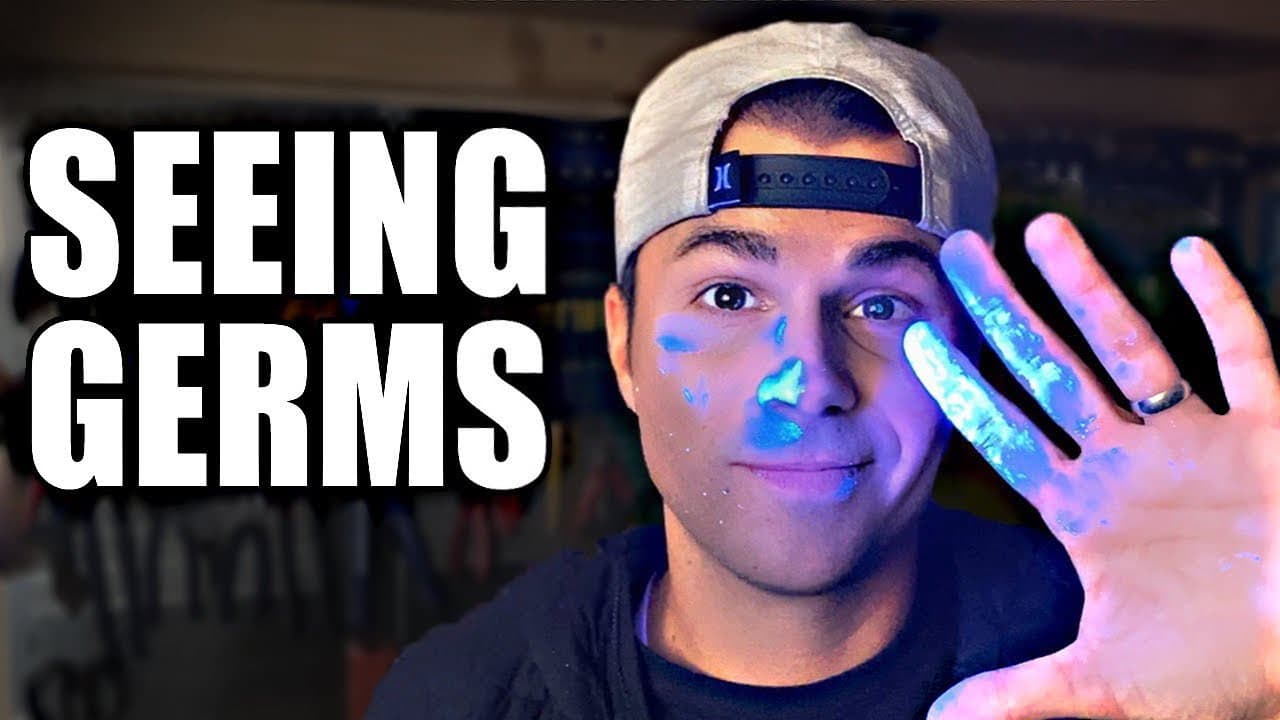
- Glo Germ powder is invisible on hands under ordinary conditions but fluoresces under a black light, making transferred material observable. Because it moves onto touched people and objects, it provides a practical classroom model for visualizing how contamination can spread through routine contact.
- Contamination is capable of spreading far beyond the initially affected people. The experiment began with powder on only the teacher and one student, yet black-light checks later found glowing traces on other children, desks, faces, the teacher's phone, and shared classroom surfaces.
- Phones are capable of returning contamination to freshly washed hands. The teacher's phone accumulated visible powder during the experiment, showing why handwashing alone can be undermined when someone immediately handles a frequently touched object that has not also been cleaned.
- Face touching is a frequent and largely unconscious route from contaminated hands to the eyes, nose, and mouth. The transcript reports an average of 16 face touches per hour, and both the teacher and presenter accumulated glowing powder despite actively trying not to touch their faces.
- Effective handwashing requires deliberate coverage rather than reliance on habitual movements. After children attempted a proper wash, glowing lotion remained around fingernails, thumbs, wrists, and the backs of hands. A deliberate 20-second wash performed better than the presenter's typical quick routine.
- Viruses are simple biological entities that need host cells to reproduce. The explanation describes them as shells containing DNA that infect cells and redirect those cells into making more copies, which can then leave a sick person through coughing, sneezing, nose wiping, and surface contact.
- Handshakes can pass trace contamination through a long sequence of people. In the classroom chain, the fifth participant retained significant powder, and continued testing found traces originating from the first student as far as eight handshakes later, supporting fist bumps as an alternative greeting.
- Social distancing is presented as the strongest adjustable measure for flattening the curve and keeping reported cases below healthcare-system capacity. The recommended response to COVID-19 is serious precaution without panic, combined with hand hygiene, surface cleaning, reduced face touching, and responsible behavior when sick.
Install to Summarize YouTube Videos and Get Transcripts
Explore YouTube Video Summarizer or Get YouTube Transcript Extractor
Questions & Answers
Q: How can Glo Germ demonstrate how germs spread?
Glo Germ powder can model contamination because it is not visible on a person's hands under normal conditions, but it becomes visible under a black light. After placing a small amount on selected people, observers can inspect hands, faces, desks, phones, and shared objects. The resulting glowing traces reveal how ordinary touching distributes material through a room.
Q: What happened in the classroom germ-spread experiment?
The teacher secretly carried glowing powder and randomly shook hands with three students. During break, one additional student received powder. Everyone then continued a normal school day without knowing the experiment's purpose. Two hours later, a black-light inspection found transferred material on other children, faces, desks, the teacher's phone, and multiple frequently touched classroom surfaces.
Q: Why should frequently touched surfaces and phones be cleaned?
Frequently touched objects can collect material from contaminated hands and transfer it back during later contact. The teacher's phone showed visible powder, illustrating how someone can wash carefully and then immediately recontaminate their hands by picking up an unclean phone. The transcript therefore recommends disinfecting objects that a sick person regularly touches and cleaning phones with antibacterial wipes.
Q: Why does touching your face increase the risk of infection?
Hands can transport contamination from people and surfaces toward the eyes, nose, and mouth, which the experiment identifies as entry points for viruses. Avoiding this behavior is difficult because face touching often happens without conscious awareness. The transcript reports an average of 16 face touches per hour, and both the teacher and presenter showed facial powder despite trying to resist.
Q: How should hands be washed more effectively?
Hands should be washed deliberately for 20 seconds, with attention to areas that habitual washing often misses. In the classroom test, glowing lotion remained around the children's fingernails, thumbs, wrists, and the backs of their hands after washing. The presenter also found that his typical quick routine removed less material than a careful wash covering the hands methodically.
Q: How do viruses reproduce and move between hosts?
Viruses are described as simple shells containing DNA that cannot duplicate without a host. They infect host cells and redirect those cells into producing more copies of the virus. When an infected person coughs, sneezes, wipes their nose, or touches a surface, those copies can be released into the environment and positioned to reach another host.
Q: How far can contamination spread through handshakes?
The handshake-chain experiment showed transfer across several consecutive people. After the initially powdered student began the chain, the fifth participant still had significant glowing traces. That participant then started another chain with four students, and three of their hands glowed. Overall, trace material from the original person was detected as far as eight handshakes later.
Q: How can social distancing help during COVID-19?
Social distancing reduces opportunities for the virus to move between hosts and is presented as the best adjustable measure for flattening the curve. Flattening the curve means keeping reported cases just under the healthcare system's capacity. The recommended approach combines distancing with serious attention to hygiene and responsible behavior, while avoiding panic and supporting healthcare workers, scientists, and vulnerable communities.
Summary & Key Takeaways
-
A classroom experiment used invisible Glo Germ powder to simulate contamination. The teacher secretly carried the powder and shook hands with three students, while another student received powder during break. By lunchtime, black-light inspections revealed extensive transfer to children, desks, faces, a phone, and other frequently touched surfaces.
-
The handwashing test showed that habitual, quick washing left glowing material around fingernails, thumbs, wrists, and the backs of hands. A deliberate 20-second wash produced better results. The face-touching tests also demonstrated how unconsciously people move contamination from their hands toward the eyes, nose, and mouth.
-
A handshake-chain experiment detected traces from the original contaminated student as far as eight handshakes later. The broader conclusion was to take COVID-19 seriously without panicking, use social distancing to help flatten the curve, improve hygiene, clean frequently touched objects, and reconsider social customs that encourage transmission.
Read in Other Languages (beta)
Share This Summary 📚
Summarize YouTube Videos and Get Video Transcripts with 1-Click
Try YouTube Summary with ChatGPT & Claude or YouTube Transcript Generator
Explore More Summaries from Mark Rober 📚



Summarize YouTube Videos and Get Video Transcripts with 1-Click
Try YouTube Summary with ChatGPT & Claude or YouTube Transcript Generator