Why Does Cybersecurity Sustain Digital Trust?
TL;DR
Digital productivity depends on public trust in the infrastructure supporting money, business, personal data, and physical systems. Repeated breaches can gradually weaken that trust even without a catastrophic attack, potentially reversing productivity gains. Security must therefore be treated as a society-wide concern woven through technology decisions, with greater emphasis on prevention-oriented platforms instead of legacy products focused mainly on detection.
Transcript
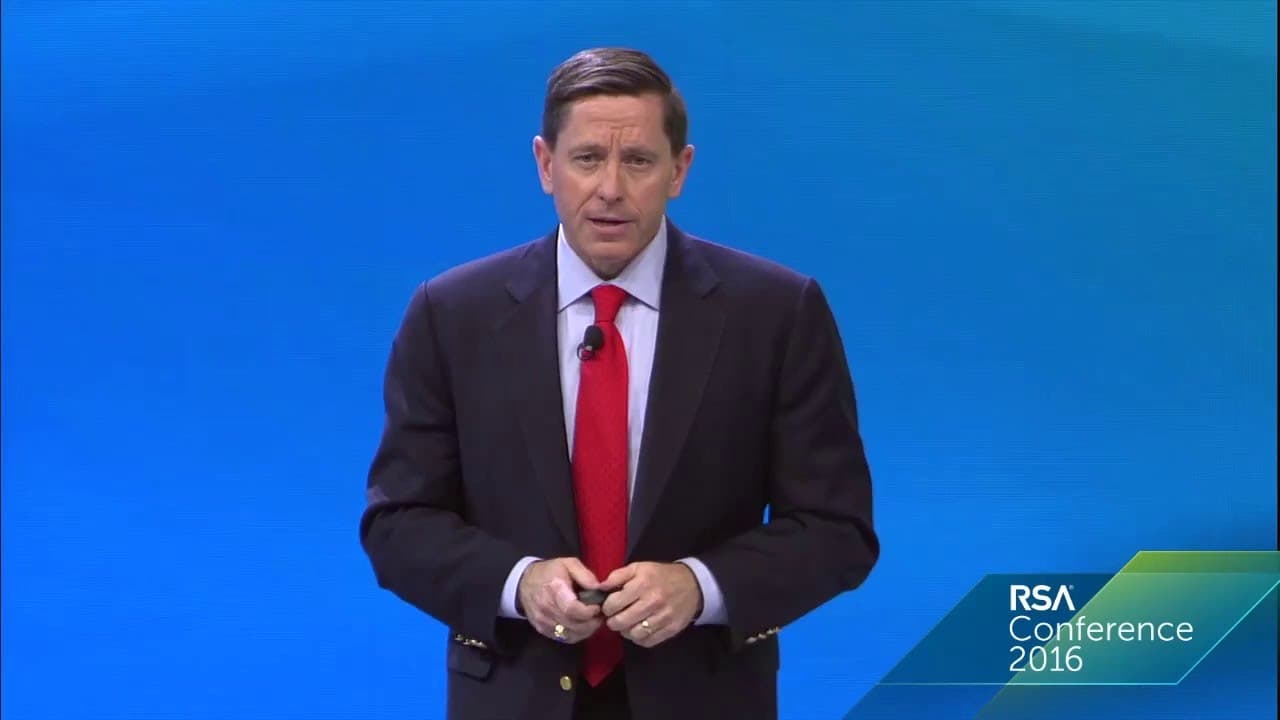
Please welcome Chairman, President, and CEO of Palo Alto Networks, Mark McLaughlin. Good afternoon, everybody. I'm Mark McLaughlin, President and CEO at Palo Alto Networks. Thank you very much for giving me a little bit of your time this afternoon. I'd like to talk about a topic that, uh, doesn't involve a lot of math, um, but is really about the d... Read More
Key Insights
- Digital infrastructure is becoming an invisible foundation for personal life, business activity, wealth, and future productivity. People increasingly take its availability and accuracy for granted, which means its social and economic value depends not only on functionality but also on continuing confidence in the systems underneath it.
- The central risk to the digital age is the gradual loss of trust caused by repeated breaches, not only a single catastrophic cyber event. When security failures increasingly touch individuals and organizations, people may begin questioning whether the infrastructure they depend upon is reliable enough to keep using.
- Digital money is fundamentally experienced as a representation provided by technology. If account balances suddenly appeared lower, the perception that funds had disappeared could trigger withdrawals and financial disruption even when the underlying assets remained intact, demonstrating that trust can determine real behavior and consequences.
- Declining confidence in digital infrastructure could reverse expected productivity gains and potentially contribute to an extraordinary decline or slowdown in economic growth. The danger develops when people and organizations retreat from efficient digital activity because they no longer believe its systems, information, or representations can be trusted.
- Cybersecurity is broader than a technical problem because it affects national defense, government policy, privacy, corporate governance, reputation, and public confidence. Its significance is reflected in presidential attention, military cyber roles, and standing corporate committees concerned with safety and security rather than only specific technology trends.
- New technology is simultaneously a source of productivity and security exposure. Software as a service, mobility, cloud computing, virtualization, and the Internet of Things offer useful capabilities, but each also creates another potential route for attackers to compromise systems, information, or connected assets.
- Cyber systems are increasingly connected to physical assets as information technology and operational technology converge. Compromising the digital controls behind those assets can therefore create physical and kinetic consequences, expanding cybersecurity concerns beyond stolen information into the operation and safety of real-world infrastructure.
- Security is becoming a fabric woven throughout technology and organizational decision-making. Important technology choices increasingly require an explicit answer to how systems and information will be protected, while the described direction of security favors prevention-oriented platforms over legacy point products focused primarily on detecting problems.
Install to Summarize YouTube Videos and Get Transcripts
Explore YouTube Video Summarizer or Get YouTube Transcript Extractor
Questions & Answers
Q: Why does digital productivity depend on cybersecurity?
Digital productivity depends on cybersecurity because personal activities, business operations, wealth, information, and physical assets increasingly rely on digital infrastructure. People expect that infrastructure to remain accurate, available, and largely invisible. If recurring breaches make users doubt those qualities, they may retreat from efficient digital services, preventing society from realizing the productivity gains it expects from continued technological development.
Q: How can repeated breaches weaken the digital age?
Repeated breaches can weaken the digital age by gradually reducing confidence in the systems people use for healthcare, government records, finances, business, and everyday personal activity. The damage does not require a single catastrophic attack. As security failures repeatedly affect individuals and organizations, users may stop trusting digital infrastructure, creating a slow but potentially severe reversal of adoption, productivity, and economic progress.
Q: Why can the perception of missing money cause real damage?
The perception of missing money can cause real damage because people encounter their wealth through digital representations such as displayed bank balances. If those balances suddenly appeared much lower, customers could leave their activities, visit cash machines, and attempt to obtain something physical. That reaction could create a run on a bank and harm financial services even if the underlying money had not actually disappeared.
Q: Why is cybersecurity more than a technical issue?
Cybersecurity is more than a technical issue because failures can affect public trust, privacy, corporate reputation, national defense, economic productivity, and physical safety. Technology provides many of the mechanisms for protection, but the consequences extend far beyond information technology departments. Government summits, military cyber roles, and corporate safety and security committees illustrate why leadership and governance must treat security as a broader organizational and societal concern.
Q: How do cloud computing and mobility increase cyber risk?
Cloud computing and mobility increase cyber risk by creating additional ways to store, reach, and use systems and information. These capabilities improve productivity and support useful personal, business, and entertainment activities, but attackers also gain more possible angles for compromise. The same tension applies to software as a service, virtualization, and the Internet of Things: valuable access and flexibility also expand security challenges.
Q: What happens when physical and cyber systems converge?
When physical and cyber systems converge, digital components increasingly control assets that can produce real-world effects. Security incidents are therefore no longer limited to stolen or compromised data. An attacker who compromises the cyber layer controlling a physical asset may create physical or kinetic consequences. This convergence of information technology and operational technology makes protection essential to both information integrity and physical operations.
Q: Why does data aggregation create a security challenge?
Data aggregation creates a security challenge because consolidated information is convenient for legitimate use but can also become a valuable and accessible target. At the same time, expanding availability provides more ways to reach that information. The Internet of Things is expected to add further access paths, so organizations must consider how concentrated data and broader connectivity jointly increase opportunities for attackers.
Q: What security approach is expected to replace legacy products?
The expected direction is a shift away from legacy point-product security technologies that focus primarily on detecting problems. The description anticipates the rise of next-generation, prevention-oriented security platforms instead. This approach aligns with the broader argument that security must be woven through technology and organizational decisions, because protecting digital trust requires more than reacting after individual compromises have already occurred.
Summary & Key Takeaways
-
Digital infrastructure supports an increasing share of personal and business activity, becoming so embedded that people expect it to remain available and largely invisible. Society anticipates major productivity gains from this dependence, but those gains are not guaranteed. Repeated security failures could undermine confidence and slow or reverse digital progress over time.
-
A catastrophic cyberattack is not the only serious danger. Trust can gradually disappear as breaches affect healthcare information, government databases, finances, and corporate reputations. A false digital representation of missing bank funds could provoke damaging behavior even if no money vanished, showing that perceived reliability matters as much as underlying technical reality.
-
Cloud services, mobility, virtualization, data aggregation, expanding access, and the Internet of Things create productivity while opening additional paths for compromise. Cyber systems increasingly control physical assets, and growing compute power strengthens the challenge. Security must consequently become part of organizational strategy, governance, technology selection, and infrastructure design rather than remain isolated.
-
Key Insights
-
Security
Read in Other Languages (beta)
Share This Summary 📚
Summarize YouTube Videos and Get Video Transcripts with 1-Click
Try YouTube Summary with ChatGPT & Claude or YouTube Transcript Generator
Explore More Summaries from RSAC Cybersecurity 📚





Summarize YouTube Videos and Get Video Transcripts with 1-Click
Try YouTube Summary with ChatGPT & Claude or YouTube Transcript Generator