What Is the Adaptive Immune System and How Does It Work?
TL;DR
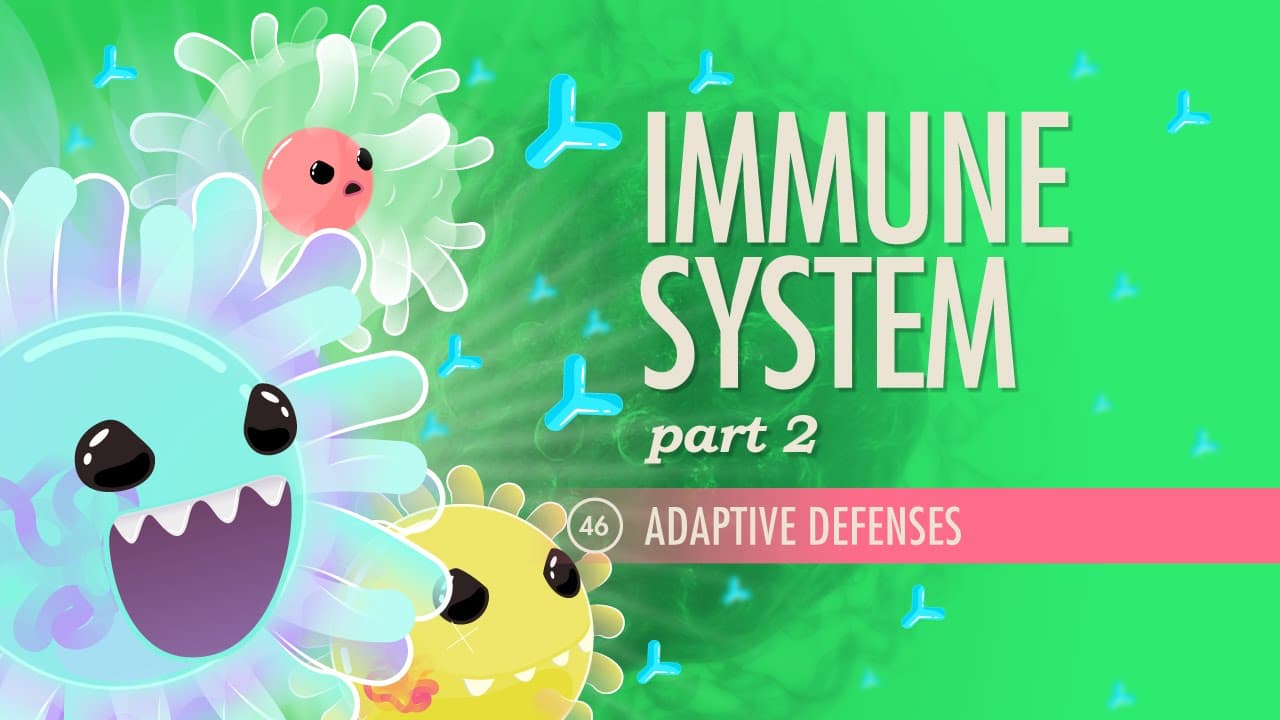
The adaptive immune system activates when it recognizes specific pathogens, utilizing B cells to produce antibodies that target and neutralize these invaders. Vaccinations enhance this system by introducing weakened pathogens, which primes the immune response for a faster future attack. This mechanism includes both active immunity from infections and vaccinations and passive immunity from maternal antibodies.
Transcript
What’s true in World of Warcraft is also true in your immune system: To defeat your enemy, you have to know your enemy. Uncover its weaknesses. Learn how to see it, before it sees you. We’ve already talked about how your innate defense system keeps out, or quietly neutralizes, pathogens without much too much fuss. But sooner or later, a threat’s go... Read More
Key Insights
- The adaptive immune system requires specific pathogen recognition before it can respond, unlike the innate system that attacks indiscriminately.
- Vaccination introduces weakened pathogens to the immune system, allowing it to recognize and remember them for faster future responses.
- B lymphocytes mature in bone marrow and develop unique antibodies to recognize specific antigens, forming a diverse defense mechanism.
- Once activated by an antigen, B cells clone themselves, creating effector cells to fight and memory cells to remember the antigen.
- Antibodies neutralize pathogens by blocking binding sites, preventing them from attaching to host cells, and aiding in their destruction.
- Active humoral immunity occurs when B cells encounter antigens naturally or via vaccination, producing a long-lasting immune response.
- Passive immunity provides temporary protection through antibodies from another source, like maternal antibodies or plasma donations.
- Antibodies can signal other immune cells to destroy pathogens, enhancing the overall immune response and maintaining health.
Install to Summarize YouTube Videos and Get Transcripts
Explore YouTube Video Summarizer or Get YouTube Transcript Extractor
Questions & Answers
Q: How does the adaptive immune system differ from the innate immune system?
The adaptive immune system differs from the innate immune system in that it requires specific recognition of pathogens before mounting a response. While the innate system attacks all foreign microbes indiscriminately, the adaptive system targets specific antigens, allowing for a more tailored and effective defense.
Q: Why are vaccinations considered a major medical advancement?
Vaccinations are considered a major medical advancement because they introduce weakened or dead pathogens to the immune system, allowing it to recognize and remember these threats. This primes the immune system to respond more quickly and effectively if the pathogen is encountered again, significantly reducing the severity of diseases.
Q: What role do B lymphocytes play in the immune response?
B lymphocytes, or B cells, play a critical role in the immune response by producing antibodies that recognize and bind to specific antigens. These cells mature in the bone marrow and, once activated by an antigen, clone themselves to produce effector cells that fight the infection and memory cells that ensure a quicker response in the future.
Q: How do antibodies neutralize pathogens?
Antibodies neutralize pathogens by binding to their surface proteins, blocking their ability to attach to host cells. This process, known as neutralization, prevents the pathogen from infecting cells and allows other immune cells to recognize and destroy the pathogen, thereby halting the spread of infection.
Q: What is the difference between active and passive humoral immunity?
Active humoral immunity involves the body producing its own antibodies in response to encountering antigens, either through natural infection or vaccination. Passive humoral immunity, on the other hand, involves receiving pre-made antibodies from another source, such as maternal antibodies during pregnancy or antibody-containing plasma from donors, providing temporary protection.
Q: Why are memory cells important in the immune system?
Memory cells are important in the immune system because they retain the genetic information needed to produce specific antibodies against pathogens that the body has previously encountered. This allows for a faster and more robust immune response upon subsequent exposures to the same pathogen, enhancing long-term immunity.
Q: How do antibodies assist other immune cells in pathogen destruction?
Antibodies assist other immune cells in pathogen destruction by marking pathogens for elimination. They bind to antigens, forming clumps that are easier for phagocytes to engulf and destroy. Additionally, antibodies can signal other immune cells to the site of infection, amplifying the immune response and ensuring efficient pathogen clearance.
Q: What challenges do evolving pathogens present to the immune system?
Evolving pathogens present challenges to the immune system by changing their surface antigens, which can render previous immune responses ineffective. This is particularly common with viruses like influenza, requiring the immune system to continually adapt and develop new antibodies to combat these ever-changing threats, highlighting the need for updated vaccines.
Summary & Key Takeaways
-
The adaptive immune system is a targeted defense mechanism that requires prior exposure to pathogens to effectively combat them. B cells play a crucial role by producing antibodies that recognize specific antigens, leading to a more efficient immune response.
-
Vaccinations are a pivotal medical advancement, introducing weakened pathogens to the immune system, which then creates memory cells. This ensures a faster and stronger response if the pathogen is encountered again.
-
The humoral immune response involves B cells that mature in the bone marrow, identifying antigens and producing antibodies. These antibodies neutralize pathogens and signal other immune cells to eliminate threats, contributing to both active and passive immunity.
Read in Other Languages (beta)
Share This Summary 📚
Summarize YouTube Videos and Get Video Transcripts with 1-Click
Try YouTube Summary with ChatGPT & Claude or YouTube Transcript Generator
Explore More Summaries from CrashCourse 📚


Summarize YouTube Videos and Get Video Transcripts with 1-Click
Try YouTube Summary with ChatGPT & Claude or YouTube Transcript Generator