Elon Musk on Trust, Advertisers, and X's Future
TL;DR
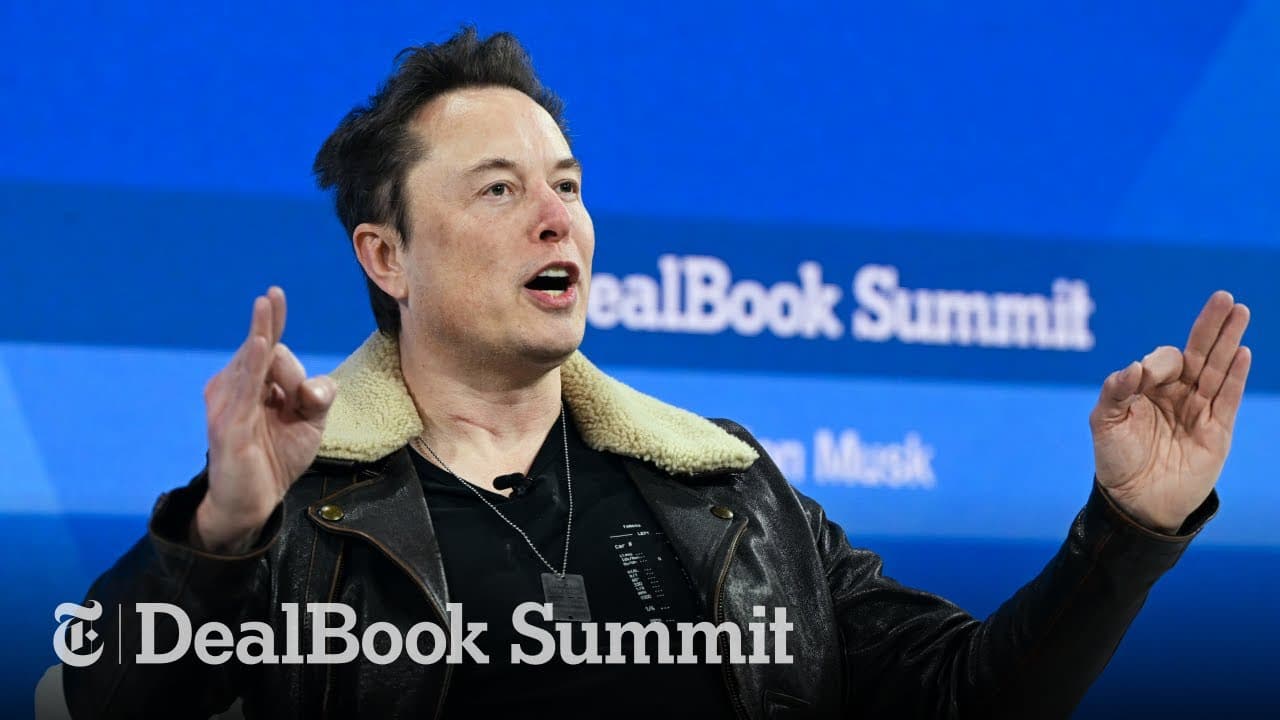
Elon Musk argues that trust in his companies should be based on their products and performance, not on whether people like him personally. He apologized for replying to a post that was interpreted as antisemitic, said he should have explained himself more fully, and rejected advertisers using their spending as leverage over X.
Transcript
please welcome Andrew Ross Orin and his guest CEO of Tesla CEO of SpaceX chief engineer and CTO of X Elon Musk good evening everybody thank you so much uh for being with us throughout the day uh and I couldn't be uh more pleased uh to sit with Elon Musk as our final interview uh of uh this remarkable uh time we've all had uh togethe... Read More
Key Insights
- Musk defines trust through measurable performance rather than personal approval. He argues that SpaceX's launch record and Tesla's cars should determine whether customers and governments rely on those companies, even when individuals dislike him or question his character.
- Musk says wanting to be liked can become a weakness. He presents himself as willing to tolerate hatred and public criticism, while refusing to engage in what he describes as pandering or a performance intended to prove that he is a good person.
- Musk acknowledges that his short reply created avoidable ambiguity. He says he should not have responded to that particular person and should have written a longer explanation, because the wording allowed critics and antisemitic readers to interpret his position in damaging ways.
- Musk states that he is not antisemitic and describes himself as philosemitic. He says he posted that clarification on his primary timeline after the controversy, although he believes news coverage largely ignored the later replies that explained what he intended.
- The Israel trip was planned before the disputed post, according to Musk. He rejects the characterization of the visit as an apology tour and treats its timing as independent of the controversy surrounding his statements and the subsequent withdrawal of advertisers.
- Musk says he received a hostage-related symbol from the parents of one of the hostages. He promised them that he would continue wearing it for as long as any hostage remained, making the gesture a personal commitment rather than a response to advertisers.
- Musk rejects advertising pressure when he perceives it as financial blackmail. He tells companies attempting to influence him through advertising money not to advertise, even after the interviewer raises the question of how losing advertisers could affect X's economic model.
- The interview frames X's dependence on advertising as a conflict between revenue and editorial independence. Musk does not provide a complete alternative business model in the supplied transcript, but makes clear that he does not want advertiser spending to dictate his conduct.
Install to Summarize YouTube Videos and Get Transcripts
Explore YouTube Video Summarizer or Get YouTube Transcript Extractor
Questions & Answers
Q: How does Elon Musk define trust in his companies?
Musk defines trust primarily through operational results and product performance. He argues that customers can dislike him personally while still relying on SpaceX because of its launch record or choosing Tesla because they believe it makes the best cars. In his view, measurable outcomes provide a stronger basis for trust than personal popularity, public approval, or a performance designed to demonstrate good character.
Q: Why did Elon Musk apologize for his controversial reply on X?
Musk says he regretted replying to that particular account and recognized that his short statement did not adequately explain his meaning. He describes the reply as handing a loaded gun to people who dislike him and, arguably, to antisemitic people. His apology concerns the ambiguity and consequences of the response, which he says were not his intention.
Q: What did Elon Musk say about accusations of antisemitism?
Musk explicitly states that he is not antisemitic and says that, if anything, he is philosemitic. He claims that he clarified his intended meaning in subsequent replies and later posted a direct statement on his primary timeline. He also argues that news coverage ignored those clarifications, while acknowledging that his original reply created the conditions for harmful interpretations.
Q: Was Elon Musk's trip to Israel an apology tour?
Musk says the trip to Israel was planned before the disputed post and was independent of the resulting controversy. He rejects the idea that the visit was an apology tour arranged because advertisers withdrew or because public criticism intensified. The supplied transcript establishes his explanation of the timing, but it does not provide separate evidence beyond his statement about the trip's prior planning.
Q: Why was Elon Musk wearing a hostage-related symbol?
Musk says the parents of one of the hostages gave him the symbol during his connection to the Israel visit. He promised that he would wear it for as long as a hostage remained. He presents the item as a sign of commitment to the hostages and their families, rather than as a public-relations response to the criticism surrounding his post on X.
Q: Why did advertisers leave X after Musk's post?
The description says companies pulled their advertising after Musk endorsed remarks that were characterized as antisemitic. During the interview, the controversy is connected to a short reply in which he wrote that another post contained the actual truth. Musk disputes the antisemitic interpretation, says he later clarified his meaning, and acknowledges that the original reply was insufficiently detailed and caused damaging reactions.
Q: What did Elon Musk tell companies withdrawing advertising from X?
Musk forcefully tells companies that, if they are trying to blackmail him with advertising money, they should not advertise. His response shows that he views coordinated financial pressure as an unacceptable attempt to control his behavior. When asked about the consequences for X's economics, he maintains his rejection of advertiser leverage, although the supplied transcript ends before a complete financial strategy is presented.
Q: How does Elon Musk separate popularity from business performance?
Musk argues that being liked is not necessary for producing dependable rockets or desirable cars. He says SpaceX's record and Tesla's products should speak for themselves, regardless of whether customers hate, like, or feel indifferent toward him. This separates judgments about his personality and public statements from judgments about whether his companies can deliver reliable technical and commercial results.
Summary & Key Takeaways
-
Musk distinguishes personal popularity from operational trust. He says people can dislike him while still judging SpaceX by its launch record and Tesla by its cars. He rejects the idea that he should perform or pander to prove his character, maintaining that the achievements of his companies should speak for themselves.
-
The interview focuses on Musk's response to a post that generated accusations of antisemitism. He says he clarified his meaning shortly afterward, regrets replying to that particular account, and believes his brief original response gave ammunition both to critics who dislike him and to people who hold antisemitic views.
-
Musk says his trip to Israel was arranged before the controversy and was not an apology tour. He describes wearing a symbol given to him by the parents of a hostage and promises to keep wearing it while any hostage remains. He also forcefully rejects advertisers using money to pressure him.
Read in Other Languages (beta)
Share This Summary 📚
Summarize YouTube Videos and Get Video Transcripts with 1-Click
Try YouTube Summary with ChatGPT & Claude or YouTube Transcript Generator
Explore More Summaries from New York Times Events 📚
Summarize YouTube Videos and Get Video Transcripts with 1-Click
Try YouTube Summary with ChatGPT & Claude or YouTube Transcript Generator