How has Scott Bessent evolved on tariffs and trade policy
TL;DR
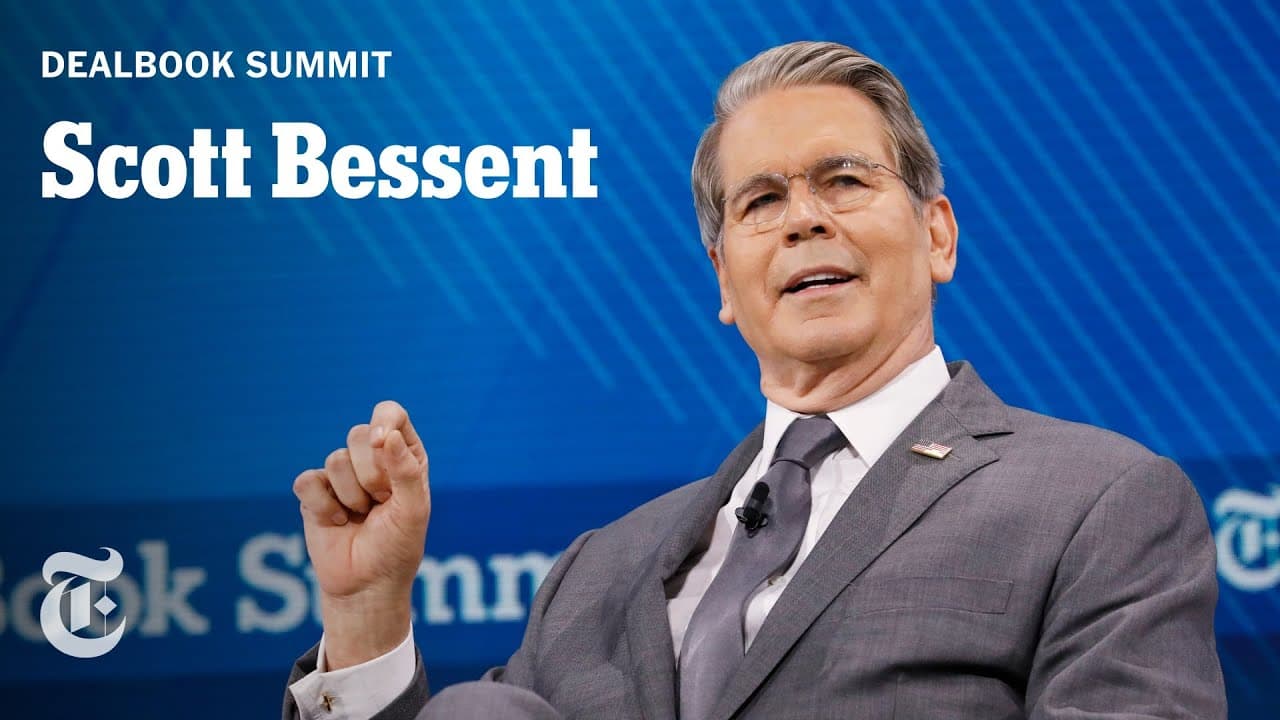
Scott Bessent explains that his thinking on tariffs has evolved from a skepticism of tariffs to embracing them as a tool for leverage in negotiations. He notes the president has a higher risk appetite and that tariffs can shift leverage in trade talks, while acknowledging inflationary concerns and their limits. The discussion covers policy, capital markets, and the future of domestic production.
Transcript
Heat. Heat. Please welcome Andrew Ross Sorcin and his guest, US Treasury Secretary Scott Bessant. [Applause] The 79th Treasury Secretary of the United States is here, Scott Besson. He is of course at the center of all of the major policy decisions of the moment and we're going to cover them all. We're going to talk about the economy, affordability,... Read More
Key Insights
- Tariffs can be used as leverage in negotiations, with the ability to set higher or lower targets shaping discussions with trading partners.
- Bessent acknowledges he has evolved on tariffs, moving from a more cautious stance to endorsing strategic tariff use under certain conditions.
- The president has a higher risk appetite than Bessent, which has influenced the negotiating posture and outcomes in tariff talks.
- Tariff policy is viewed as a tool to rebalance trade and potentially rebalance domestic production, not just a revenue source.
- Inflation concerns are part of tariff debates, but Bessent distinguishes temporary, one-time price moves from generalized, persistent inflation.
- The discussion contrasts incremental tariff approaches with maximalist positions and explains how the latter can create leverage in negotiations.
- Legal authorities like AIPA are cited as expanding negotiating space, affecting how tariffs can be deployed in emergencies or broader strategy.
- China's export subsidy model is discussed as a factor in tariff strategy, influencing how tariffs interact with global competition.
Install to Summarize YouTube Videos and Get Transcripts
Explore YouTube Video Summarizer or Get YouTube Transcript Extractor
Questions & Answers
Q: What is Scott Bessent's core view on tariffs after his evolution?
Scott Bessent explains that he has evolved from viewing tariffs skeptically as inflationary taxes to recognizing tariffs as a strategic lever in negotiations. He notes that a maximalist tariff stance can provide leverage in deals, while acknowledging tariffs are only part of the economy. This shift aims to rebalance trade and encourage domestic production.
Q: Why does Bessent say the president’s risk appetite matters in tariff policy?
Bessent says the president’s higher risk appetite shifts the negotiation dynamic, enabling stronger positions that can compel concessions from trading partners. He contrasts incremental tariff strategies with maximalist approaches, arguing that the latter can produce leverage and quicker outcomes in negotiations, even if it carries inflationary concerns.
Q: How does Bessent view the inflation impact of tariffs?
Bessent distinguishes between a one-time price adjustment caused by tariffs and generalized, persistent inflation. He suggests tariffs can raise prices in the short term but must be weighed against the long-term goal of rebalancing trade and expanding domestic production. He also notes the broader economic context affects inflation differently.
Q: What role does AIPA play in tariff strategy according to the interview?
AIPA is described as emergency authority that expands the president’s negotiating room. It allows for more flexible tariff actions in urgent situations, which can influence the outcomes of negotiations and the policy tools available to the administration when dealing with trade disputes.
Q: What is the discussion about China in relation to tariffs?
The discussion highlights China’s export subsidies and price-cutting behavior, indicating that tariffs interact with China’s economic model. Bessent mentions that these dynamics have influenced how tariffs are used to counter subsidized production and to shift leverage in negotiations with Chinese trade policies.
Q: What does Bessent say about the possibility of lower income taxes contingent on tariffs?
Bessent indicates that the potential for lowering income taxes could depend on a ruling and tariff revenue dynamics. He suggests ongoing legal outcomes could influence whether tariff-related revenue supports tax reductions, but he does not commit to a definite plan until rulings are known.
Q: How does Bessent describe the public and political reception of tariffs among Democrats?
Bessent argues that tariffs are often portrayed negatively by Democratic lawmakers who he says have limited ability to express support due to political dynamics. He suggests that many Democrats could favor tariffs in principle but refrain from vocal support to avoid political backlash, reflecting broader partisan dynamics in tariff debates.
Q: What is the expected impact of tariffs on labor and domestic production according to the discussion?
The conversation frames tariffs as a tool intended to support labor and boost domestic production by reshaping trade incentives. While acknowledging inflation risks, the discussion suggests tariffs could help rebalance trade and encourage onshore production, contributing to a stronger industrial base over time.
Summary & Key Takeaways
-
Scott Bessent discusses his evolving view on tariffs and acknowledges the president’s higher risk appetite in negotiations. The dialogue explains how tariffs can be used to gain leverage with trading partners and how tariff strategies interact with inflation dynamics. It emphasizes a shift toward rebalancing trade and boosting domestic production.
-
The interview examines tariff policy as a tool rather than a fixed stance, highlighting a contrast between gradual tariff approaches and maximalist positions. It also touches on legal authorities like AIPA and their role in shaping negotiations and potential outcomes, including Supreme Court implications.
-
The segment connects tariff strategy to broader economic objectives, including currency considerations, labor effects, and the role of China in global trade. It situates tariffs within a dynamic policy landscape where incentives, negotiations, and market responses all influence reform efforts.
Read in Other Languages (beta)
Share This Summary 📚
Summarize YouTube Videos and Get Video Transcripts with 1-Click
Try YouTube Summary with ChatGPT & Claude or YouTube Transcript Generator
Explore More Summaries from New York Times Events 📚

Summarize YouTube Videos and Get Video Transcripts with 1-Click
Try YouTube Summary with ChatGPT & Claude or YouTube Transcript Generator