What Did Bart Houlahan Explain in the VIP Speaker Series About B Lab, B Corps, and Business as a Force for Good?
TL;DR
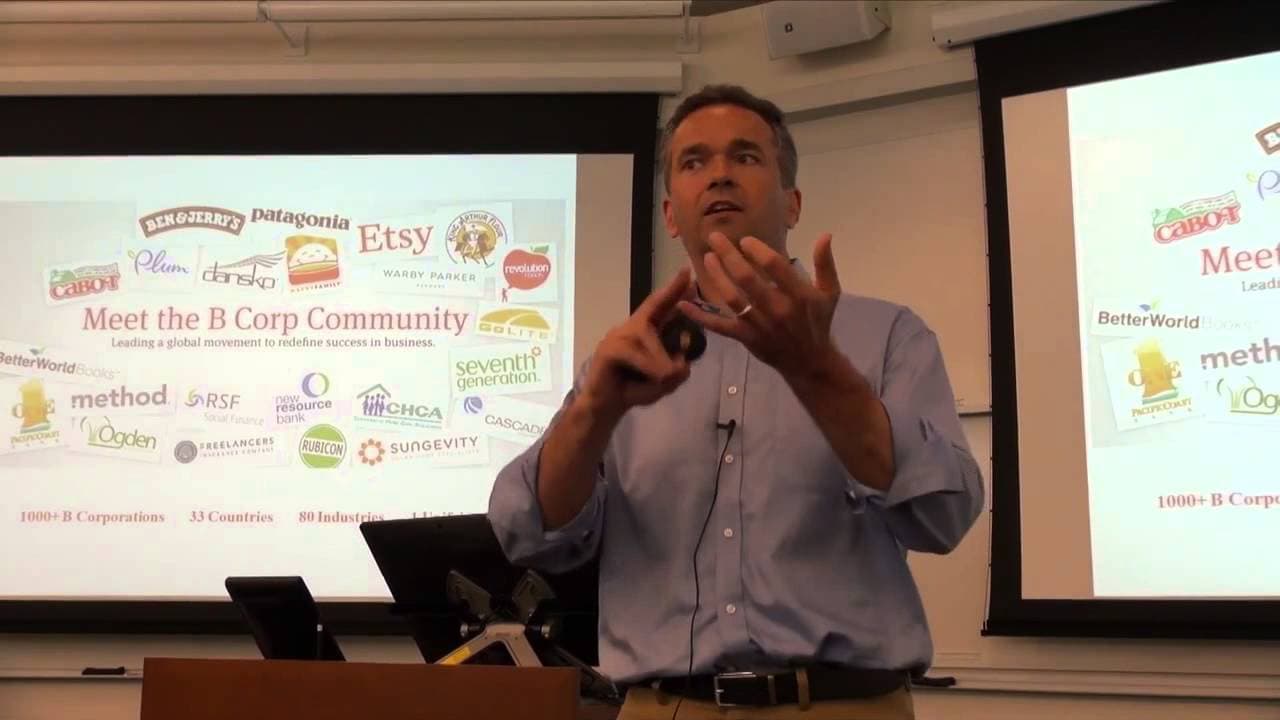
Bart Houlahan explains that B Lab supports entrepreneurs who use business as a force for good through B Corp certification, B Analytics, and benefit corporations. His path began in investment banking before he became president of AND1, where the team built an employee-centered and socially responsible company. Read on to see how those experiences shaped his approach to changing capitalism.
Transcript
bart along with his partners jayco and gilbert and andrew cassoy co-founded b lab in 2006 b labs non-profit organization dedicated to serving entrepreneurs using business as a force for good b-lab drives systemic change through three interrelated initiatives first certified b corporations incorporate certification for sustainable businesses and soc... Read More
Key Insights
- Three initiatives reinforce one another: B Lab’s model combines company certification, performance analytics, and legal reform rather than treating them as isolated programs. Certification identifies businesses meeting higher standards, B Analytics evaluates companies and funds, and benefit corporation legislation changes the permitted purpose of a company. Together, these initiatives connect operating behavior, investment decisions, and corporate governance.
- Certification includes legal accountability: A Certified B Corporation is presented as more than a company with positive intentions. It must meet higher standards for social and environmental performance while accepting legal accountability. The existing page materials further explain that companies use the B Impact Assessment and revise governing documents so decision-makers consider stakeholders beyond shareholders.
- Analytics can influence capital: B Analytics is described as a customizable data platform that assesses the social and environmental performance of both companies and funds. Its purpose is to drive capital toward impact investments. This makes measurement relevant not only to internal improvement but also to how investors compare opportunities and decide where funding should go.
- Benefit corporations change permissions: The benefit corporation is a legally recognized corporate form that changes corporate fiduciary duty. According to the introduction, it permits a company to create social value alongside shareholder value. This legal initiative supports leaders who want social and environmental considerations embedded in the company’s governing structure rather than left solely to voluntary practice.
- The original plan was conventional: After eight years across Wall Street and Boston investment banking, Houlahan had mapped out a specific route. He expected to complete two years at Harvard Business School, spend three or four years at a venture capital firm with an operating bent, and then enter one of its portfolio companies as a senior executive with real equity.
- Trust shaped the career decision: Houlahan’s desired portfolio company needed to operate in an industry he cared about and offer colleagues he admired and could trust over time. AND1 unexpectedly met those conditions through his former Stanford roommate. The personal relationship and direct operating opportunity allowed him to bypass both business school and the venture capital stage of his plan.
- AND1 began on a small scale: When Houlahan encountered the opportunity, AND1 was approximately six months old and generating about half a million dollars through trash-talking T-shirts. The founder needed someone to help operate the business as president. Houlahan interpreted that immediate need as the accelerated arrival of the opportunity he had expected to pursue over several years.
- A deposit became a turning point: Houlahan did not merely defer Harvard Business School while evaluating AND1. By the end of the wedding weekend, he and his future colleague had called Harvard and told the school to keep the deposit. That concrete choice marked his transition from a carefully sequenced finance career into direct responsibility for an emerging athletic brand.
- AND1 challenged major competitors: Houlahan compares AND1 at its peak to taking the basketball operation of Adidas or Reebok and making it an independent company. The business competed for the number-two position in basketball. Nike still dominated the category throughout his 13 years at AND1, showing both the company’s growth and the scale of its competitive environment.
- Responsibility preceded customer pressure: AND1 did not adopt socially and environmentally responsible practices because its buyers demanded them. Houlahan explicitly says the consumers did not care, describing the market as 18-year-old basketball players buying 85-dollar shoes. The practices reflected what the founders believed a company should be and the kind of organization they personally wanted to build.
- Workplace design expressed values: AND1 offered a full basketball court, lunchtime games, morning yoga, extensive benefit plans, a mother’s room, short-term and long-term disability support, and on-site child care. Dogs and children were present in the office. These details illustrate how the company translated its family-centered philosophy into daily working conditions rather than limiting it to a mission statement.
- Autonomy replaced clock punching: Employees at AND1 did not work fixed hours or punch a clock. Each person received responsibilities and was expected to complete them, with attendance organized around the work rather than rigid timekeeping. Sick employees stayed home. Houlahan presents this trust-based structure as part of treating employees like family and creating a workplace people genuinely wanted to join.
Install to Summarize YouTube Videos and Get Transcripts
Explore YouTube Video Summarizer or Get YouTube Transcript Extractor
Questions & Answers
Q: What does B Lab do to support entrepreneurs using business for social and environmental change?
B Lab supports these entrepreneurs through three connected initiatives: Certified B Corporations, B Analytics, and benefit corporations. Its certification recognizes businesses that meet higher standards for social and environmental performance and legal accountability. B Analytics assesses companies and funds so capital can be directed toward impact investments. Benefit corporation advocacy provides a legally recognized structure that permits companies to pursue social value together with shareholder value.
Q: Who is Bart Houlahan, and why did he co-found B Lab?
Bart Houlahan is a co-founder of B Lab, which he and his partners established in 2006. Before B Lab, he worked in investment banking and then served as president of AND1 during a 13-year career with the basketball footwear and apparel company. AND1 operated as a socially and environmentally responsible business even though its consumers were not asking for those practices. That experience helps explain why his later nonprofit work focused on businesses using capitalism as a force for change.
Q: How did Bart Houlahan move from investment banking to AND1?
After graduating from Stanford in 1989, Houlahan spent two years on Wall Street and another six years in investment banking in Boston. He planned to attend Harvard Business School, join a venture capital firm, and later move into a portfolio company. About a month before school began, he met his former college roommate, who needed a president for the newly established AND1. Houlahan recognized that the role already offered the industry, responsibility, equity, and trusted relationship he had been seeking, so he abandoned the longer plan and joined.
Q: What was AND1 when Houlahan joined the company?
AND1 was about six months old and was generating approximately half a million dollars from trash-talking T-shirts. Its founder was having difficulty finding a president who could help operate the company. Houlahan proposed himself for the role during a Stanford wedding weekend and told Harvard to keep his deposit. The small T-shirt venture later became a basketball footwear and apparel company competing for the number-two position in basketball behind Nike.
Q: How did AND1 treat its employees?
AND1 treated employees as members of a family and designed its workplace around trust, flexibility, and shared enthusiasm. Employees had no fixed hours and did not punch a clock, but they were assigned responsibilities and expected to complete them. The office included a full basketball court, lunchtime games, morning yoga, dogs, children, and a child care center. The company also provided strong benefit plans, a mother’s room, and short-term and long-term disability support because its leaders wanted a workplace people would value.
Q: Why was AND1 socially and environmentally responsible?
Houlahan says AND1 adopted responsible practices because that was the kind of company its founders wanted to operate. Consumer pressure was not the reason, since he says their customers did not care about those issues. The business was selling 85-dollar shoes to 18-year-old basketball players, yet its leaders still wanted an organization they could be proud of. They believed strong treatment of employees and the broader production community would create a company whose people shared a genuine passion for being there.
Q: How did AND1 extend its values beyond its main office?
AND1 applied its family-centered approach not only to office employees but also to the people producing its goods overseas. Houlahan says approximately 10,000 people made the company’s shoes and apparel in factories in China and Taiwan. The company regarded those workers as part of its community. This extension matters because it connected the firm’s internal workplace values with responsibility for the people involved in its manufacturing system.
Q: How do B Corp certification and benefit corporations differ?
Certified B Corporations are businesses recognized for meeting higher standards of social and environmental performance and legal accountability. The existing page materials say the certification process uses the B Impact Assessment across governance, workers, community, and environment. Benefit corporations, by contrast, are a legally recognized corporate form that changes corporate fiduciary duty. The two approaches complement each other because certification evaluates company performance, while the legal form permits leaders to create social value as well as shareholder value.
Summary & Key Takeaways
-
Introducing B Lab’s mission: Bart Houlahan co-founded B Lab with his partners in 2006 as a nonprofit serving entrepreneurs who use business as a force for good. B Lab pursues systemic change through three connected initiatives. Certified B Corporations meet higher standards for social and environmental performance and legal accountability. B Analytics assesses companies and funds to help direct capital toward impact investments. Benefit corporations provide a legally recognized form that permits companies to create both shareholder value and social value.
-
Tracing an unexpected career path: Houlahan explains that becoming the leader of a nonprofit focused on capitalism for change was not an obvious destination. After graduating from Stanford in 1989, he entered investment banking, spending two years on Wall Street and another six years in Boston. He enjoyed the work but did not care for the people on Wall Street. His original plan involved Harvard Business School, a venture capital firm with an operating bent, and eventually a leadership role at a portfolio company.
-
Finding the AND1 opportunity: About a month before starting at Harvard Business School, Houlahan met his college roommate at a Stanford wedding. The roommate had started AND1 roughly six months earlier and was struggling to find a president for the half-million-dollar T-shirt company. Houlahan saw that the opportunity already contained what his longer plan was designed to provide: an appealing industry, a senior operating role, meaningful equity, and the chance to work with someone he admired and trusted.
-
Building a basketball business: Houlahan called his former roommate and asked why he had not been invited to become AND1’s president. By the end of the weekend, they had told Harvard to keep the deposit, and Houlahan joined the company. AND1 developed from its early trash-talking T-shirts into a basketball footwear and apparel business. At its peak, it competed for the number-two position in basketball, although Nike remained far ahead throughout Houlahan’s 13-year AND1 career.
-
Practicing responsibility at AND1: Houlahan says the move from athletic footwear to B Lab was less dramatic than it appears because AND1 was already socially and environmentally responsible. That commitment did not originate in consumer demand. The company sold 85-dollar shoes to 18-year-old basketball players, but its leaders wanted to build a workplace they could be proud of. They extended a family-centered philosophy from employees to approximately 10,000 people making AND1 shoes and apparel in factories in China and Taiwan.
Read in Other Languages (beta)
Share This Summary 📚
Summarize YouTube Videos and Get Video Transcripts with 1-Click
Try YouTube Summary with ChatGPT & Claude or YouTube Transcript Generator
Explore More Summaries from Stanford 📚




Summarize YouTube Videos and Get Video Transcripts with 1-Click
Try YouTube Summary with ChatGPT & Claude or YouTube Transcript Generator