How Did Martin Luther Spark the Protestant Reformation?
TL;DR
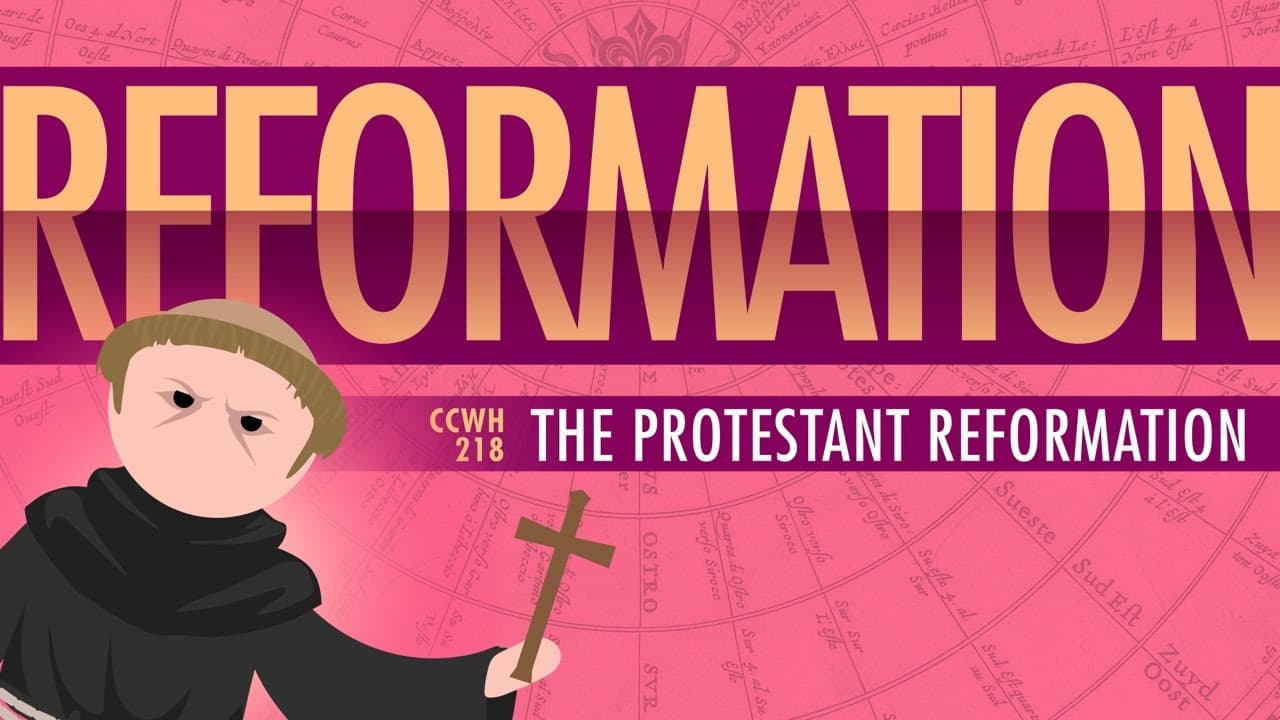
Martin Luther's challenge to the Catholic Church's practices, especially the sale of indulgences, sparked the Protestant Reformation. This movement led to the creation of numerous Christian denominations, increased literacy, and had significant political and economic impacts, including the redistribution of church wealth and the rise of religious tolerance over time.
Transcript
Hi, I’m John Green, this is Crash Course World History and today we’re going to talk about the Protestant Reformation. Mr Green, Mr. Green, this is irrelevant for me; I’m an atheist. Yeah I know Me From the Past, because I’m you. Although actually you are now Episcopalian, a Protestant church started because a King wanted to get a divorce. But anyw... Read More
Key Insights
- The Protestant Reformation was initiated by Martin Luther, who challenged the Catholic Church's practices.
- Luther's 95 Theses criticized the sale of indulgences, sparking widespread religious debate.
- Luther's ideas spread rapidly due to the printing press, reaching a wide audience across Europe.
- The Reformation led to the creation of multiple Christian denominations, including Lutherans, Calvinists, and Anabaptists.
- Luther translated the Bible into German, making it accessible to the general populace for the first time.
- The Reformation had significant political implications, allowing rulers to seize church assets.
- Religious conflicts during this period eventually led to greater religious tolerance in Europe.
- The Reformation is linked to the rise of capitalism, as suggested by sociologist Max Weber.
Install to Summarize YouTube Videos and Get Transcripts
Explore YouTube Video Summarizer or Get YouTube Transcript Extractor
Questions & Answers
Q: How did Martin Luther's actions lead to the Protestant Reformation?
Martin Luther's actions, particularly his 95 Theses, challenged the Catholic Church's practice of selling indulgences. His writings criticized the church's authority and suggested that salvation came through faith alone. These ideas spread rapidly through the printing press, leading to widespread debate and the formation of new Christian denominations, marking the start of the Protestant Reformation.
Q: What was the significance of Luther's translation of the Bible?
Luther's translation of the Bible into German was significant because it made the scriptures accessible to ordinary people for the first time, allowing them to read and interpret religious texts independently. This democratization of religious knowledge contributed to increased literacy, religious debate, and the spread of Protestant ideas, fundamentally altering the religious landscape of Europe.
Q: Why did some rulers support the Protestant Reformation?
Some rulers supported the Protestant Reformation because it allowed them to seize church assets, including land and wealth, which increased their power and resources. The movement provided an opportunity to break from the Pope's authority and establish state-controlled churches, aligning religious and political power in their favor, as exemplified by figures like Grand Master Albert of Prussia.
Q: What were the political implications of the Protestant Reformation?
The Protestant Reformation had significant political implications, as it challenged the Catholic Church's authority and allowed rulers to confiscate church property, increasing their wealth and power. It also led to religious conflicts and wars, ultimately contributing to the development of religious tolerance as people realized the necessity of coexisting with differing beliefs.
Q: How did the printing press influence the spread of Reformation ideas?
The printing press played a crucial role in the spread of Reformation ideas by enabling the mass production and distribution of Martin Luther's writings and translations. This technology allowed his criticisms of the Catholic Church to reach a wide audience quickly, facilitating debate and the dissemination of Protestant beliefs across Europe, which was instrumental in the movement's success.
Q: What was the role of indulgences in sparking the Reformation?
Indulgences were a major catalyst for the Reformation as they were seen as a corrupt practice by the Catholic Church, where people could pay for the reduction of punishment for sins. Martin Luther's opposition to this practice, articulated in his 95 Theses, criticized the church's exploitation of believers and sparked widespread debate and calls for reform, leading to the Protestant Reformation.
Q: In what ways did the Reformation impact European society?
The Reformation impacted European society by increasing literacy and education as people sought to read religious texts independently. It led to the formation of various Protestant denominations, altering the religious landscape. Politically, it allowed rulers to consolidate power by seizing church assets, and socially, it eventually contributed to the development of religious tolerance and modern capitalist practices.
Q: How did the Protestant Reformation influence modern political ideas?
The Protestant Reformation influenced modern political ideas by introducing the concepts of protest and reform as central tenets. It demonstrated the power of challenging established authority and advocating for change, inspiring future movements for civil rights and social justice. The emphasis on individual interpretation and questioning of authority laid the groundwork for democratic principles and the value of personal conscience.
Summary & Key Takeaways
-
Martin Luther's protest against the Catholic Church's sale of indulgences marked the beginning of the Protestant Reformation, a movement that reshaped religious and political landscapes across Europe. His 95 Theses and subsequent writings challenged church authority, leading to the formation of new Christian denominations and increased access to religious texts.
-
Luther's translation of the Bible into German allowed ordinary people to read and interpret scripture, fostering a culture of religious debate and literacy. The Reformation also had political ramifications, as rulers took advantage of the movement to seize church land and wealth, altering the balance of power in Europe.
-
Despite initial resistance, the Reformation eventually contributed to religious tolerance and the development of modern capitalism. The movement's emphasis on protest and reform has had a lasting impact on political and social movements worldwide, demonstrating the enduring influence of Luther's challenge to ecclesiastical authority.
Read in Other Languages (beta)
Share This Summary 📚
Summarize YouTube Videos and Get Video Transcripts with 1-Click
Try YouTube Summary with ChatGPT & Claude or YouTube Transcript Generator
Explore More Summaries from CrashCourse 📚




Summarize YouTube Videos and Get Video Transcripts with 1-Click
Try YouTube Summary with ChatGPT & Claude or YouTube Transcript Generator