What Is Inside Jupiter? Exploring Its Internal Structure
TL;DR
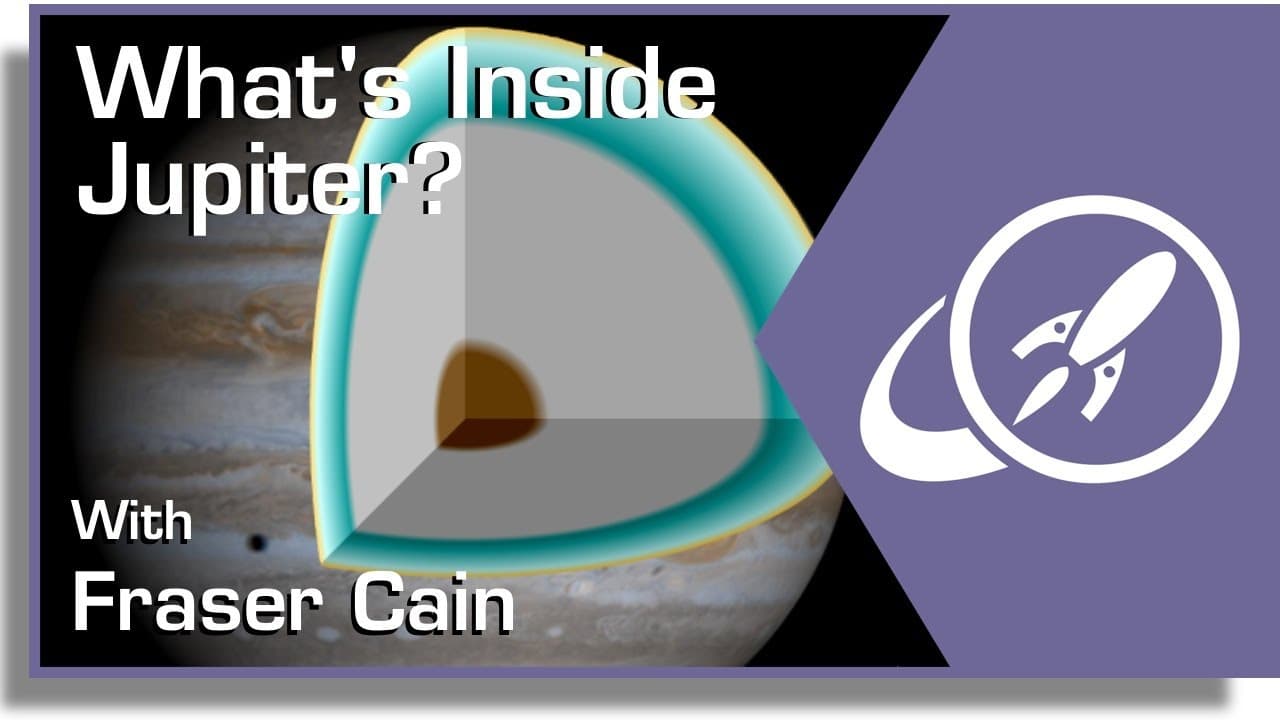
Jupiter's interior consists primarily of hydrogen and helium, with a dense core that may contain rocky material. Surrounding the core is a thick layer of metallic hydrogen that generates a powerful magnetic field, while its atmosphere features rotating bands of ammonia clouds. Extreme pressure and temperature make exploration of Jupiter's depths extremely challenging.
Transcript
what's inside Jupiter is it chameleons candy cake cheddar no one knows no one can ever know well that's not entirely true or even remotely true that we totally know Jupiter is the largest planet in the solar system and two and a half times the mass of the other planets combined it's a gas giant like Saturn Uranus and Neptune it's almost 90% hydroge... Read More
Key Insights
- 🪐 Jupiter is the largest planet in our solar system and has more than twice the mass of all other planets combined.
- ❓ Its composition is primarily hydrogen and helium, with various trace elements.
- 💯 The planet's core is either rocky or highly compressed hydrogen and helium.
- 💯 Metallic hydrogen, found above the core, produces Jupiter's magnetic field.
- 😶🌫️ Jupiter's atmosphere consists of rotating bands of ammonia clouds.
- ❓ Exploring Jupiter's interior is challenging due to its extreme temperatures and pressures.
- ❓ NASA's Galileo spacecraft only managed to descend 2% of Jupiter's radius before being destroyed.
Install to Summarize YouTube Videos and Get Transcripts
Explore YouTube Video Summarizer or Get YouTube Transcript Extractor
Questions & Answers
Q: What is the composition of Jupiter?
Jupiter is composed mainly of hydrogen and helium, with traces of methane, ammonia, water, and other substances that behave differently under the planet's immense pressure and temperature.
Q: What lies at the center of Jupiter?
At the center of Jupiter is its dense core, which is still a subject of debate among astronomers. It could be a rocky region or hydrogen and helium under extreme forces.
Q: What is metallic hydrogen, and where is it found in Jupiter?
Metallic hydrogen is a unique form of hydrogen that exists under high pressure and temperature. It is found in a layer surrounding Jupiter's core and acts as an electric Dynamo, generating the planet's magnetic field.
Q: What are the darker regions in Jupiter's atmosphere?
Astronomers are still uncertain about the composition of the darker regions in Jupiter's atmosphere. Further exploration and research are needed to determine their nature.
Summary & Key Takeaways
-
Jupiter, the largest planet in our solar system, is a gas giant composed mostly of hydrogen and helium.
-
Deep inside Jupiter lies a dense core, consisting of either rocky material or highly compressed hydrogen and helium.
-
Surrounding the core is a layer of metallic hydrogen, which acts as an electric Dynamo, generating a powerful magnetic field. Above this is the planet's atmosphere, visible as rotating bands of ammonia clouds.
Read in Other Languages (beta)
Share This Summary 📚
Summarize YouTube Videos and Get Video Transcripts with 1-Click
Try YouTube Summary with ChatGPT & Claude or YouTube Transcript Generator
Explore More Summaries from Fraser Cain 📚




Summarize YouTube Videos and Get Video Transcripts with 1-Click
Try YouTube Summary with ChatGPT & Claude or YouTube Transcript Generator