How to Automate Security in Cloud Infrastructure
TL;DR
Cloud security automation should use provider APIs, real-time state, and infrastructure events to enforce controls at cloud speed. Begin with continuous guardrails that detect and remediate unsafe configurations while supporting approved exceptions, then automate urgent workflows such as incident response and build orchestrations that coordinate several products or controls.
Transcript
So we're gonna talk about automation, and we're gonna go pretty deep. I'm gonna do a lot of demos, I'm gonna do code samples, I'm gonna build automations in front of you, and all of this is for cloud, and all of this is obviously security-focused today. Now, how do we-- why is automation such a big deal in cloud? And so I'm gonna spend a, a few min... Read More
Key Insights
- Cloud computing is built on abstraction and automation, with virtualization, software-defined networking, and storage virtualization forming the abstraction layer. Automation then provides capabilities such as elasticity and scaling, making automated security a natural extension of the platform rather than a separate operating model.
- Cloud security automation is enabled by rapid elasticity and broad network access. Elastic operations already depend on platform automation, while remote cloud management provides APIs that security teams can use to inspect resources, change configurations, and apply controls throughout customer-managed infrastructure.
- The cloud management plane is a critical security focus because access to it can provide control across an entire environment. Its broad authority creates a larger attack surface in this area, so protecting management access and automating oversight are central concerns for cloud security programs.
- Cloud infrastructure changes too quickly for many controls that depend on stable IP addresses or slowly updated inventories. Instances in scaling groups can appear and disappear throughout a day, requiring security decisions that follow current cloud state rather than assumptions based on static infrastructure.
- Account separation is both an operational pattern and a security control because different projects, application stacks, and deployment environments can be isolated from one another. This separation helps control the blast radius, but consistent security across many accounts depends on centralized automation techniques.
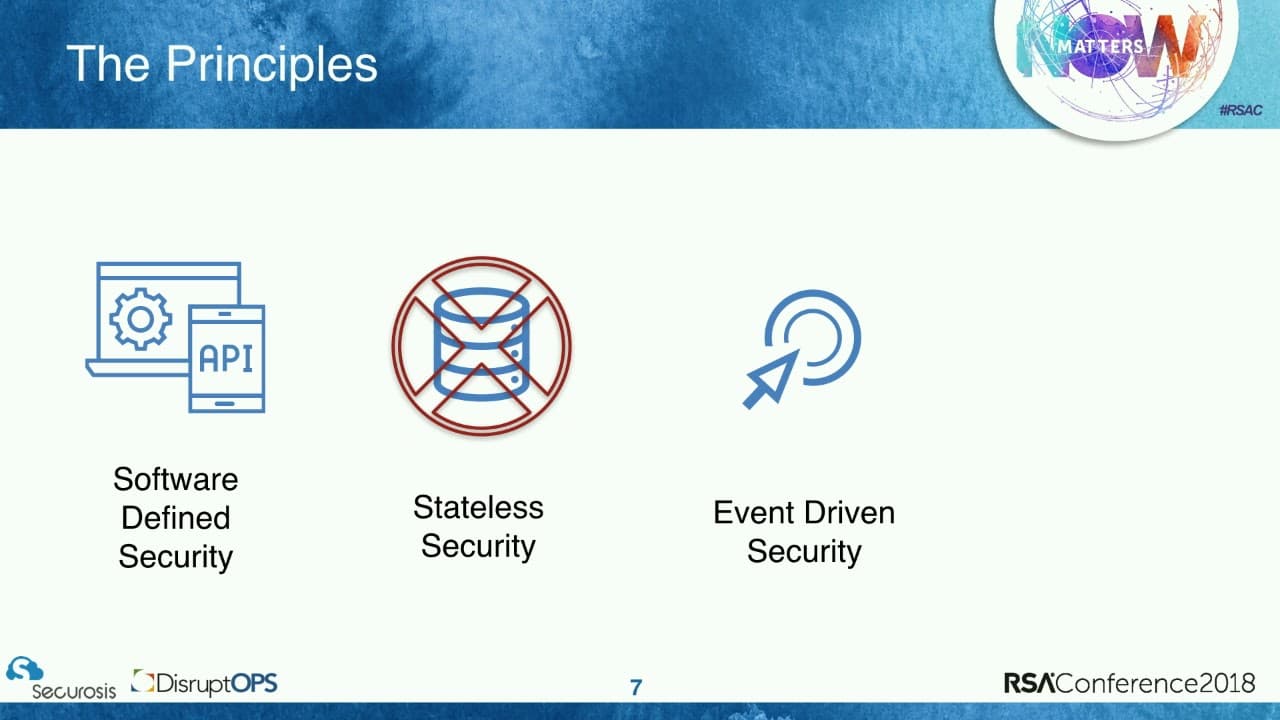
- Guardrails are continuously running automations that detect deviations and return teams to approved configurations. A guardrail for public storage must include detection, remediation, and an exception mechanism so resources intended to be public are not incorrectly changed.
- Workflows are automated, multi-step processes designed for activities that are not continuously performed but must be completed quickly. Incident response fits this model because its sequence of actions can be prepared in advance and executed rapidly when a security event occurs.
- Event-driven security works by detecting infrastructure events and using them to trigger actions. Cloud providers expose events generated by activities such as user logins, allowing security logic to respond directly to current activity instead of waiting for a later scanning and database analysis cycle.
Install to Summarize YouTube Videos and Get Transcripts
Explore YouTube Video Summarizer or Get YouTube Transcript Extractor
Questions & Answers
Q: Why is automation essential for cloud security?
Automation is essential because cloud platforms themselves operate through abstraction, automated scaling, remote management, and APIs. Security teams must work at the same speed as changing infrastructure and organizational deployments. Cloud-native automation lets them inspect current conditions, enforce controls, and respond to events without relying on manual processes that cannot keep pace with resources appearing, changing, and disappearing.
Q: What is software-defined security in the cloud?
Software-defined security means making and enforcing security decisions through code and APIs. Instead of depending primarily on a physical appliance or a separate box, security automation communicates with cloud environments and relevant tools programmatically. This approach uses the management capabilities already built into cloud platforms to apply controls across infrastructure in a repeatable and scalable manner.
Q: What is stateless security as described in the talk?
Stateless security is the practice of making decisions from real-time assessments of the cloud environment instead of relying on previously stored scan results. The cloud controller can report the current state through an API call, so automation can evaluate what exists now. The term emphasizes reducing dependence on databases that may describe an earlier version of a rapidly changing environment.
Q: How do cloud security guardrails work?
Cloud security guardrails run continuously to identify configurations that leave an approved path and bring them back into compliance. A complete guardrail combines detection with remediation and includes a method for handling valid exceptions. For example, a storage exposure control must distinguish accidental public access from resources that have been deliberately approved for public availability.
Q: How are automated workflows different from guardrails?
Guardrails operate continuously and correct deviations as teams build and change cloud resources. Workflows automate a defined sequence of steps for an activity that happens only when needed. Incident response is a workflow because it requires several coordinated actions performed quickly after an event, while a configuration guardrail continually watches for and corrects an unsafe state.
Q: What is security orchestration in a cloud environment?
Security orchestration combines different products or control mechanisms so they can perform a coordinated response. The talk illustrates this with automation that detects an internet-facing web service and inserts a web application firewall. The key distinction is that orchestration crosses product or control boundaries, turning a detected infrastructure condition into a broader set of connected security actions.
Q: Why do distributed cloud accounts require security automation?
Cloud-native operations can separate projects, application stacks, and deployment environments into distinct provider accounts. This isolation offers operational benefits and helps limit the blast radius when something goes wrong. However, security teams still need to apply and manage controls across every account. Automation provides a practical way to maintain consistent oversight without removing the isolation between environments.
Q: How does event-driven cloud security improve response?
Event-driven security uses events produced by cloud infrastructure to trigger security actions. Activities such as a user login can become immediate inputs to automated logic. This allows controls to react to what is happening in the environment rather than waiting for a scheduled scan, storing the result, and analyzing it later, which may reflect outdated cloud state.
Summary & Key Takeaways
-
Cloud computing is founded on abstraction and automation. Virtualization, software-defined networking, and storage virtualization provide abstraction, while automated operations enable elasticity and scaling. Because customer-managed infrastructure is exposed through extensive provider APIs, security teams can use the same cloud-native mechanisms already used by development and operations teams to implement security controls.
-
Cloud environments expand the importance of the management plane, change too quickly for tools that depend on stable infrastructure details, and commonly distribute workloads across isolated accounts. Automation helps security teams manage controls consistently across these environments while preserving the operational isolation that limits the impact of problems between projects, applications, and deployment stages.
-
Cloud security automation can be organized into guardrails, workflows, and orchestrations. Guardrails continuously detect and correct unsafe conditions while permitting approved exceptions. Workflows automate time-sensitive, multi-step procedures such as incident response. Orchestrations connect several products or controls, allowing one observed condition to trigger a coordinated security response across the cloud environment.
Read in Other Languages (beta)
Share This Summary 📚
Summarize YouTube Videos and Get Video Transcripts with 1-Click
Try YouTube Summary with ChatGPT & Claude or YouTube Transcript Generator
Explore More Summaries from RSAC Cybersecurity 📚


Summarize YouTube Videos and Get Video Transcripts with 1-Click
Try YouTube Summary with ChatGPT & Claude or YouTube Transcript Generator