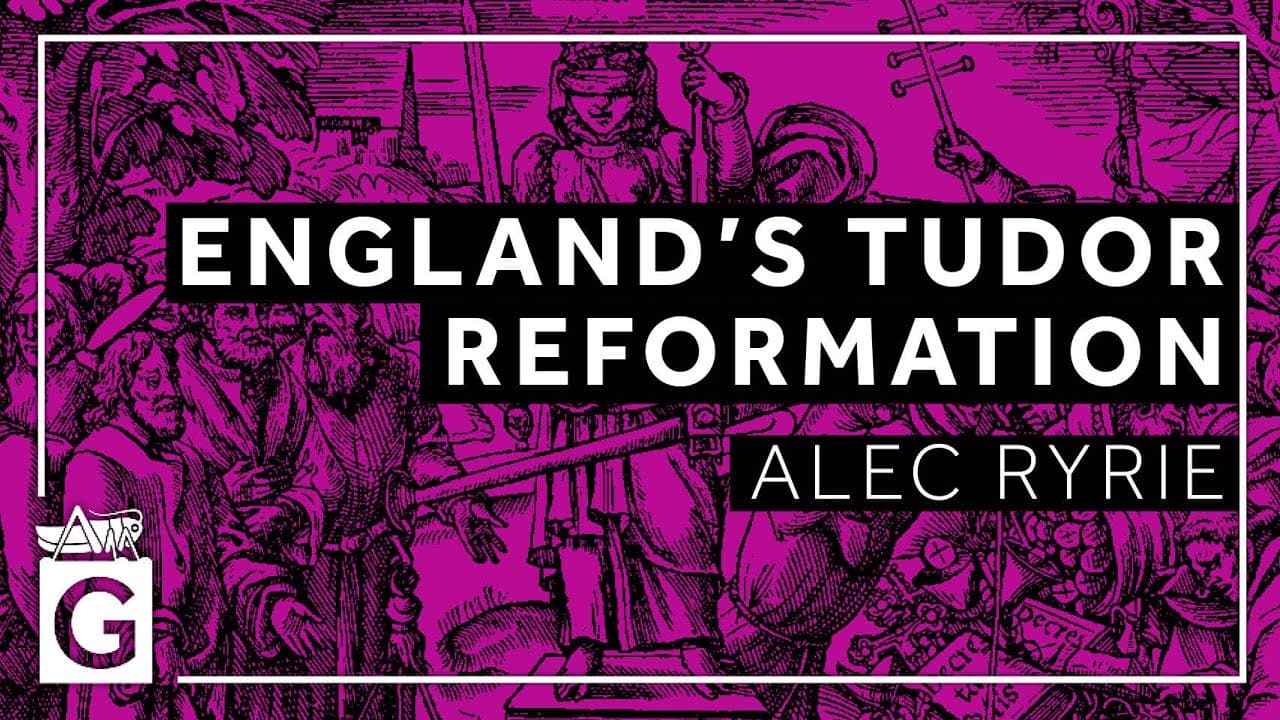
England's Tudor Reformation
TL;DR
England's Reformation was more of a political event than a religious one, shaping the English state and its relationships with other nations. The repercussions of the Reformation can still be felt in the Church of England, the power dynamics between church and state, and the relationships between England, Wales, Ireland, and Scotland.
Transcript
- So welcome to this third in our series of lectures on England's Reformation and their legacies. The Reformation is conventionally the process by which parts of Catholic Europe embraced Protestantism. And that's a process that happens in England, but let's not get too distracted by it. From the point of view of law and of the sinews of the English... Read More
Key Insights
- 🏛️ The English Reformation was more about politics and state-building than religious reform.
- 🥺 The Reformation had a significant impact on the relationships between England, Wales, Ireland, and Scotland, leading to tensions and conflicts.
- 🎮 Parliament played a crucial role in the English Reformation, granting the monarchs the power to control the Church of England.
Install to Summarize YouTube Videos and Get Transcripts
Explore YouTube Video Summarizer or Get YouTube Transcript Extractor
Questions & Answers
Q: Why was the English Reformation more of a political event than a religious one?
While the English Reformation did bring about cultural and religious transformations, it was primarily driven by the desire of English monarchs, such as Henry VIII and Elizabeth I, to establish their authority and control over the English Church. The religious aspect was often secondary to the political motives.
Q: How did the English Reformation shape the relationships between the nations of Britain and Ireland?
The English Reformation had a significant impact on the relationships between England, Wales, Scotland, and Ireland. England's dominance over Wales was solidified, and the Church of England's control was extended to Wales. In Ireland, the Reformation led to conflict between the English and Irish, and later attempts to establish Protestantism resulted in tension and resistance.
Q: What was the role of Parliament in the English Reformation?
Parliament played a crucial role in the English Reformation. The statutory laws enacted by Parliament gave the English monarchs the power to control the Church of England and establish their supremacy. Parliament also had the authority to make changes to the church's doctrine and liturgy.
Q: How did the Tudor Reformations impact the power dynamics between church and state?
The Tudor Reformations shifted the balance of power in favor of the English monarchy. The monarchs used the Reformation to assert their authority over the church, appoint bishops and clergy, and even make changes to religious doctrines. The church became a tool for the monarchs to exercise control and legitimize their rule.
Summary & Key Takeaways
-
The Reformation in England was a political event that led to the transformation of the English state and its relationships with other countries.
-
The conflicts between church and state in medieval times, such as the breakdowns in relations between King Henry II and Archbishop Thomas Becket and King John and Pope Innocent III, showed the need for collaboration between the secular and spiritual powers.
-
The Tudor monarchs, particularly Henry VIII and Elizabeth I, used the Reformation to assert their authority and control over the Church of England, resulting in a system of government-controlled religion.
Read in Other Languages (beta)
Share This Summary 📚
Summarize YouTube Videos and Get Video Transcripts with 1-Click
Try YouTube Summary with ChatGPT & Claude or YouTube Transcript Generator
Explore More Summaries from Gresham College 📚


Summarize YouTube Videos and Get Video Transcripts with 1-Click
Try YouTube Summary with ChatGPT & Claude or YouTube Transcript Generator