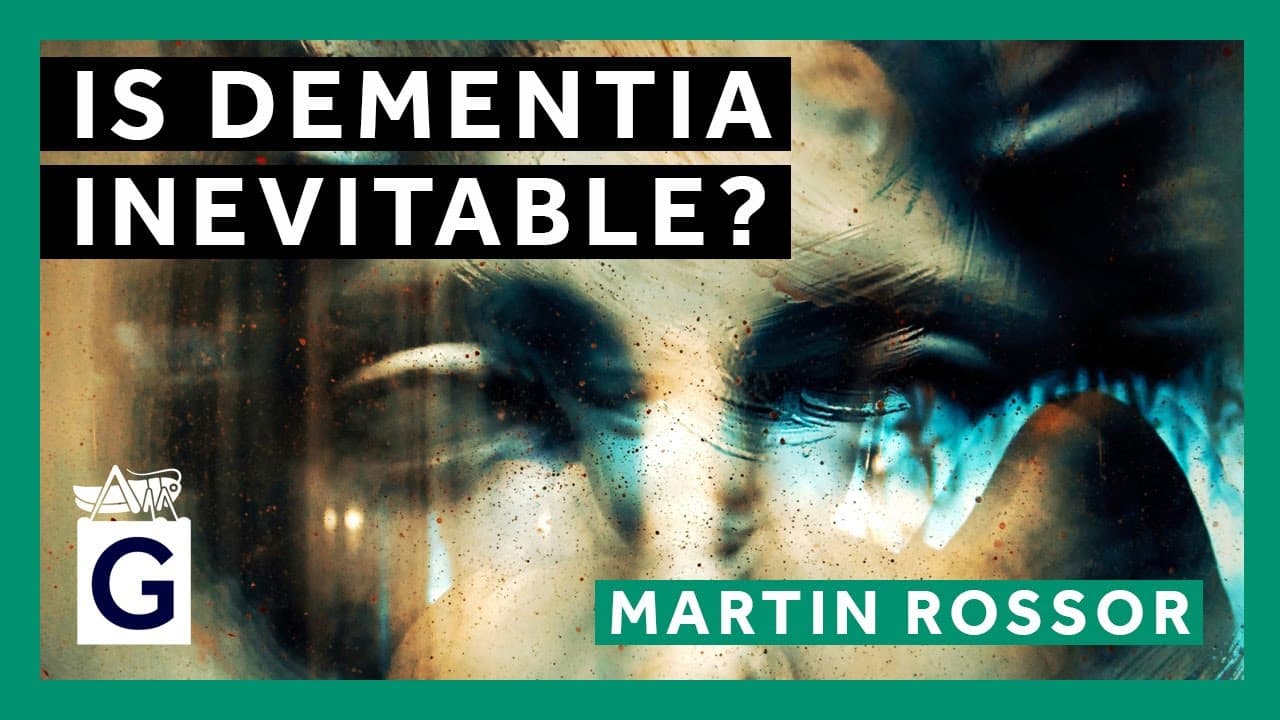
Is Dementia Inevitable?
TL;DR
Dementia is not inevitable in everyone, and our current understanding of the disease has advanced significantly. Prevention measures, such as education and a healthy lifestyle, can play a significant role in reducing the risk of dementia.
Transcript
- It's probably not the done thing to give the answer to a question right at the beginning, but I'm going to risk it. In a trivial sense, I think dementia is inevitable. Given our current biology, if somebody lived to 150, we recognize that organisms and their organs decay and fail. Given our current biology, if somebody lives a normal maximum life... Read More
Key Insights
- 🍉 The term "dementia" has limitations and can be misleading as it implies a global cognitive impairment. In reality, different diseases can cause specific cognitive impairments, and understanding these nuances is essential in diagnosis and treatment.
- 🖤 Not all dementias are the same, and treatments can vary depending on the underlying cause. While some dementias are treatable, others, like Alzheimer's disease, still lack a definitive cure.
- 💗 Prevention is a crucial focus for tackling dementia, and there is growing evidence that lifestyle factors and proactive management of health conditions can help lower the risk.
- 😪 Sleep, gut health, and stress levels are all interconnected with cognitive function and should be considered when addressing dementia prevention.
Install to Summarize YouTube Videos and Get Transcripts
Explore YouTube Video Summarizer or Get YouTube Transcript Extractor
Questions & Answers
Q: Is dementia inevitable as we age?
In a trivial sense, dementia is inevitable as our bodies and organs naturally decay and fail. However, if one lives a healthy lifestyle and takes preventive measures, the answer is no. Aging alone does not guarantee the development of dementia.
Q: What are the different diseases that can cause dementia?
While there are hundreds of diseases that can lead to dementia, some of the most well-known ones include Alzheimer's disease, dementia with Lewy bodies, and vascular dementia. Each disease has its unique causes and effects on the brain.
Q: What role does genetics play in the development of dementia?
In certain cases, such as familial Alzheimer's disease, genetics can play a significant role. Mutations in specific genes related to the production of amyloid proteins are linked to the development of Alzheimer's disease. However, the relationship between genetics and dementia is complex and not fully understood.
Q: Can lifestyle factors and education help prevent dementia?
Yes, there is evidence that lifestyle factors, such as a healthy diet, regular exercise, and cognitive engagement, can lower the risk of developing dementia. Additionally, higher education levels have been associated with a reduced risk of cognitive decline.
Summary & Key Takeaways
-
Dementia is not a new phenomenon and has been documented throughout history, with references dating back to ancient times.
-
There are various diseases that can cause dementia, with Alzheimer's disease being one of the most well-known. Understanding the specific causes and mechanisms of each disease is crucial for advancing treatments and prevention strategies.
-
Prevention is key in tackling dementia, with evidence suggesting that education, lifestyle factors, and proactive management of underlying health conditions can help reduce the risk.
Read in Other Languages (beta)
Share This Summary 📚
Summarize YouTube Videos and Get Video Transcripts with 1-Click
Try YouTube Summary with ChatGPT & Claude or YouTube Transcript Generator
Explore More Summaries from Gresham College 📚

Summarize YouTube Videos and Get Video Transcripts with 1-Click
Try YouTube Summary with ChatGPT & Claude or YouTube Transcript Generator