How Does Your Mind Trap You in Familiar Patterns?
TL;DR
Your mind fills gaps, interprets colors, and favors familiar solutions by matching current information to patterns built from past experience. This process makes perception efficient and rewarding, but it can also produce convincing illusions, intuitive math errors, and unnecessarily complicated decisions. Recognizing the first automatic response creates an opportunity to consider a simpler or more accurate alternative.
Transcript
Good afternoon. Show of hands, how many people here sleep on the same side of the bed every single night? And how many of you, when you travel without your significant other, still sleep on that same side of the bed? Yes, most of us do. How many of you park on one side of the driveway instead of the other? How many of you take the same route to wor... Read More
Key Insights
- The mind is fundamentally a pattern-matching system that compares present information with arrangements that worked historically. Each successful match produces a small burst of dopamine, while departures from an established pattern lack that reward and can create the familiar feeling of disliking change.
- Visual perception is a construction assembled by the mind rather than a complete, direct record of the surroundings. Each eye has a blind spot where the optic nerve enters without photoreceptors, yet the mind fills that missing area so the gap normally remains unnoticed.
- Saccadic movement is the rapid, jerky shifting of the eyes that occurs about five times per second. Vision shuts off during these movements, producing roughly ninety minutes of unrecognized blindness each day, while the mind maintains apparent continuity by preserving what it believes remains present.
- Detailed vision is limited to an area about as wide as a thumbnail held at arm's length, representing roughly three degrees of vision. Peripheral vision supplies the broader scene but cannot provide the same reading-level detail, even though experience feels continuously sharp and complete.
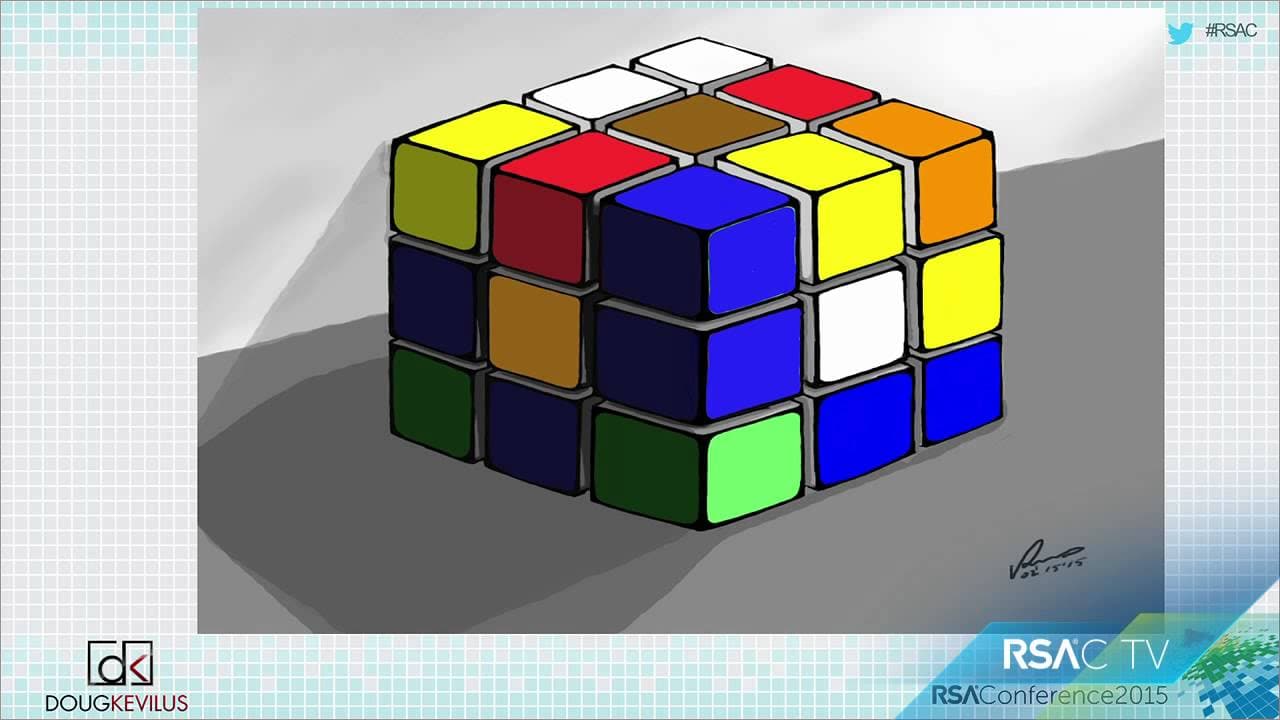
- Color consistency is an interpretive process in which the mind adjusts perceived color according to surrounding light, shadow, and context. The disputed dress and the cube demonstrations show that identical colors can look different because the mind applies expectations formed through previous encounters with illumination.
- Language comprehension is guided by expectations that can add information or conceal mistakes. When people are instructed to read, an established reading pattern can make them insert an expected letter and overlook an unexpected word, demonstrating that prompts can shape what they believe they observed.
- Intuitive reasoning can produce an appealing but incorrect answer before deliberate calculation begins. In the bat-and-ball problem, fifty percent of MIT students reportedly answer ten cents, although a five-cent ball and a one-dollar-and-five-cent bat satisfy both stated conditions.
- Learned procedures can block simpler solutions even when the procedure still works. In the water-container experiment, eighty-four percent of trained participants repeated a complicated pattern, while ninety-nine percent of those who had not learned it found the faster solution using only the two smaller containers.
Install to Summarize YouTube Videos and Get Transcripts
Explore YouTube Video Summarizer or Get YouTube Transcript Extractor
Questions & Answers
Q: How does the mind use patterns in everyday life?
The mind matches current situations with patterns that have worked in the past. This process influences routine choices such as sleeping on the same side of the bed, parking in a familiar place, and taking the same route to work. Successful pattern matches bring a small burst of dopamine, while unfamiliar actions lack that reward, which can make change feel uncomfortable.
Q: Why can two people see different colors in the same image?
The mind determines perceived color by interpreting the entire scene, including its lighting, shadows, foreground, background, and previously learned expectations. The disputed dress appeared white and gold to about seventy-four percent of people, while most of the remainder saw blue and black and a small percentage saw another alternative. The difference reflected mental interpretation rather than a problem with the eyes.
Q: How does the brain compensate for blind spots in vision?
Each eye has a blind spot at the back where the optic nerve enters and no photoreceptors are present. People do not normally see an empty patch because the mind stitches together the available visual information and supplies what it believes continues through the missing area. The resulting experience feels complete, even though part of the scene was not directly detected.
Q: Why does vision seem continuous during rapid eye movements?
The eyes shift through short, jerky movements called saccadic movements about five times per second. Vision shuts off during these movements, but people do not consciously experience repeated moments of darkness. Instead, the mind preserves what it believes remains in place and creates apparent continuity. According to the presentation, these interruptions total roughly ninety minutes of unnoticed blindness each day.
Q: How much of human vision is actually seen in sharp detail?
Sharp, detailed vision covers only about three degrees of the visual field, approximately the width of a thumbnail held at arm's length. The rest of the scene is viewed through peripheral vision, which cannot resolve nearby writing with comparable clarity. The mind nevertheless combines these inputs so the entire environment appears more uniformly detailed than it truly is.
Q: Why do identical colors look different under shadows or colored light?
The mind uses context to infer how illumination has changed an object's appearance. Because experience teaches that an object in shadow should look like a darker version of itself, identical brown squares can appear brown and orange. Similarly, gray cubes surrounded by red or green lighting can appear red or green until the distracting background or shading is covered.
Q: Why do people get the bat-and-ball problem wrong?
The problem encourages a quick intuitive answer of ten cents because a dollar and ten cents separate neatly into a dollar and ten cents. That answer fails the condition that the bat costs exactly one dollar more than the ball. A five-cent ball requires a one-dollar-and-five-cent bat, producing the correct total while preserving the stated one-dollar difference.
Q: How can a learned pattern prevent a simpler solution?
A procedure that repeatedly succeeds can become the default response even when a later task offers an easier method. In the water-container experiment, eighty-four percent of participants trained on a multi-step measuring pattern reused it for the eight-cup task. Among people who had not learned that pattern, ninety-nine percent found the faster solution of using the two smaller containers and pouring once.
Summary & Key Takeaways
-
People repeatedly choose the same side of the bed, parking place, or route because familiar behavior forms comfortable patterns. The mind rewards successful pattern matching with a small burst of dopamine, while actions that contradict established patterns feel less pleasant. This helps explain why people resist change even when alternatives are available.
-
Visual experience is partly constructed rather than recorded exactly. The mind fills each eye's blind spot, preserves a sense of continuity while vision shuts off during rapid eye movements, and interprets colors according to lighting, shadows, backgrounds, and prior experience. Consequently, identical colors can appear dramatically different within different visual contexts.
-
Patterns also shape reading, reasoning, and problem-solving. A prompt can cause readers to insert expected letters or overlook unexpected wording, while intuitive reasoning produces the wrong answer to the bat-and-ball problem. Learned procedures can similarly hide simpler solutions, showing why people should reconsider familiar methods when accuracy or consequences matter.
Read in Other Languages (beta)
Share This Summary 📚
Summarize YouTube Videos and Get Video Transcripts with 1-Click
Try YouTube Summary with ChatGPT & Claude or YouTube Transcript Generator
Explore More Summaries from RSAC Cybersecurity 📚






Summarize YouTube Videos and Get Video Transcripts with 1-Click
Try YouTube Summary with ChatGPT & Claude or YouTube Transcript Generator