Why Can Parrots Mimic Human Speech So Well?
TL;DR
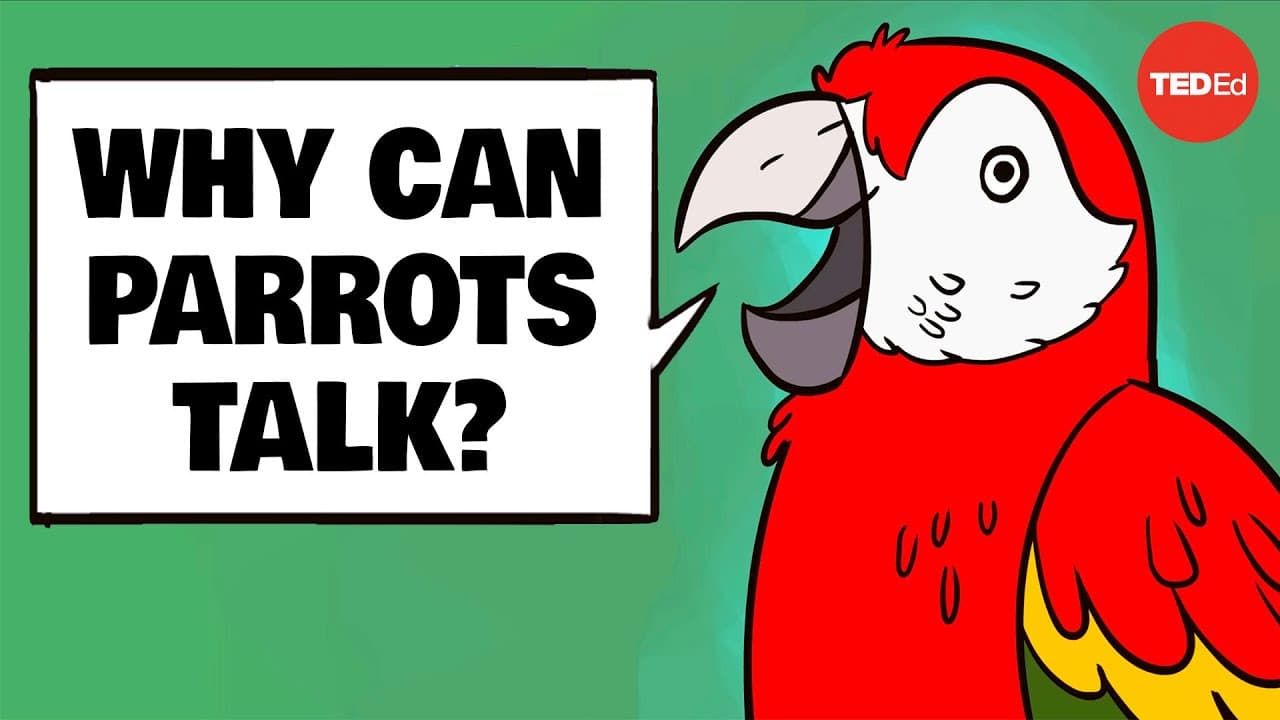
Parrots can mimic human speech due to their unique vocal anatomy and social nature. Their specialized syrinx allows them to produce diverse sounds, while their flexible tongues and beaks help shape these sounds. Additionally, parrot brains have specific circuits that enable them to learn and assign meaning to words, often using vocalizations to form social bonds.
Transcript
In 2010, a parrot that spoke with the same British accent as his owner went missing. They were reunited four years later, but the intervening time left a conspicuous mark: the parrot had lost its British accent and was instead chattering away in Spanish. Parrots and several other birds are the only other animals that produce human speech. And some... Read More
Key Insights
- 👥 Parrots use vocalizations for various purposes in their social interactions, including mating, territorial displays, and group coordination.
- 👂 The specialized anatomy of a parrot's syrinx and their flexible tongues and beaks enable them to shape sounds and mimic a wide range of sounds, including human speech.
- 👻 Parrot brains have unique circuits that allow them to learn and imitate calls, both of their own species and humans, giving them extraordinary flexibility in vocalizations.
- 😒 Captive parrots can assign meaning to words and use them appropriately in different contexts, demonstrating a level of understanding.
- 🦜 Parrots are vulnerable to poaching and habitat loss, and protecting their natural habitats is vital for their conservation.
Install to Summarize YouTube Videos and Get Transcripts
Explore YouTube Video Summarizer or Get YouTube Transcript Extractor
Questions & Answers
Q: How do parrots produce human speech?
Parrots produce speech through their syrinx, located at the base of their windpipe. They shape the sounds using their tongues and beaks, similar to how humans use their larynx, tongue, and lips.
Q: Do parrots understand what they are saying?
While captive parrots may associate words with certain responses, they have been observed to use words in appropriate contexts and assign meaning to them. Some parrots even ask existential questions and demonstrate understanding of color and object recognition.
Q: Why can parrots mimic a wide range of sounds?
Parrots have flexible tongues and powerful beaks that allow them to shape sounds, along with highly developed brain circuits that facilitate learning and imitating a variety of sounds, including the human voice.
Q: How have human actions impacted wild parrot populations?
Poaching and pet trading, along with habitat loss from deforestation, have led to a significant decline in wild parrot populations. To understand and protect these birds, studying and preserving them in their natural habitats is crucial.
Summary & Key Takeaways
-
Parrots use vocalizations for mating, territorial displays, and group coordination, and their ability to mimic sounds is enhanced by their social nature.
-
The anatomy of a parrot's syrinx, located at the base of its windpipe, allows them to shape sounds using their tongues and beaks.
-
Parrots have specialized brain circuits that give them flexibility in learning calls, both of their own species and human speech.
Read in Other Languages (beta)
Share This Summary 📚
Summarize YouTube Videos and Get Video Transcripts with 1-Click
Try YouTube Summary with ChatGPT & Claude or YouTube Transcript Generator
Explore More Summaries from TED-Ed 📚
Summarize YouTube Videos and Get Video Transcripts with 1-Click
Try YouTube Summary with ChatGPT & Claude or YouTube Transcript Generator