How Does NVIDIA RTX Spark Reinvent the PC?
TL;DR
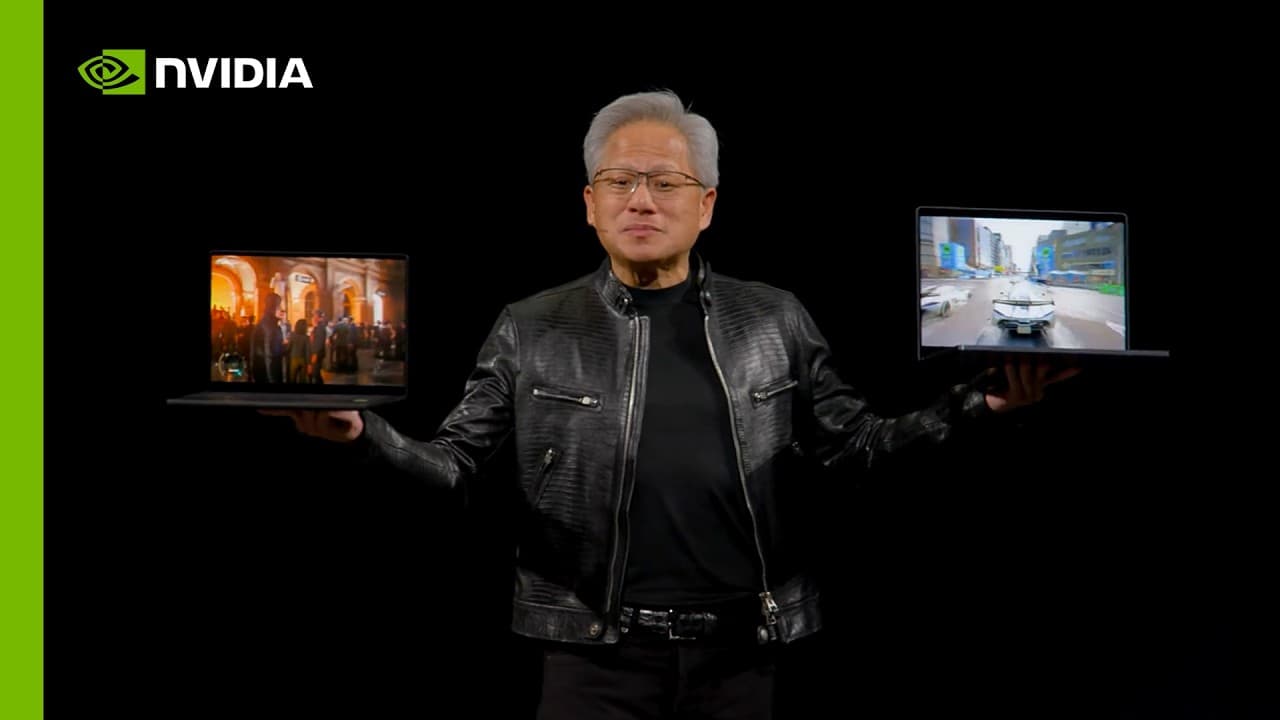
RTX Spark is designed to turn Windows PCs into platforms for personal AI agents that can run continuously, use local applications, connect to local or cloud models, and automate complex workflows. NVIDIA says the platform combines its Blackwell RTX GPU, a custom Grace CPU, unified memory, CUDA compatibility, and close integration with Microsoft Windows.
Transcript
My relationship with you started here. And many of you, many of you, many of my friends and partners here in Taiwan, your companies started here. This is in a lot of ways the beginning of the modern computer industry. 40 years now. Nvidia is 33 years old. the PC industry was already starting to get the P Windows one and Windows 2 and Apple Apple on... Read More
Key Insights
- RTX Spark is presented as a Windows computing platform built for personal AI agents. These agents can run natively, connect to models located on the PC, network, or cloud, operate continuously, and use applications and files while remaining inside a security sandbox.
- The N1X combines a Blackwell RTX GPU with a custom 20-core Grace CPU developed in partnership with MediaTek. NVIDIA says the processors are fused through NVLink and supported by 128 GB of unified memory, creating one integrated platform for graphics, AI, and general computing.
- The Blackwell RTX GPU contains 6,144 CUDA cores and is described as providing one petaflop of AI performance. The complete chip is manufactured using TSMC's 3-nanometer process and contains 70 billion transistors, according to the specifications announced during the keynote.
- Large language models are described as an intelligence extension for the personal computer. They accept prompts, understand computer vision, and generate video and sound, while an agentic runtime provides a layer through which autonomous agents can interact with the operating system and applications.
- The architectural demonstration shows an agent operating Rhino and Blender through tools installed on an RTX Spark laptop. It models a site, proposes building forms, generates interior layouts, places structural elements, corrects mistakes, transfers design context, and produces photorealistic views with the Flux 2 model.
- RTX Spark supports NVIDIA's existing software stack alongside Windows applications, according to Jensen Huang. He says workloads involving CUDA, physics, biology, genomics, artificial intelligence, computer graphics, seismic processing, and astrophysics can run on the machine, in addition to newly supported agent workflows.
- Adobe is re-engineering the core architecture of Photoshop and Premiere for RTX Spark. The keynote claims that the resulting releases will run twice as fast and will support agent interaction through an MCP server, allowing agents on the laptop to work with Adobe's creative tools.
- NVIDIA and Microsoft are extending the concept beyond laptops to a three-machine Windows lineup covering desktops, laptops, and workstations. The workstation is described as having 768 GB of memory, 20 petaflops of performance, and 8 terabytes per second of memory bandwidth for models with up to one trillion parameters.
- More videos from this channel:
- More from this channel: NVIDIA
Install to Summarize YouTube Videos and Get Transcripts
Explore YouTube Video Summarizer or Get YouTube Transcript Extractor
Questions & Answers
Q: What is NVIDIA RTX Spark designed to do?
NVIDIA RTX Spark is designed to reinvent the Windows personal computer for an era of autonomous AI agents. These agents can run natively and continuously, connect to local, network, or cloud models, understand user requests, inspect files, conduct research, and operate applications. The platform also retains support for Windows programs, NVIDIA's CUDA software stack, computer graphics, gaming, and scientific computing workloads.
Q: What hardware specifications does the RTX Spark chip have?
The announced RTX Spark hardware uses the N1X chip developed by NVIDIA in partnership with MediaTek. It combines a Blackwell RTX GPU containing 6,144 CUDA cores with a custom 20-core Grace CPU connected through NVLink. NVIDIA also specifies 128 GB of unified memory, one petaflop of AI performance, a TSMC 3-nanometer manufacturing process, and 70 billion transistors.
Q: How do AI agents change the role of a Windows PC?
AI agents change the PC from a tool that primarily waits for users to open applications, click, and type into a system that can perform ongoing work. An agent can understand spoken or written requests, use computer vision, read files, research topics, and operate installed software. It can also connect to models running locally, in the cloud, or elsewhere on a network.
Q: How does the RTX Spark architectural design agent work?
The demonstrated agent runs locally on RTX Spark inside an open-shell sandbox using the Hermes harness and connects to Claude Sonnet in the cloud. After receiving a site, sketches, a mood board, requirements, and design intent, it operates Rhino to model terrain and building forms. It then creates layouts, places elements, corrects mistakes, transfers the project to Blender, and helps produce photorealistic views.
Q: Can people intervene while an RTX Spark agent is working?
People can intervene throughout the demonstrated agent workflow. During the house-design example, the agent first develops terrain, setbacks, building forms, and interior layouts, but the user can jump in whenever changes are needed. The user also approves progress, fine-tunes materials, and selects camera shots. This presents the agent as a collaborative operator rather than a completely isolated process.
Q: What software can run on an RTX Spark computer?
Jensen Huang says RTX Spark can run Windows applications and the complete NVIDIA software stack. The examples named in the keynote include CUDA programs, physics, digital biology, genomics, artificial intelligence, seismic processing, astrophysics, and computer graphics. The platform is also intended to run agents and work with creative tools such as Rhino, Blender, Photoshop, and Premiere through agent-friendly integrations.
Q: How are Adobe applications being adapted for RTX Spark?
Adobe is re-engineering the core architecture of Photoshop and Premiere for RTX Spark, according to the keynote. NVIDIA claims the new versions will operate twice as fast as their existing performance. Adobe is also making the tools agent-friendly through an MCP server, which allows an AI agent running on the laptop to interact with the creative applications as part of a broader automated workflow.
Q: What RTX Spark computers did NVIDIA announce?
NVIDIA announced a Windows product line spanning laptops, desktops, and workstations rather than limiting RTX Spark to one portable system. The desktop is positioned as an always-running home computer for personal agents. The DGX Station for Windows is presented for developers, with 768 GB of memory, 20 petaflops of performance, 8 terabytes per second of memory bandwidth, and capacity for a one-trillion-parameter model.
Summary & Key Takeaways
-
NVIDIA and Microsoft are reworking the Windows PC around autonomous agents. Jensen Huang describes large language models as an intelligence extension comparable to DirectX, while an agentic runtime becomes a new application layer. These agents can understand prompts and vision, generate media, access files, conduct research, and operate computer tools.
-
The RTX Spark laptop uses NVIDIA's N1X chip, developed with MediaTek. The announced specifications include a Blackwell RTX GPU with 6,144 CUDA cores, a custom 20-core Grace CPU connected by NVLink, 128 GB of unified memory, a 3-nanometer TSMC process, and 70 billion transistors.
-
NVIDIA demonstrated an architectural agent controlling Rhino and Blender from a sandboxed environment. It developed terrain, building forms, interior layouts, materials, and renderings while detecting mistakes and accepting human adjustments. The broader product line includes laptop, desktop, and workstation systems designed for Windows, CUDA software, and continuous personal agents.
Read in Other Languages (beta)
Share This Summary 📚
Summarize YouTube Videos and Get Video Transcripts with 1-Click
Try YouTube Summary with ChatGPT & Claude or YouTube Transcript Generator
Explore More Summaries from NVIDIA 📚

Summarize YouTube Videos and Get Video Transcripts with 1-Click
Try YouTube Summary with ChatGPT & Claude or YouTube Transcript Generator