Why Should We Stop Pressuring Singles to Marry?
TL;DR
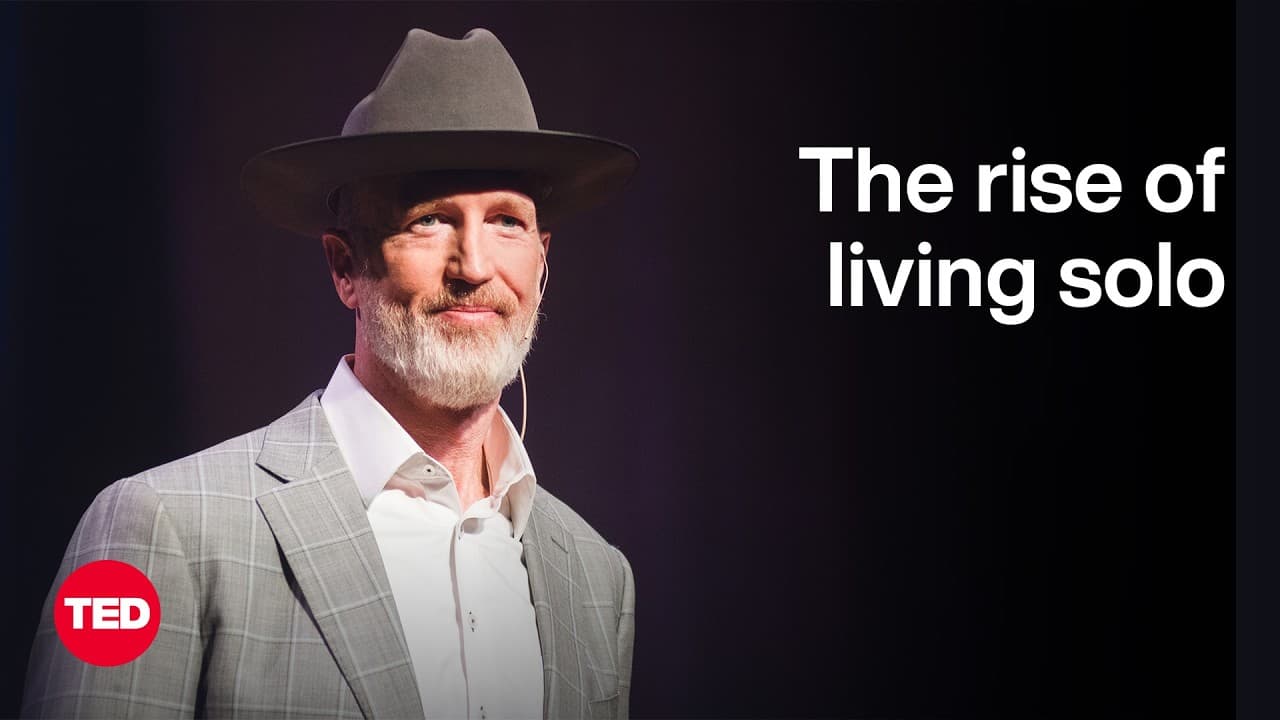
We should stop pressuring singles to marry because single life can be just as fulfilling and meaningful as marriage. Today, many adults lead rich, independent lives, investing time in personal growth and community rather than conforming to traditional expectations. Societal progress, particularly in gender equality, is reflected in the rise of singles choosing their paths, highlighting the need for equal recognition of single living alongside marriage.
Transcript
My not so subtle request: stop telling single people to get married. (Laughter) Twenty years ago, I threw myself a bachelor party as a new professor at CU Boulder. Backs were slapped, stories were shared, glasses clinked. But there was a hitch. I wasn't getting hitched. My rationale, without a wedding in sight, why do married folks get to have all ... Read More
Key Insights
- The solo movement celebrates single life as a valid, fulfilling path, not inferior to marriage.
- Society often pressures singles to marry, despite many leading happy, independent lives.
- Historical context shows marriage was once a business transaction, now it's more about love and optional.
- Single people often invest in education, careers, and community, contributing significantly to society.
- Many singles find fulfillment in deep friendships and chosen families, not just romantic relationships.
- Countries like Sweden support singles with individual-focused social policies, promoting independence.
- The rise of single living reflects broader societal progress, especially in gender equality.
- Promoting both single and married life as equal options can enhance societal happiness and fulfillment.
Install to Summarize YouTube Videos and Get Transcripts
Explore YouTube Video Summarizer or Get YouTube Transcript Extractor
Questions & Answers
Q: What is the main argument Peter McGraw presents in his talk?
Peter McGraw argues that single life should be celebrated and considered equally fulfilling as married life. He challenges the societal pressure on singles to marry, emphasizing that many singles lead happy, independent lives and contribute significantly to society. He calls for a reevaluation of the cultural narrative that equates marriage with happiness and fulfillment.
Q: How does McGraw view the historical context of marriage?
McGraw views the historical context of marriage as a business transaction, where women were often treated as property. He highlights that marriage was invented to form alliances during harsh times, but today, it's more about love and is increasingly optional. This shift reflects broader societal progress, especially in terms of gender equality.
Q: What societal changes does McGraw associate with the rise of single living?
McGraw associates the rise of single living with societal progress, particularly in gender equality. He notes that advancements such as birth control, education, and economic opportunities have empowered individuals, especially women, to choose independence over marriage. This shift is a sign of progress rather than a problem to be solved.
Q: What role do chosen families play in the lives of singles, according to McGraw?
According to McGraw, chosen families and deep friendships play a crucial role in the lives of singles. He emphasizes that social connections beyond romantic relationships are vital for life satisfaction. Singles often form significant bonds with friends and community, which provide support and fulfillment similar to traditional family structures.
Q: How does McGraw suggest society should support single individuals?
McGraw suggests that society should support single individuals by advocating for policies that cater to a family of one. He praises countries like Sweden, where social safety nets are provided to individuals, regardless of marital status. This includes universal healthcare, affordable education, and childcare, promoting independence and equality for singles.
Q: What is McGraw's stance on the correlation between marriage and happiness?
McGraw is skeptical of the correlation between marriage and happiness, arguing that the data showing married people as happier is often misinterpreted. He points out that people who marry are typically already happier and that the happiness boost from marriage fades quickly. He advocates for recognizing the happiness and fulfillment found in single life.
Q: How does McGraw propose society should view single and married living?
McGraw proposes that society should view single and married living as equal options, each with its own opportunities for a remarkable life. He argues against the notion that one path is superior to the other, advocating for a world where individuals can choose their own paths without societal pressure or judgment.
Q: What is the 'solo movement' that McGraw mentions?
The 'solo movement' that McGraw mentions is a cultural shift that celebrates single life as a valid, fulfilling path. It challenges the traditional view that marriage is the ultimate goal, instead promoting the idea that singles can lead rich, interconnected lives filled with personal growth, meaningful work, and strong social connections.
Summary & Key Takeaways
-
Peter McGraw advocates for recognizing single life as equally fulfilling as marriage, challenging societal norms that prioritize marriage as the ultimate goal. He highlights that singles often lead rich, interconnected lives, contributing significantly to society without needing a partner.
-
The solo movement embraces independence, with singles investing in personal growth and community. McGraw argues that historical marriage was a business arrangement, and today, it's a choice, not a necessity. He calls for policies supporting individuals, regardless of marital status.
-
McGraw underscores the importance of chosen families and deep friendships in single people's lives. He suggests that societal progress is reflected in the rise of singles, especially in gender-equal countries like Sweden, and advocates for equality between single and married living.
Read in Other Languages (beta)
Share This Summary 📚
Summarize YouTube Videos and Get Video Transcripts with 1-Click
Try YouTube Summary with ChatGPT & Claude or YouTube Transcript Generator
Explore More Summaries from TED 📚


Summarize YouTube Videos and Get Video Transcripts with 1-Click
Try YouTube Summary with ChatGPT & Claude or YouTube Transcript Generator