How to Avoid Phone Scams and Protect Your Savings
TL;DR
Treat unsolicited phone calls as potential scams, especially when callers demand immediate action, claim authority, or discourage outside verification. Caller ID cannot establish legitimacy because scammers can spoof numbers, so pause, think clearly, and consult someone you trust before sharing information or moving money. Older adults may need additional awareness and financial controls because scammers deliberately target them.
Transcript
Hello, and welcome to this installment of our RSAC 365 webcast series. Today, we have a great topic for you on how to avoid being a scam victim when your phone rings. I'm your host, Casey Zorcas, Content Strategist for RSA Conference. During the webcast, all participants will be in listen-only mode. Our guest will be taking questions at the end of ... Read More
Key Insights
- Unsolicited phone calls are strong warning signs because many legitimate organizations have shifted routine communications to email, text, or other digital channels. A caller claiming to represent Medicare, Amazon, or an electric company should not be trusted merely because the organization sounds familiar.
- Caller ID is not reliable evidence of identity because scammers can spoof the displayed number. They may use the recipient's area code and prefix to make a call appear local, so a familiar-looking number should not lower the recipient's guard.
- Phone scams are organized business operations that may include management, call centers, technical personnel, security staff, and money mules. Their coordinated structure allows scammers to contact victims efficiently and move money through multiple participants rather than operating as isolated individuals.
- Scammers benefit from international enforcement barriers because jurisdiction, extradition, investigation, and prosecution can be difficult across national borders. The presentation says these obstacles make the odds of being caught very small and encourage scammers to operate with little fear of consequences.
- Older adults are particularly attractive targets because they may be trusting, generous toward relatives, retired, or less comfortable with technology. Grandparents may also answer calls eagerly because they hope to hear from family, creating an opening for emotionally manipulative stories.
- Urgency is a deliberate manipulation tactic that prevents recipients from thinking clearly or seeking a second opinion. Scammers often impose immediate deadlines because even a short pause, a calm review of the story, or a conversation with another person can expose contradictions.
- Professional expertise does not eliminate vulnerability because distraction and pressure can impair judgment. The presentation describes a medical professional who received an alleged Amazon call while juggling responsibilities and ultimately lost $10,000, illustrating how circumstances can matter as much as knowledge.
- Financial controls can reduce potential losses for older adults by making large withdrawals harder to complete without review. Families should combine such controls with repeated conversations about scam calls, especially when a caller invokes a grandchild, emergency, authority, or urgent payment demand.
Install to Summarize YouTube Videos and Get Transcripts
Explore YouTube Video Summarizer or Get YouTube Transcript Extractor
Questions & Answers
Q: How can I recognize a phone scam when someone calls?
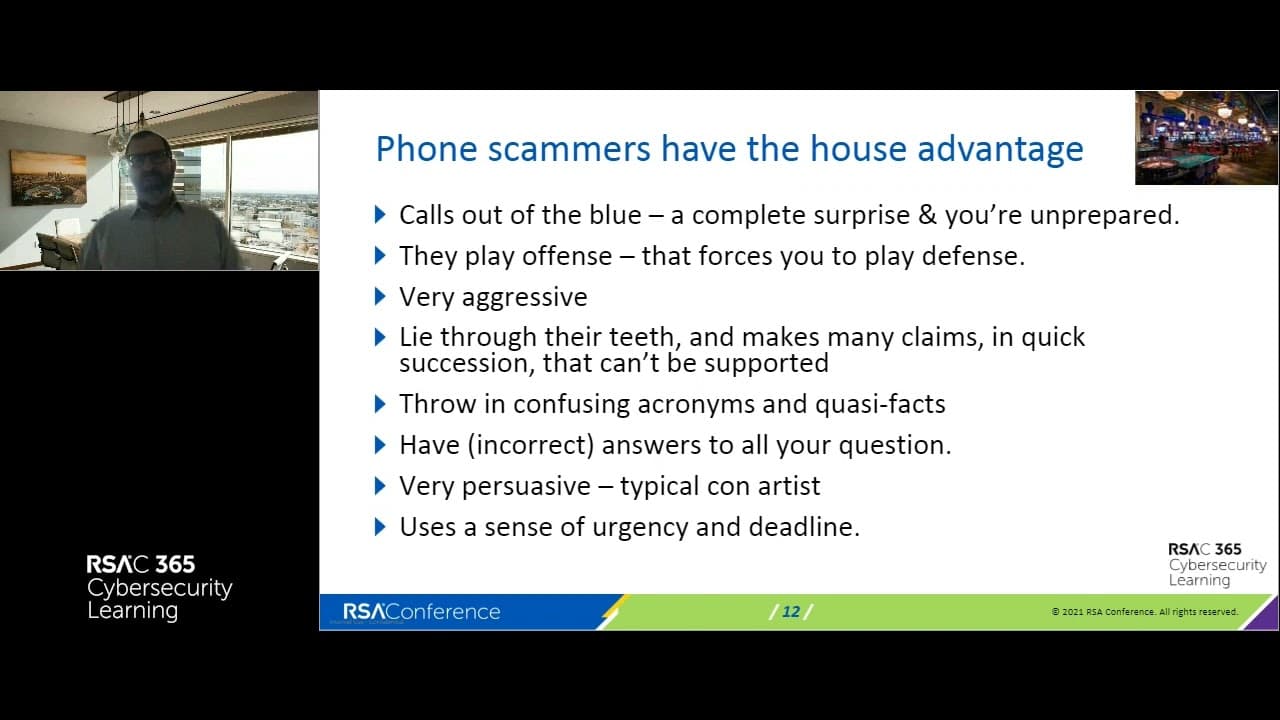
An unexpected call should immediately raise your guard, particularly when the caller claims to represent a familiar company or government program. Warning signs include aggressive persuasion, claims of authority, references to laws or acronyms, fabricated facts, urgent deadlines, and pressure to act without consulting anyone. Caller ID does not prove legitimacy because the displayed number can be spoofed.
Q: Why do phone scammers create urgency and deadlines?
Scammers create urgency to keep recipients from thinking carefully, checking the story, or talking with another person. An unexpected call already leaves the recipient unprepared, and a deadline increases that disadvantage. The caller wants an immediate reaction while the recipient is defensive or distracted. Pausing for even a few minutes with a clear head can reveal that the demand is suspicious.
Q: Can caller ID confirm that a phone call is legitimate?
Caller ID cannot confirm a caller's identity because scammers can spoof the number displayed on the recipient's phone. They may choose a number with the same area code and prefix as the recipient to make the call look local or familiar. Although legitimate professionals may sometimes disguise their numbers, the display itself should never be treated as proof that a caller is trustworthy.
Q: Why are older adults frequently targeted by phone scammers?
Older adults may be targeted because scammers perceive them as trusting, generous, retired, or less comfortable with technology. Grandparents can be especially receptive to calls because they hope a child or grandchild is contacting them. Scammers exploit that openness and affection. Families should provide clear warnings and consider controls that prevent large amounts of money from being withdrawn without additional review.
Q: Are phone scams run by individuals or organized groups?
Many phone scams operate through structured organizations rather than isolated callers. The presentation describes operations with management, call centers, controls, technical workers, security personnel, and money mules. Some schemes span countries and coordinate multiple roles, including people who collect funds from victims. This organization helps scammers operate efficiently and makes the activity more difficult for law enforcement to investigate.
Q: Why are phone scammers difficult for law enforcement to catch?
Phone scammers can operate across national borders, creating problems involving international law, jurisdiction, extradition, investigation, and prosecution. The presentation says the odds of being caught are extremely small and the odds of both capture and prosecution are smaller still. It cites Noor Aziz Uddin, who was caught in 2015 after the FBI spent four years pursuing him, as an example of the difficulty.
Q: Can educated professionals still become phone scam victims?
Education and professional status do not prevent someone from becoming a victim when circumstances reduce careful judgment. The presentation describes a medical professional working alone late in the afternoon after his secretary had left. While juggling several responsibilities, he responded to an alleged Amazon scam and lost $10,000. Distraction, pressure, and vulnerability can therefore overcome knowledge or professional experience.
Q: What should families do to protect older relatives from scam calls?
Families should explain that older adults are prime targets and review the warning signs repeatedly, including unsolicited calls, urgent demands, emotional stories, and claims of authority. They should encourage relatives to pause and consult someone before acting. When significant savings are involved, families should also consider financial controls that make large withdrawals difficult to complete without an additional review or conversation.
Summary & Key Takeaways
-
Phone scams are lucrative because organized groups can contact large numbers of people while facing substantial jurisdictional, extradition, and enforcement obstacles. These operations may include management, call centers, technical staff, security personnel, and money mules. Their structure and low perceived risk allow them to operate efficiently across national boundaries.
-
Scammers create a psychological advantage by calling unexpectedly, presenting fabricated facts, invoking laws or acronyms, claiming authority, and imposing urgent deadlines. These techniques keep recipients defensive and reduce the likelihood that they will pause or consult another person. Even accomplished professionals can lose money when distracted, busy, or emotionally vulnerable.
-
The safest response to an unsolicited call is heightened skepticism. Caller ID is unreliable because numbers can be spoofed, including numbers that resemble the recipient's area code and prefix. Families should warn older adults about these tactics and consider controls that make large withdrawals more difficult without additional review or discussion.
Read in Other Languages (beta)
Share This Summary 📚
Summarize YouTube Videos and Get Video Transcripts with 1-Click
Try YouTube Summary with ChatGPT & Claude or YouTube Transcript Generator
Explore More Summaries from RSAC Cybersecurity 📚






Summarize YouTube Videos and Get Video Transcripts with 1-Click
Try YouTube Summary with ChatGPT & Claude or YouTube Transcript Generator