How to Build Practical Ethics for Algorithms
TL;DR
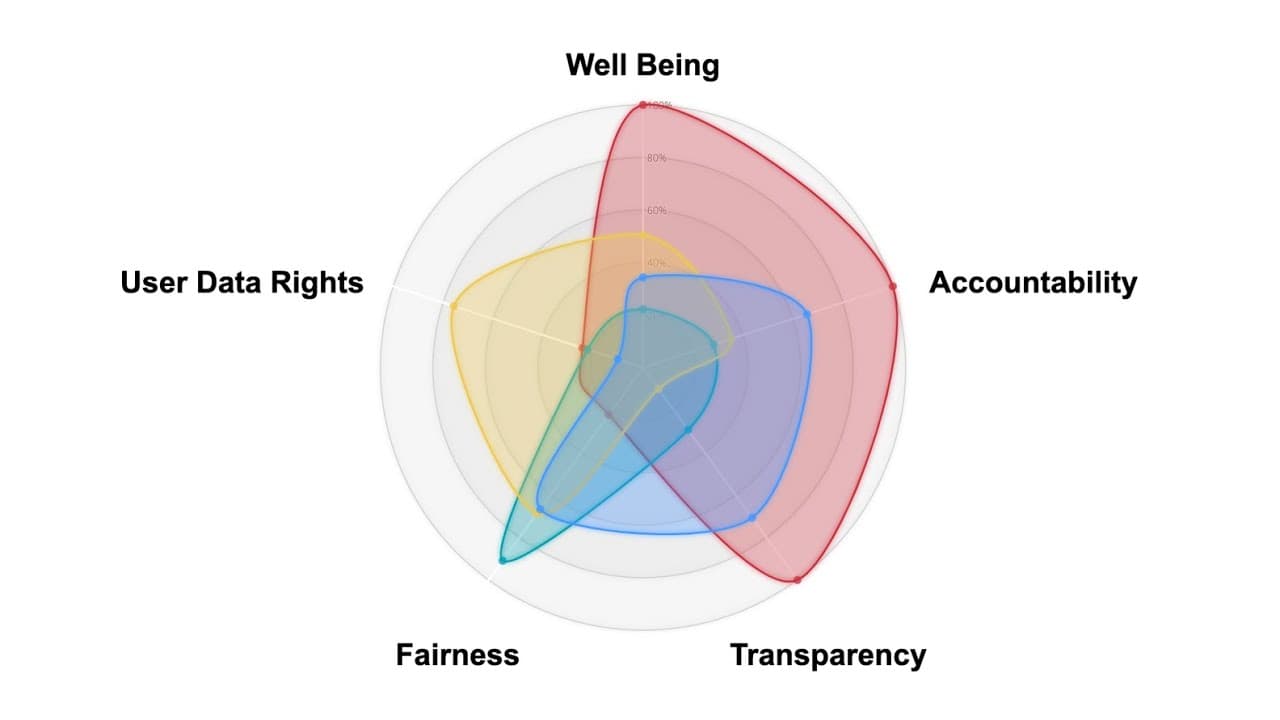
Ethical algorithms should be evaluated across well-being, accountability, transparency, fairness, and user data rights before they are developed or used. Organizations can apply available open-source tools and established techniques, chart their results on an ethical maturity graph, track progress over time, and ensure that predictions based on past data do not erase individual change or reinforce existing inequalities.
Transcript
I'm Mike Kiser, and I'm the Global Security Advocate from the Office of the CTO at SailPoint Technologies. And it's my pleasure this year at RSA to introduce a session with my good friend Ben, um, about how algorithms, um, need an ethical but a practical ethical approach. Happy to present the session called The Past Is Not the Future: Practical Eth... Read More
Key Insights
- Algorithms use historical data to predict future outcomes, but the assumption that enough data can make anything predictable risks treating a person's past as an unchangeable destiny and overlooking evidence of individual growth.
- Tara Simmons's case is an example of why historical information cannot always predict future character. Her past included addiction and felony convictions, yet she later graduated near the top of her law school class and demonstrated that her life had fundamentally changed.
- Algorithmic systems can influence human well-being and contain inherent biases. Without deliberate ethical safeguards, their predictions may reinforce existing inequalities instead of promoting justice and fairness for the individuals subject to automated decisions.
- The practical ethics framework consists of five areas: well-being, accountability, transparency, fairness, and user data rights. These categories consolidate established ethical approaches into a structure that organizations can apply when evaluating algorithms.
- Practical algorithm ethics requires currently available tools and established techniques. Open-source tools can help organizations move from expressing ethical intentions to conducting structured self-evaluations and adopting practices that make those intentions actionable.
- An ethical maturity graph visually charts an organization's self-assessed performance across the five ethical areas. It creates a concise view of strengths and weaknesses that can otherwise be difficult to communicate during discussions about algorithms and related choices.
- Repeated ethical maturity assessments can show progress over time. An organization might focus on improving transparency by explaining why its algorithms make particular decisions, then compare later snapshots to earlier evaluations to determine whether its approach has advanced.
- Ethical standards should be established and followed before an artificial intelligence technology is developed or an algorithm is used. Past patterns may be helpful in aggregate, but responsible systems must preserve attention to individual circumstances and humanity.
Install to Summarize YouTube Videos and Get Transcripts
Explore YouTube Video Summarizer or Get YouTube Transcript Extractor
Questions & Answers
Q: How can organizations evaluate the ethics of algorithms?
Organizations can evaluate algorithms across five areas: well-being, accountability, transparency, fairness, and user data rights. They can use available open-source tools and well-known techniques to assess their practices in each area, then chart the results on an ethical maturity graph. This process turns broad ethical commitments into an actionable self-evaluation that identifies strengths, weaknesses, and opportunities for improvement.
Q: What are the five areas of practical algorithm ethics?
The five areas are well-being, accountability, transparency, fairness, and user data rights. Together, they provide a consistent structure for examining how an organization designs or uses algorithms. The framework consolidates ethical approaches proposed by organizations including IBM, the IEEE, and the High-Level Expert Group on Artificial Intelligence, with the goal of making established principles practical rather than reworking them.
Q: What is an ethical maturity graph for algorithms?
An ethical maturity graph is a visual representation of an organization's self-evaluated performance across well-being, accountability, transparency, fairness, and user data rights. It provides a concise view of an ethical approach that can be difficult to communicate through discussion alone. Organizations can use the graph to identify weak areas, establish improvement priorities, and show how their practices change over time.
Q: How does an ethical maturity graph track progress?
An organization can create snapshots of its ethical maturity graph at different times and compare them from year to year or decade to decade. Changes along each axis show where its approach has advanced or remains weak. For example, the organization may expand its transparency practices by explaining algorithmic decisions more clearly to users and clients, then record that improvement in a later assessment.
Q: Why should algorithms not treat the past as destiny?
Historical patterns can support predictions, particularly in aggregate, but they do not prove that an individual's future must repeat the past. People can change in ways that prior data does not capture. Treating history as destiny can therefore produce harmful decisions, obscure individual circumstances, and reinforce existing inequalities. Ethical algorithm design must preserve attention to the people affected by each system.
Q: What does Tara Simmons's case show about prediction?
Tara Simmons had experienced addiction and had felony convictions, but she later graduated near the top of her law school class. The Washington State Law Board denied her access to the bar because it feared her former behavior would return. The Washington State Supreme Court ruled in her favor after determining that she had changed her life and was fundamentally different from her former self.
Q: How can organizations learn from others about algorithm ethics?
Organizations can compare their ethical approaches with those of other groups using algorithms, artificial intelligence, or machine learning. They can seek out organizations whose strengths match their own weaknesses and discuss which tools, evaluation methods, and practices have worked. They can also exchange lessons about unsuccessful approaches and the challenge of navigating internal politics while advancing ethical standards.
Q: When should ethical standards for algorithms be established?
Ethical standards should be established and followed before an artificial intelligence technology is developed or an algorithm is used. Addressing ethics at that stage helps organizations examine well-being, accountability, transparency, fairness, and user data rights before predictive systems affect people. The objective is to keep technological capability from outpacing ethical judgment and to preserve humanity within algorithmic decision-making.
Summary & Key Takeaways
-
Algorithms often predict a person's future from patterns in past data, but such predictions can harm individuals when they treat history as destiny. Tara Simmons's case illustrates the danger: despite addiction and felony convictions in her past, her later achievements demonstrated meaningful change that the Washington State Supreme Court ultimately recognized.
-
The proposed practical framework consolidates ethical work from IBM, the IEEE, and the High-Level Expert Group on Artificial Intelligence into five areas: well-being, accountability, transparency, fairness, and user data rights. Organizations can evaluate each area using currently available open-source tools and established techniques instead of relying on ethical aspirations alone.
-
An ethical maturity graph provides a concise visual representation of an organization's performance across the five areas. Repeated snapshots can reveal weaknesses, document progress, and support comparisons with other organizations. The broader objective is to ensure that expanding algorithmic power does not outpace ethics or disregard the individuals affected by automated decisions.
Read in Other Languages (beta)
Share This Summary 📚
Summarize YouTube Videos and Get Video Transcripts with 1-Click
Try YouTube Summary with ChatGPT & Claude or YouTube Transcript Generator
Explore More Summaries from RSAC Cybersecurity 📚





Summarize YouTube Videos and Get Video Transcripts with 1-Click
Try YouTube Summary with ChatGPT & Claude or YouTube Transcript Generator