What Is the Sympathetic Nervous System and How Does It Work?
TL;DR
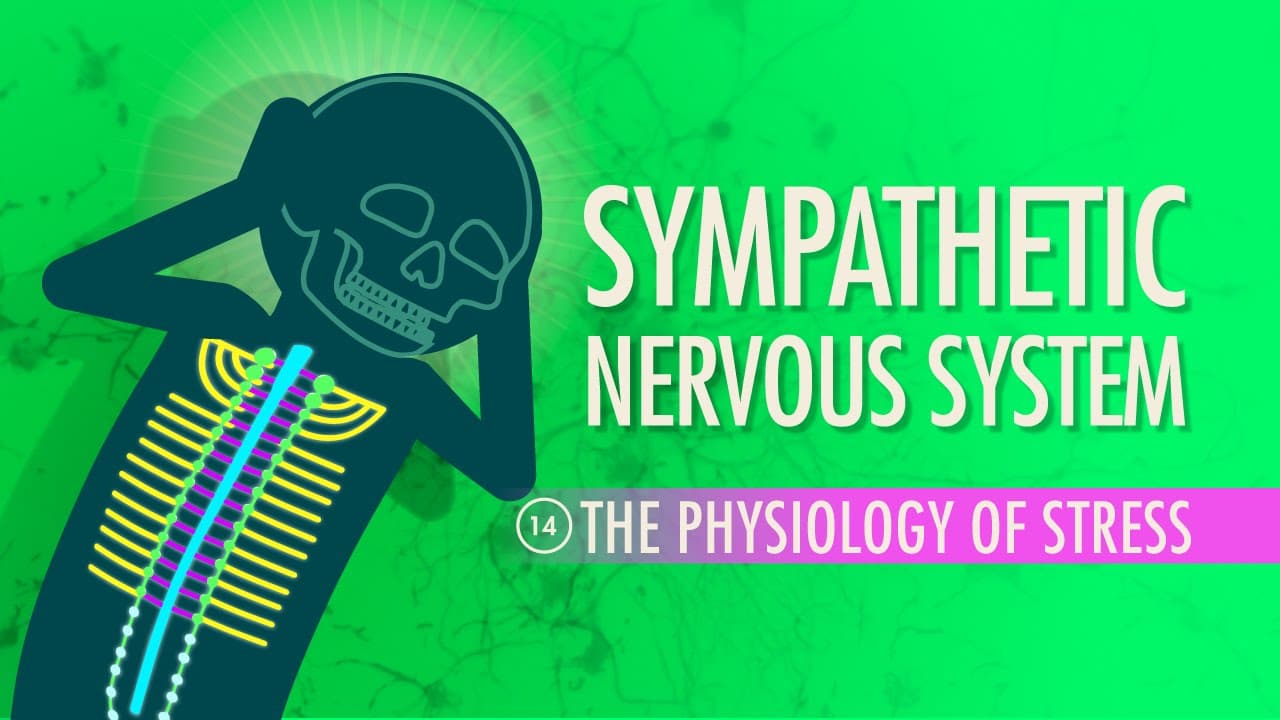
The sympathetic nervous system manages the body's stress response by prioritizing immediate functions such as increased heart rate and muscle readiness during emergencies. It operates using neurotransmitters like acetylcholine and norepinephrine, which can act differently based on their receptors, leading to varying effects on the body. Chronic activation due to non-life-threatening stressors can result in health issues like high blood pressure and immune suppression.
Transcript
So you’re sound asleep, when your smoke alarm goes off. Before you even know what’s going on, you start to feel it. Those smoke alarms are loud -- for a good reason. Your heart starts to race, your breathing picks up, you become sweaty all over your body. You are stressed. And I’m not talking about the my-iPhone-just-died kind of stress. I’m talkin... Read More
Key Insights
- The sympathetic nervous system is crucial for survival, managing stress responses by prioritizing immediate bodily needs like increased heart rate and muscle readiness.
- Stress responses can be triggered by non-life-threatening situations, leading to potential health issues due to the body's full response.
- Neurotransmitters like acetylcholine and norepinephrine play key roles in transmitting stress signals to effector organs.
- Norepinephrine can function as both a neurotransmitter and a hormone, depending on its method of delivery in the body.
- The adrenal glands release norepinephrine and epinephrine as hormones to enhance the body's stress response.
- Different receptors, such as alpha and beta receptors, determine whether norepinephrine causes muscle contraction or relaxation.
- Chronic activation of the sympathetic nervous system due to everyday stress can lead to health issues like high blood pressure and immune suppression.
- Understanding the sympathetic nervous system is essential for managing stress and maintaining overall health.
Install to Summarize YouTube Videos and Get Transcripts
Explore YouTube Video Summarizer or Get YouTube Transcript Extractor
Questions & Answers
Q: What triggers the sympathetic nervous system?
The sympathetic nervous system is triggered by stress, whether from life-threatening situations or non-life-threatening conditions like worrying about bills. It prepares the body for immediate action by increasing heart rate, redirecting blood flow, and activating muscles for a fight-or-flight response.
Q: How do neurotransmitters function in the sympathetic nervous system?
Neurotransmitters like acetylcholine and norepinephrine facilitate communication within the sympathetic nervous system. Acetylcholine is released at ganglia to stimulate postganglionic fibers, while norepinephrine is released at effector organs to trigger responses such as increased blood flow to muscles.
Q: What role do hormones play in the stress response?
Hormones like norepinephrine and epinephrine, released by the adrenal glands, enhance the body's stress response by traveling through the bloodstream to various organs. They help increase heart rate, boost blood flow to essential muscles, and prepare the body for immediate physical activity.
Q: How can norepinephrine act as both a neurotransmitter and a hormone?
Norepinephrine acts as a neurotransmitter when released from neurons across synapses to target organs. It functions as a hormone when secreted by glands like the adrenal glands into the bloodstream for widespread distribution, despite being the same chemical in both cases.
Q: Why can the same chemical cause different responses in the body?
The same chemical can cause different responses due to the presence of different receptors. For example, norepinephrine can cause muscle contraction or relaxation depending on whether it binds to alpha or beta receptors, influencing blood flow to various body parts.
Q: What are the potential health effects of chronic stress activation?
Chronic activation of the sympathetic nervous system due to frequent stress can lead to health issues such as high blood pressure, digestive problems, and immune system suppression. This occurs because the body's full stress response is activated even for non-life-threatening stressors.
Q: How does the body differentiate between life-threatening and non-life-threatening stress?
The body often does not differentiate between life-threatening and non-life-threatening stress, triggering a full sympathetic response in both cases. This can lead to unnecessary activation of stress mechanisms, potentially causing long-term health issues if not managed properly.
Q: What is the relationship between the sympathetic and parasympathetic systems?
The sympathetic and parasympathetic systems are parts of the autonomic nervous system. While the sympathetic system activates the body's stress response, the parasympathetic system promotes relaxation and recovery, balancing the body's functions by encouraging rest, digestion, and recovery from stress.
Summary & Key Takeaways
-
The sympathetic nervous system is vital for managing stress, prioritizing immediate bodily functions like heart rate and muscle readiness during emergencies.
-
Stress responses can be triggered by non-life-threatening situations, leading to chronic health issues due to the body's intense response.
-
Neurotransmitters and hormones, such as acetylcholine and norepinephrine, play crucial roles in transmitting stress signals and managing bodily responses.
Read in Other Languages (beta)
Share This Summary 📚
Summarize YouTube Videos and Get Video Transcripts with 1-Click
Try YouTube Summary with ChatGPT & Claude or YouTube Transcript Generator
Explore More Summaries from CrashCourse 📚






Summarize YouTube Videos and Get Video Transcripts with 1-Click
Try YouTube Summary with ChatGPT & Claude or YouTube Transcript Generator