How to Measure Enterprise Security Effectively
TL;DR
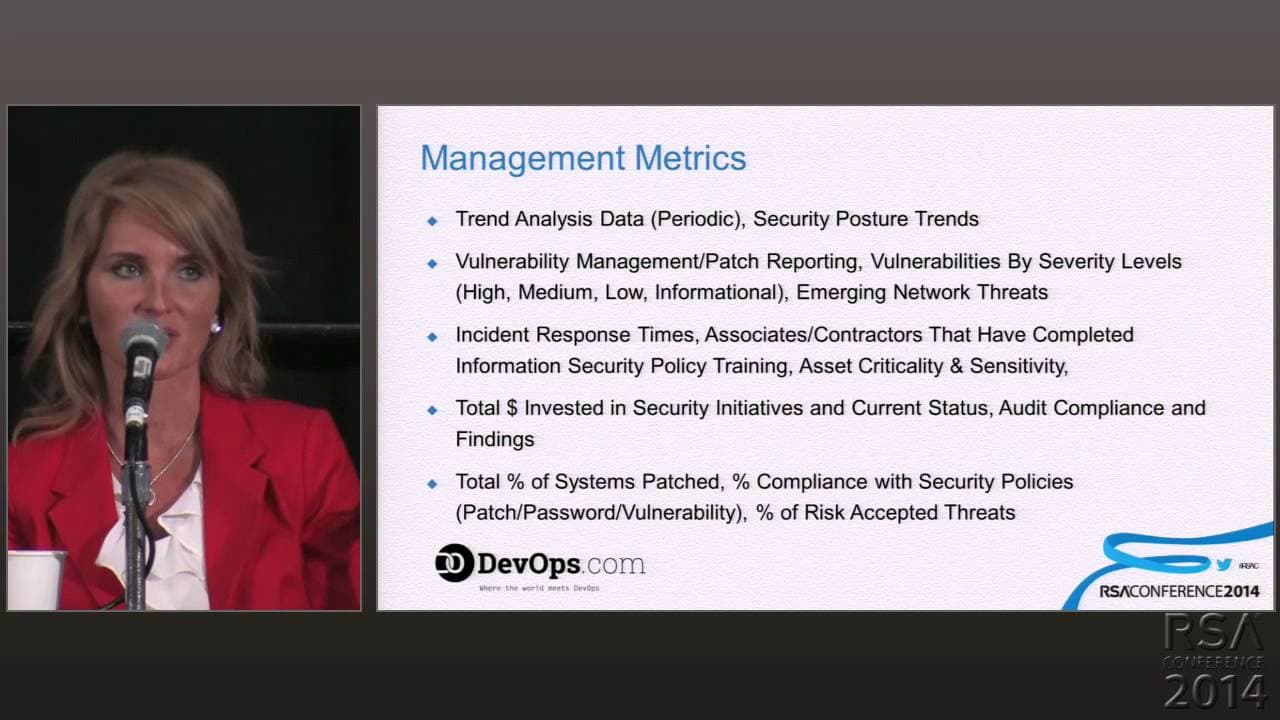
Effective security metrics connect threats, vulnerabilities, and risks to business objectives defined with stakeholders. They should present a clear picture within seconds, support decisions, and show how the security program affects the organization, while technical operational details should be tailored for managers, executives, boards, audit teams, and risk teams.
Transcript
Thank you everyone. So on behalf of the panel and I thank you all for coming, and I, I hope we can teach you all something or at least show you some things about security metrics today. And I'm looking forward to a lively discussion at the end with questions and give and take with our panel members. My name is Alan Shimel. I'm the managing partner ... Read More
Key Insights
- Effective security metrics are clear, quickly understandable, actionable, and connected to business objectives. A measurement has limited value when its audience cannot determine what it means, why it matters, or what action could improve the situation.
- Business objectives are defined with stakeholders, not imposed by the security function. Their involvement allows security professionals to connect organizational priorities with relevant data, threats, vulnerabilities, and risks, then measure security's effect on those priorities.
- Technical security data is often unsuitable for executive reporting because it lacks business context. Executives may dismiss recurring operational details as routine work unless the information demonstrates consequences for objectives, decisions, risk, or organizational performance.
- Security alignment requires more than combating threats. The security program must work with the business, understand its priorities, and demonstrate how protective activities support those priorities across departments and leadership levels.
- Audience-specific reporting is essential because engineers, managers, CISOs, boards, auditors, and risk teams need different levels of detail. The same underlying security issue should be framed according to the decisions and responsibilities of each audience.
- More security metrics do not necessarily indicate a stronger security posture. Additional detail can obscure important information, while complete attainment of a metric does not automatically prove that the organization is more secure.
- Vulnerability counts require interpretation because a large total does not explain which findings are real, relevant, or important to the organization. Reporting should connect findings to applicable risks and business effects instead of presenting an unexplained volume.
- Security management involves translating between technical teams and business leaders. Managers must understand operational security information while expressing it in business terms that leaders can use to evaluate priorities, risks, and the program's contribution.
Install to Summarize YouTube Videos and Get Transcripts
Explore YouTube Video Summarizer or Get YouTube Transcript Extractor
Questions & Answers
Q: How should an enterprise measure security effectively?
An enterprise should begin with business objectives defined through stakeholder participation, then identify the data, threats, vulnerabilities, and risks connected to those objectives. Metrics should show how security activity affects the objectives, present a clear picture quickly, and provide actionable information. Measurements should also be adapted for the intended audience rather than distributed as identical technical reports across the organization.
Q: What makes a security metric useful to decision-makers?
A useful security metric is understandable within a short period, communicates a clear picture, and indicates information that can be acted upon. Most importantly, it explains a relationship between security activity and a business objective. A technically accurate measurement can still be ineffective when decision-makers cannot identify its organizational significance or determine what response it requires.
Q: Why should security metrics align with business objectives?
Security metrics should align with business objectives because the security program exists to support the organization, not merely to combat threats in isolation. Connecting measurements to objectives helps leaders understand how risks and protective actions affect the business. It also gives security teams a meaningful basis for choosing what to measure and demonstrating the program's contribution.
Q: How can security teams make metrics relevant to executives?
Security teams can make metrics relevant to executives by translating technical conditions into effects on business objectives. Reports should explain what a threat, vulnerability, or risk means for organizational priorities and what decisions or actions are available. Repeatedly presenting technical detail without that connection can cause executives to regard the information as routine work that requires no involvement.
Q: Why are raw vulnerability counts insufficient for security reporting?
Raw vulnerability counts are insufficient because they do not reveal which findings are genuine, relevant, or consequential to the organization. A large total can alarm an audience without explaining actual exposure or priorities. Security managers should interpret the findings, relate them to applicable data and business objectives, and clarify which risks require attention or action.
Q: Who should participate in defining enterprise security metrics?
Business stakeholders and security professionals should define enterprise security metrics together. Stakeholders establish the objectives and provide context about what matters across departments and executive levels. Security teams contribute knowledge about available data, threats, vulnerabilities, and risks. Their collaboration creates measurements that reflect both organizational priorities and the security conditions that could affect them.
Q: Should every security audience receive the same metrics?
Every security audience should not receive the same level or type of detail. Engineers and administrators may need operational measurements, while CISOs, boards, audit teams, risk teams, and other leaders need information related to their responsibilities and decisions. Tailoring the presentation helps each audience understand the issue without losing the connection to shared business objectives.
Q: Does reaching complete compliance with a metric prove better security?
Reaching complete attainment on a metric does not necessarily prove that an organization is more secure, just as falling short does not automatically prove that it is less secure. The metric must be interpreted in context, including its relationship to actual risks and business objectives. Leaders should avoid treating a target alone as a definitive measure of security posture.
Summary & Key Takeaways
-
Security teams can measure extensive amounts of data, but measurable information is not automatically useful. Effective metrics must communicate a clear picture quickly, provide actionable information, and reveal how security activity affects business objectives. The central challenge is selecting information that matters instead of presenting every available operational measurement.
-
Business stakeholders must participate in defining objectives because security teams cannot determine those objectives alone. Security professionals can then evaluate the data, threats, vulnerabilities, and risks connected to each objective. This relationship creates metrics that show whether the security program supports departmental needs and broader organizational priorities.
-
Security reporting must reflect the needs of its audience. Highly technical measurements may help engineers and administrators but can leave executives disengaged because they do not explain business consequences. Managers should translate operational findings into relevant effects on objectives while resisting the assumption that more detail or complete attainment automatically means better security.
Read in Other Languages (beta)
Share This Summary 📚
Summarize YouTube Videos and Get Video Transcripts with 1-Click
Try YouTube Summary with ChatGPT & Claude or YouTube Transcript Generator
Explore More Summaries from RSAC Cybersecurity 📚



Summarize YouTube Videos and Get Video Transcripts with 1-Click
Try YouTube Summary with ChatGPT & Claude or YouTube Transcript Generator