How to Balance SOC Automation and Human Judgment
TL;DR
SOC automation should remove repetitive work and reduce alert noise while preserving human review for ambiguous or high-impact decisions. Teams should automate well-understood steps, validate results through quality assurance, control changes to scripts and workflows, maintain integrations, and give analysts enough context and time to apply judgment when anomalies do not fit established patterns.
Transcript
Okay. Automation versus human intuition. So September 1983, Mr. Petrov, his job was to monitor the nuclear warning, early warning system, uh, of the Soviet Union when he noticed a missile, uh, incoming from the United States go across his screen. His job was to push that button if-- and launch an attack in retaliation. But he did not, because he st... Read More
Key Insights
- SOC automation is most valuable when it removes repetitive processing and preserves analyst attention for ambiguous, unusual, or high-impact events. Automating every checklist item can eliminate valuable checkpoints where human intuition, organizational knowledge, and careful investigation are necessary to interpret what an alert actually means.
- Human judgment is essential when an apparent threat does not fit the expected pattern. The Petrov example shows the value of pausing to question an automated warning, considering whether the surrounding circumstances make sense, and resisting an irreversible response when a single signal conflicts with informed intuition.
- Dwell time is the period a threat actor remains inside an environment before being noticed. The cited M-Trends report indicated that organizations were increasingly detecting threats themselves before an outside agency informed them, suggesting that internal visibility and detection practices were becoming more effective.
- Alert overload is partly a consequence of successful visibility and awareness programs. Organizations collect large volumes of logs, while trained users send suspicious messages to security teams. Without orchestration, analysts may divide their attention between reported phishing and other alerts, leaving important work delayed or ignored.
- Phishing response is a workflow that combines evidence review, maliciousness assessment, containment, detection updates, message quarantine, and user communication. Closing the feedback loop matters because employees may need to know whether a reported invoice or purchase order requires legitimate business action.
- Automation candidates are best identified by reviewing recurring alerts and documenting how analysts repeatedly handle them. When a familiar event reaches an established threshold, teams can automate predictable steps while retaining human review at points where context, uncertainty, or potential consequences require additional judgment.
- Quality assurance is necessary because automated workflows can miss relevant activity or generate false alarms. Teams should test what a workflow captures, examine incorrect results, and tune its criteria so that automation reduces noise without hiding signals that analysts should investigate.
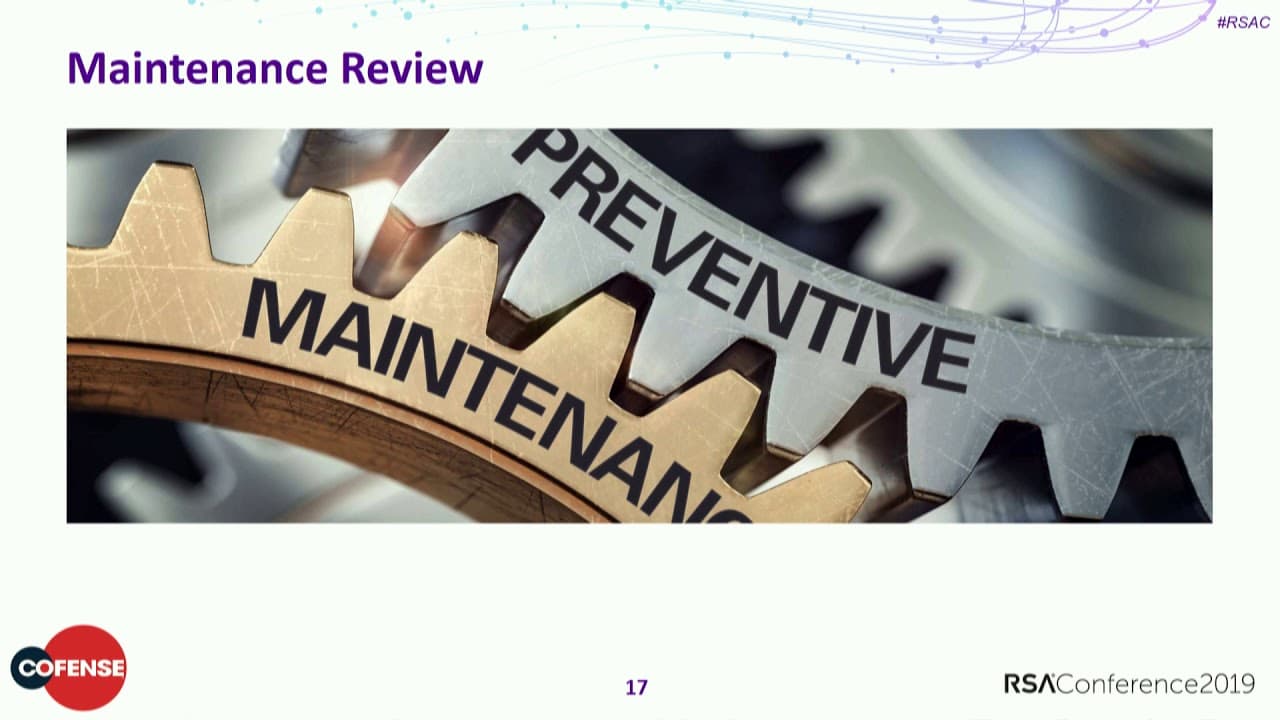
- Change control and maintenance are core requirements for reliable security automation. Scripts and rules should have controlled access, recorded modifications, known ownership, and regular validation. An automated process cannot be treated as a permanent setup because integrations, detections, and operational conditions can change.
Install to Summarize YouTube Videos and Get Transcripts
Explore YouTube Video Summarizer or Get YouTube Transcript Extractor
Questions & Answers
Q: How should SOC teams balance automation and human judgment?
SOC teams should automate repetitive, well-understood tasks while reserving human review for ambiguous, unusual, or consequential decisions. Automation can collect evidence, enrich alerts, distribute detections, and coordinate routine containment steps. Analysts should examine high-fidelity alerts and anomalies that require context. This balance reduces time spent staring at routine alerts without allowing automated rules to make every critical incident response decision.
Q: What security operations tasks are suitable for automation?
Suitable tasks are repeatable steps that occur frequently and follow a documented, predictable process. Examples from phishing response include extracting evidence, blocking a known malicious address, sending signatures to antivirus systems, requesting message quarantine, and returning a result to the reporting user. Teams should begin with patterns already observed in their environment, then automate selected steps only after understanding their conditions and possible exceptions.
Q: Why should critical incident response decisions retain human review?
Critical decisions may depend on context that an automated warning or checklist does not capture. An analyst can question whether an event fits the expected behavior, investigate surrounding evidence, and recognize an anomaly that changes the conclusion. Human checkpoints are especially important for high-fidelity alerts, uncertain phishing messages, and actions that could disrupt users or systems if an automated assessment is wrong.
Q: How can automation reduce phishing alert overload in a SOC?
Automation can handle predictable parts of phishing analysis and response so analysts do not manually repeat every action for every reported message. It can collect relevant data, pass confirmed indicators to defensive tools, request quarantine, and notify the reporting user. Analysts can then focus on determining whether suspicious content is malicious, examining unusual cases, and applying business context when a message could be legitimate.
Q: Why is user feedback important after a phishing report?
User feedback closes the reporting loop and confirms that the security team acted on the submission. It also helps employees decide what to do next. A finance employee who reports a message about an invoice or purchase order may still need to process it if it is legitimate. A clear response therefore supports both security behavior and necessary business activity.
Q: How should a SOC choose its first automation use case?
A SOC should review events already seen in its environment and identify alert types that recur often enough to consume meaningful analyst time. The team should map the existing response process, separate predictable steps from judgment-dependent decisions, and automate the predictable portion. Starting from observed work provides a concrete basis for thresholds, testing, tuning, and measuring whether the workflow actually reduces noise.
Q: How should security teams test and maintain automated workflows?
Security teams should define a quality assurance process that checks whether each workflow captures the intended events and avoids unacceptable false alarms. Incorrect outcomes should be reviewed and used to tune the automation. Teams must also revisit workflows after deployment to confirm that scripts, rules, integrations, and detections still work. Automation requires continuing maintenance rather than a set-and-forget approach.
Q: What governance controls are needed for SOC automation?
SOC automation needs change control that identifies who may modify scripts and rules, records what changed, and protects working processes from unexplained alterations. Clear ownership and modification criteria help teams answer auditor questions and investigate failures. Governance should be paired with regular maintenance, because a properly approved workflow can still become ineffective when tools, integrations, alert patterns, or operational requirements change.
Summary & Key Takeaways
-
Security operations teams asked for greater visibility, collected extensive logs, and trained users to report suspicious email. Those improvements also created more work for analysts. Automation can reduce this burden, but extracting data alone is insufficient. Useful automation must connect tools and execute carefully selected parts of established incident response processes.
-
Phishing response illustrates how automation and human judgment can work together. Tools can gather evidence, distribute detections, request message quarantine, and notify users of results. Analysts should remain involved when legitimacy is uncertain, business context matters, or an unusual signal could change the appropriate response to a reported message.
-
A sustainable automation program begins with recurring alerts and documented workflows. Teams should identify repeatable steps, use existing skills and tools, test outputs, tune false alarms, control modifications, and conduct ongoing maintenance. The goal is not unattended decision-making, but more analyst time for investigation, contextual reasoning, and consequential security decisions.
Read in Other Languages (beta)
Share This Summary 📚
Summarize YouTube Videos and Get Video Transcripts with 1-Click
Try YouTube Summary with ChatGPT & Claude or YouTube Transcript Generator
Explore More Summaries from RSAC Cybersecurity 📚




Summarize YouTube Videos and Get Video Transcripts with 1-Click
Try YouTube Summary with ChatGPT & Claude or YouTube Transcript Generator