Talking about the main concepts of the week IV (URJCx)
TL;DR
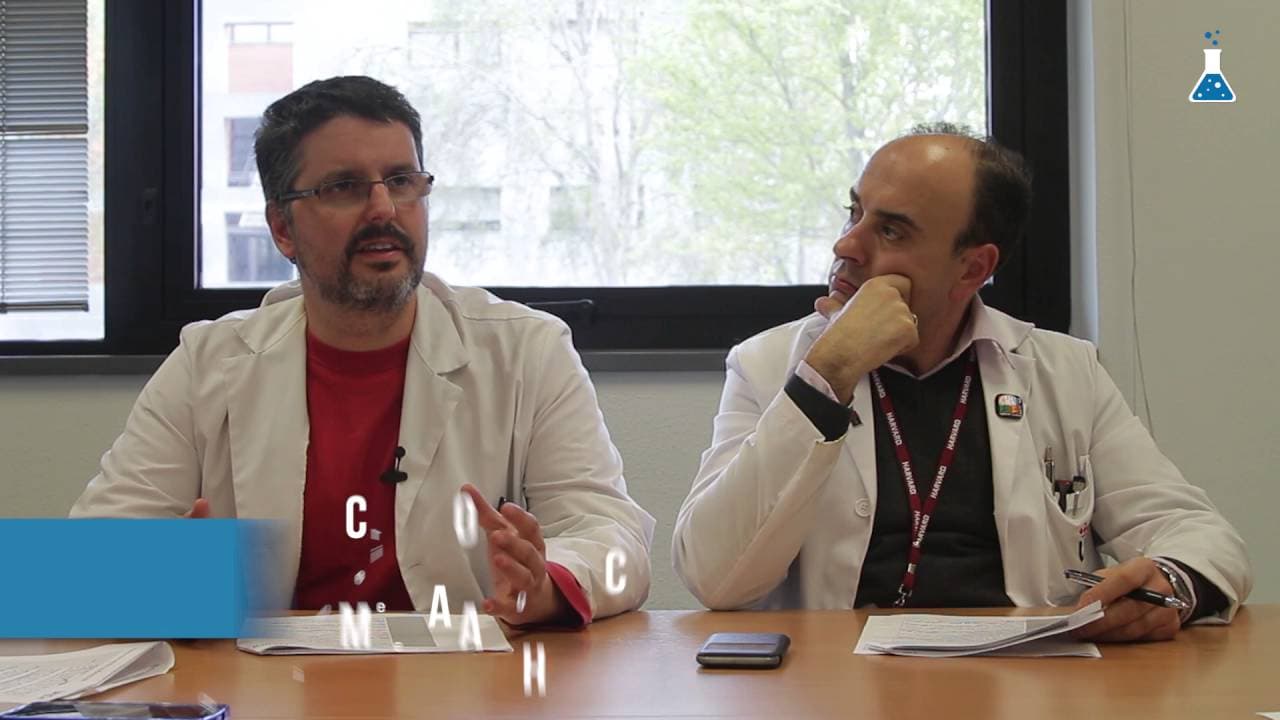
Discussion on chemical properties and daily life relevance of group 13 elements.
Transcript
you property who you seen is the most relevant for the element of group 13 well given the router shall electronic configuration ns2 and b1 they can show both 1 plus or three plash oxidation states in my opinion this is a really important future yeah this is something that we haven't seen before four elements in blog is so this is the first time tha... Read More
Key Insights
- Group 13 elements exhibit unique oxidation states due to their ns2 and np1 electronic configuration, showing both +1 and +3 states.
- Redox diagrams like Lattimer and Frost are essential for understanding the properties of group 13 elements.
- Group 13 elements exhibit diverse acid-base behaviors, with boron forming acidic oxides and aluminum showing amphoteric properties.
- Aluminum is a prevalent element in daily life, found in various objects like cans and appliances, highlighting its importance.
- Gallium arsenide serves as a semiconductor alternative to silicon and germanium, crucial in laser and LED technologies.
- Boron in glass enhances its properties, making it a valuable component in modern applications.
- The environmental impact of aluminum production is significant, necessitating recycling to mitigate energy consumption and pollution.
- Group 13 elements possess a vacant p orbital, which influences their chemical reactivity and bonding capabilities.
Install to Summarize YouTube Videos and Get Transcripts
Explore YouTube Video Summarizer or Get YouTube Transcript Extractor
Questions & Answers
Q: What are the oxidation states of group 13 elements?
Group 13 elements have an ns2 and np1 electronic configuration, allowing them to exhibit oxidation states of +1 and +3. This dual oxidation state capability is a notable feature, distinguishing them from other groups. The +3 state is more common, but the +1 state is also significant in certain chemical contexts.
Q: How do redox diagrams help in understanding group 13 elements?
Redox diagrams such as Lattimer and Frost are essential tools for understanding the redox behavior of group 13 elements. These diagrams help visualize the potential changes between oxidation states, providing insights into their chemical reactivity and stability. They are particularly useful in predicting reactions and understanding complex chemical systems.
Q: What is the significance of aluminum in daily life?
Aluminum is a highly significant element in daily life due to its widespread use in various objects like beverage cans, food packaging, and domestic appliances. Its lightweight, corrosion resistance, and recyclability make it a valuable material in multiple industries, contributing to its ubiquitous presence and economic importance.
Q: Why is gallium important in semiconductor technology?
Gallium plays a crucial role in semiconductor technology, particularly in the form of gallium arsenide. It serves as an alternative to silicon and germanium, offering superior electronic properties for certain applications. Gallium arsenide is used in high-speed electronics, laser diodes, and LED technologies, making it vital for modern electronic advancements.
Q: How does boron enhance glass properties?
Boron is a key component in enhancing glass properties, particularly in borosilicate glass. It improves thermal resistance, chemical durability, and mechanical strength, making the glass more suitable for demanding applications. This enhancement is crucial for laboratory glassware, cookware, and certain types of optical lenses, where durability and performance are essential.
Q: What are the environmental impacts of aluminum production?
Aluminum production has significant environmental impacts, primarily due to its high energy consumption and associated greenhouse gas emissions. The extraction process, particularly the Hall-Héroult process, contributes to environmental degradation. Therefore, recycling aluminum is vital to reduce energy use, minimize waste, and lessen the overall environmental footprint.
Q: What chemical properties are influenced by the vacant p orbital in group 13 elements?
The vacant p orbital in group 13 elements significantly influences their chemical reactivity and bonding capabilities. This orbital allows these elements to form pi-bonds and engage in complex bonding arrangements. It also contributes to their ability to act as Lewis acids, accepting electron pairs in reactions, which is a critical aspect of their chemistry.
Q: What are the acid-base behaviors of group 13 oxides?
Group 13 oxides exhibit diverse acid-base behaviors. Boron forms acidic oxides, while aluminum and gallium form amphoteric oxides, capable of reacting with both acids and bases. Indium and thallium oxides are more ionic, showing basic characteristics. This variation is due to differences in electronegativity and bonding, reflecting the complexity of group 13 chemistry.
Summary & Key Takeaways
-
Group 13 elements have a distinctive electronic configuration allowing them to exhibit multiple oxidation states, making them unique in chemical behavior. Redox diagrams are crucial for understanding these properties. Aluminum, gallium, and boron have significant roles in daily life, from household items to advanced technologies.
-
The chemical behavior of group 13 elements varies significantly, with boron forming acidic oxides and aluminum showing amphoteric properties. Gallium's role as a semiconductor is notable, offering alternatives to traditional materials like silicon. Boron's contribution to glass properties is also significant and widely appreciated.
-
Aluminum's prevalence in daily life underscores its importance, but its production poses environmental challenges, emphasizing the need for recycling. Group 13 elements' vacant p orbitals contribute to their chemical reactivity, making them distinct from other groups. Discussions continue to explore these elements' roles and impacts.
Read in Other Languages (beta)
Share This Summary 📚
Summarize YouTube Videos and Get Video Transcripts with 1-Click
Try YouTube Summary with ChatGPT & Claude or YouTube Transcript Generator
Explore More Summaries from universidadurjc 📚




Summarize YouTube Videos and Get Video Transcripts with 1-Click
Try YouTube Summary with ChatGPT & Claude or YouTube Transcript Generator