In Order To CHANGE YOUR LIFE, You NEED To Understand THIS FIRST | Chelsea handler & Jay Shetty
TL;DR
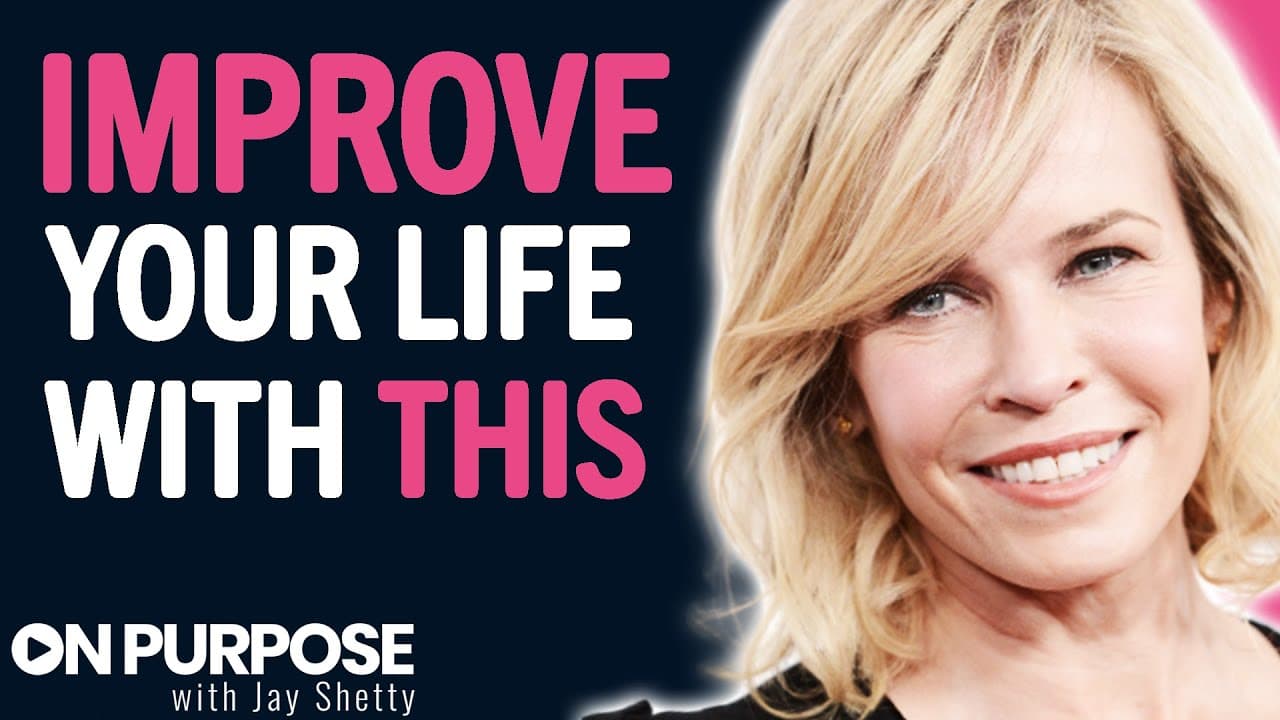
Therapy can help you face old injuries, such as losing a sibling in childhood, that success and a tough exterior hide. Chelsea Handler explains that sharing openly, getting past ego and cynicism, and working with a psychiatrist let her understand her anger and become more useful to other people.
Transcript
i just think optimism is great because i think you know positivity is better than negativity and optimism and visualization of positive things works i mean like it's just about like which direction do you want to go in you know which road do you want to go down i'd rather be happy hello everyone welcome back to on purpose the number one health podc... Read More
Key Insights
- Many people look for the right person instead of working on being the right person. Chelsea Handler opens her book with a Gloria Steinem quote to set that theme, and says her own pattern runs toward extreme independence.
- Fierce independence can be a defense. Handler describes rejecting everyone first so that nobody gets to reject her, and telling herself she can fix everything and needs no one.
- Chasing achievements can cause you to lose the plot. Handler says people focus on what they are doing and achieving rather than on what kind of person they are being along the way.
- Unrepaired injuries from the past still matter even when you look successful. Handler says a nine-year-old injury from her brother dying and her father's reaction stayed with her behind a veneer of being fine.
- Repairing your own injuries makes you more useful to others. Handler argues that a meaningful, impactful life requires getting real with yourself before trying to create change.
- Therapy is a privilege not everyone can afford. Handler feels that because she can pay for a psychiatrist, she has an obligation to do the work and become a better human being.
- Cynicism and ego can be barriers to therapy. Handler distrusted spiritual mumbo jumbo and feared that talking about herself for two hours was navel gazing and narcissism.
- Intense anger can point to something deeper. After the election, Handler's anger was constant, and therapy showed that the unhinged political climate echoed an out-of-control childhood.
Install to Summarize YouTube Videos and Get Transcripts
Explore YouTube Video Summarizer or Get YouTube Transcript Extractor
Questions & Answers
Q: Why did Chelsea Handler start seeing a psychiatrist?
Handler started after the election, when her outrage was at a ten out of ten all the time. She could not work or focus on anything except the news and the constant spin cycle. She wanted to turn that anger into something powerful and good instead of letting it rob her of her life.
Q: What did therapy reveal about Chelsea Handler's anger?
After three sessions spent complaining about Donald Trump, she and her psychiatrist began to look at what his presidency represented to her. It stood for an unhinged childhood where things were completely out of control. For the first time in her adult life things felt out of control again, which reminded her of her brother going away and dying.
Q: Why does Chelsea Handler say you should not minimize painful events?
Her psychiatrist told her not to minimize an incident just because it was not something as extreme as rape or sexual assault. She had a right to be in pain after losing her brother. Handler says the injury is deep and it matters, even if she once treated it as the past and told herself it did not.
Q: What is the Gloria Steinem quote at the start of Handler's book about?
The quote is about how people look for the right person rather than trying to be the right person. Handler says this theme matters to her because many people want someone to complete their lives, like a lid for a pot. Her own tendency is the opposite: insisting she needs no one and can fix everything herself.
Q: Why was Chelsea Handler resistant to therapy at first?
She had a hard time with therapy because she thought it represented spiritual mumbo jumbo. As someone with a show and books about herself, she worried that going to talk about herself for two hours was navel gazing. She thought it was all ego and even called herself a narcissist, and she also admits she lied to therapists early on.
Q: How does fierce independence show up as a defense?
Handler says she was so independent that she would reject everyone so that nobody could reject her. She told herself she could handle everything, did not need help from anyone, and did not need a man or a family. She notes that most people lean toward one extreme or the other.
Q: Why does Handler believe doing therapy is a responsibility?
She points out that not many people have the luxury of working on themselves, since many are just trying to scrape by. Because she can afford to see a psychiatrist for a year, she feels she had better do the work. Her aim is to be a better human being at the end of it and to do things that are impactful.
Q: How did Chelsea Handler decide to talk about therapy at Wisdom 2.0?
Her psychiatrist referred her to the Wisdom 2.0 conference in San Francisco and asked if she was interested in speaking. She was not sure at first, but since her entire book is about her relationship with her psychiatrist and her experience of therapy, she decided it was a good place to start promoting the book.
Summary
This video features an interview with Chelsea Handler, where she discusses her book "Life Will Be the Death of Me" and her journey towards mindfulness, personal growth, and self-awareness. She talks about the importance of optimism, being the right person rather than finding the right person, and the power of therapy in exploring and healing from past traumas. She also addresses the superficiality and cynicism often associated with spirituality and self-help practices. Handler shares her own transformation in habits and mindset, including meditation and cannabis use, and the need for empathy and self-awareness in building meaningful connections with others.
Questions & Answers
Q: Why did Chelsea start her book with the quote about finding the right person versus being the right person?
Chelsea explains that the quote resonated with her because she has always been fiercely independent and focused on being self-sufficient. She often rejected others before they could reject her and believed she didn't need anyone in her life. The quote set the tone for her book by challenging this mindset and emphasizing the importance of personal growth and self-improvement.
Q: How did Chelsea first become open to therapy and exploring her own emotions?
Chelsea was initially resistant to therapy but decided to give it a try after feeling overwhelmed by anger and outrage after the 2016 election. She realized that her anger was consuming her and affecting her ability to focus and be productive. She saw therapy as a way to channel her anger into something positive and to better understand herself and her reactions. Through therapy, she uncovered the underlying trauma and emotional wounds that were fueling her anger and began the process of healing and growth.
Q: How did Chelsea start revisiting traumatic events and moments in a constructive way?
Chelsea highlights the importance of having a professional therapist to guide and support the process. She acknowledges that revisiting painful memories can be challenging, and having the vocabulary and expertise of a therapist is crucial in navigating and addressing deep emotional wounds. She also emphasizes the role of mindfulness and welcoming unwelcome thoughts and emotions, rather than suppressing or avoiding them.
Q: How has Chelsea's mindset and habits changed since her journey towards self-awareness?
Chelsea mentions several changes she has made, including committing to a daily meditation practice, being less reactive, and having more presence in her interactions and relationships. She also mentions using cannabis as part of her routine, finding that it has helped her reduce drinking and become more present and calm. Overall, she strives for a more mindful, empathetic, and less judgmental approach to life.
Q: How does Chelsea navigate the superficiality and cynicism often associated with spirituality and self-help practices?
Chelsea points out that she has been skeptical of these practices in the past, often associating them with superficial trends and fads. However, she recognizes that everyone has different beliefs and practices, and what might work for one person may not work for another. She prefers to focus on her own preferences and what she finds beneficial, rather than calling out or putting down others for their beliefs. She values the power of empathy and self-awareness in personal growth and building meaningful connections.
Q: How does Chelsea view the role of comedy in her journey of personal growth?
Chelsea believes that humor is essential in her book and in life. She wants her readers to find enjoyment and playfulness, even in deeper and more profound topics. She views comedy as a way to digest serious subjects, lightening the mood while still conveying important messages. Comedy also allows her to engage with her audience and use her platform to make a difference and create change.
Q: How does Chelsea describe empathy and its importance in her life?
Chelsea distinguishes between sympathy and empathy, noting that she was previously more sympathetic rather than truly empathetic. She explains that empathy involves putting oneself in another person's shoes and genuinely considering their perspective and experiences. Through therapy, she has learned to cultivate empathy and develop a deeper understanding and connection with others. She emphasizes the importance of empathy in building meaningful relationships and fostering a more compassionate and inclusive world.
Q: How has Chelsea's identity as a comedian transformed through her journey of personal growth and self-awareness?
Chelsea acknowledges that her journey has had an impact on her as a comedian. While comedy remains an integral part of her identity, she now infuses it with deeper and more profound messages. She seeks to challenge and expand audiences' expectations, offering a blend of humor and thought-provoking insights. Through her comedy, she aims to make a difference and contribute to positive change in the world.
Q: What changes has Chelsea noticed in herself since embracing mindfulness and personal growth?
Chelsea shares that she is now less reactive and impulsive, choosing to pause and reflect before responding to situations. She has also become more present and less focused on the future or the past. Additionally, she has become more aware of her own ego and the need to let go of the need to always be right or have all the answers. Overall, she has experienced a positive shift in her mindset and habits, allowing her to live a more balanced and fulfilling life.
Q: How does Chelsea approach challenges and setbacks in her personal growth journey?
Chelsea embraces challenges and setbacks as opportunities for growth. She acknowledges that personal growth is not linear and that there will be setbacks along the way. However, she maintains a positive attitude and is committed to continuing her progress. She sees challenges as chances to learn and improve, rather than allowing them to demotivate or discourage her.
Takeaways
Chelsea Handler's journey towards mindfulness and personal growth highlights the importance of optimism, self-awareness, and empathy. She emphasizes the need to focus on being the right person rather than solely searching for external validation or completion. Chelsea's story reminds us of the potential for transformation and growth at any stage in life. By embracing therapy, mindfulness practices like meditation, and examining our own trauma and beliefs, we can develop a deeper understanding of ourselves and create more meaningful connections with others. Chelsea's playful yet profound perspective serves as an inspiration for personal growth and positive change.
Summary & Key Takeaways
-
Chelsea Handler talks with Jay Shetty about her book Life Will Be the Death of Me and her experience with therapy. She explains how a psychiatrist's referral led her to speak at Wisdom 2.0, and why she decided to share her story publicly.
-
She discusses the Gloria Steinem quote that opens her book, about being the right person rather than finding one. Handler describes her fierce independence, her habit of rejecting others first, and how people often chase results instead of understanding who they are.
-
Handler describes why she started therapy after the election, when her anger was constant. Early sessions were complaints about Donald Trump, but they led to her brother's death and the feeling of life being out of control, and to accepting that her pain was valid.
Read in Other Languages (beta)
Share This Summary 📚
Summarize YouTube Videos and Get Video Transcripts with 1-Click
Try YouTube Summary with ChatGPT & Claude or YouTube Transcript Generator
Explore More Summaries from Celebrities 📚



Summarize YouTube Videos and Get Video Transcripts with 1-Click
Try YouTube Summary with ChatGPT & Claude or YouTube Transcript Generator