How to launch a business in 7 days plan for startups
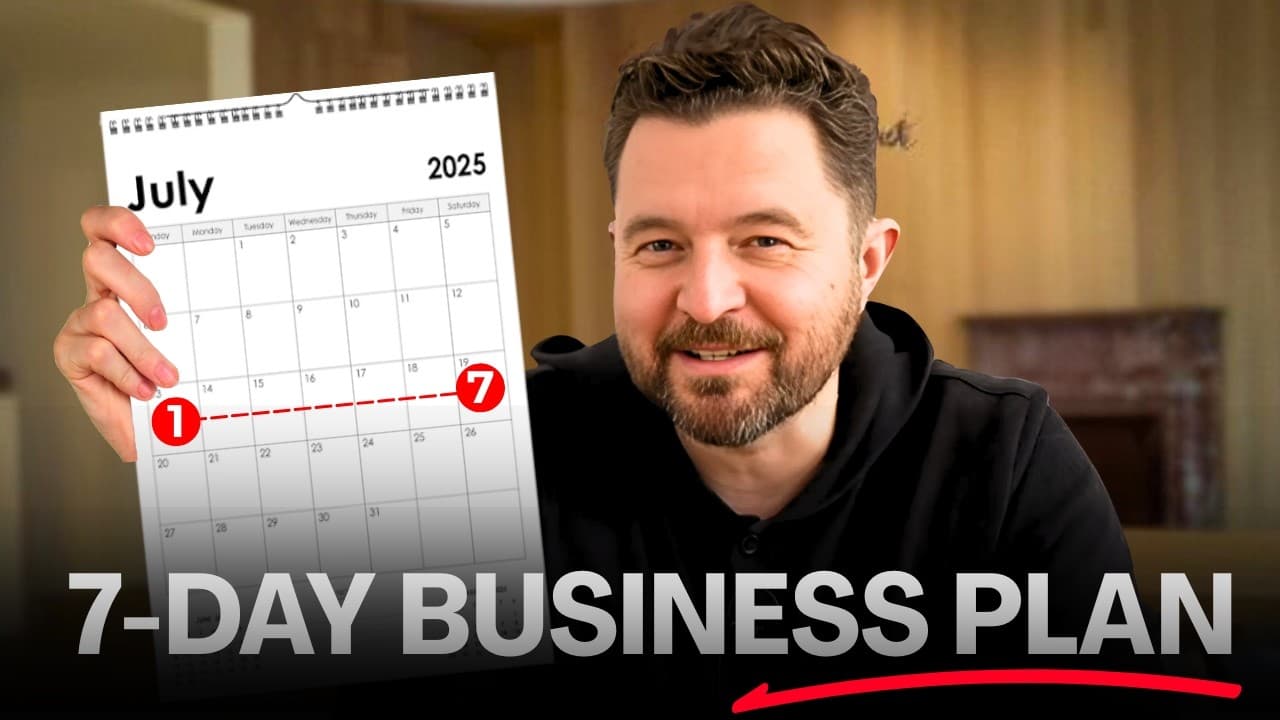
TL;DR
The plan starts with a two-person scout team to test ideas. Over seven days you generate ten ideas, narrow to three, create waiting lists, and publish signature content while sending targeted messages. By week end you book sales calls, refine offers, and pick a winner for launch.
Transcript
If I had to start all over again, this is going to be what I would do in my first week in my first seven days to get the business off the ground. Now, as you may know, I've launched seven businesses from zero to a million in their first 12 months over the last 20 years. I've worked with 5 a half thousand different businesses globally. I've got lots... Read More
Key Insights
- A scout team is essential for early feasibility testing, combining two people to explore whether you can sell and build something.
- Three prompts drive initial ideas: passion, problems, and payment, ensuring a balanced set of opportunities.
- Waiting lists are a core validation tool that entice early sign ups and provide pre-launch momentum.
- Harvard Business Review found waiting lists can boost sales by structuring early interest and commitment.
- You should create three waiting lists to compare performance and optimize messaging and offers.
- Signature content plus a disciplined 60 direct messages per idea translates to substantial outreach and data collection.
- Sales meetings become a focus mid week to convert interest into tangible opportunities, not just awareness.
- By the end of day seven you choose a winner based on data and feedback and prepare for a formal launch.
Install to Summarize YouTube Videos and Get Transcripts
Explore YouTube Video Summarizer or Get YouTube Transcript Extractor
Questions & Answers
Q: What is the initial team setup for launching a business in seven days?
The plan starts with a scout team, which is two people working together to explore whether you can sell something and whether you can build it. This collaborative approach helps validate ideas faster than solo efforts and sets the foundation for rapid testing across the week.
Q: How are ideas generated in Day 1 of the plan?
Day 1 focuses on generating ten ideas based on three prompts: passion, problems you have noticed in the world, and the money flow in industries. You then narrow these ten ideas down to three by seeking input from experienced entrepreneurs in your network who can advise on feasibility and potential improvements.
Q: What is the purpose of three waiting lists in the plan?
Three waiting lists are created to test interest in each of the top ideas. A waiting list page is set up, with clear messaging about frustrations and potential solutions. The goal is to gauge demand before building the product and to identify which idea resonates most with potential customers.
Q: What role does signature content play in the strategy?
For each idea, you publish a piece of signature content that outlines a thesis or key insights relevant to the idea. This content, typically 300 to 500 words, is shared on social platforms to establish credibility and generate interest, which is then amplified through direct messages.
Q: How many direct messages are recommended per idea, and why?
A minimum of 60 direct messages is recommended for each idea, resulting in 180 messages per day for three ideas. This aggressive outreach accelerates feedback collection, drives traffic to the waiting lists, and helps validate which idea garners the most interest.
Q: What happens on Day 4 and why is it important?
On Day 4 you aim to book sales calls with interested prospects. Meeting potential customers converts interest into concrete conversations, enabling you to understand their needs, negotiate terms, and begin shaping a compelling offer that can be tested through the waiting lists.
Q: How is data used to select the final winner?
Throughout the week you collect data from waiting lists, signature content engagement, and sales conversations. This data informs which idea has the strongest market signal, and the honest feedback gathered helps you refine the offer or select the winner to launch.
Q: What does Harvard Business Review say about waiting lists?
Harvard Business Review is cited as having tested the strategy and found that launching with a waiting list increases sales by about 40 percent. This external validation supports the approach of pre-launch interest as a proven method to improve launch performance.
Summary & Key Takeaways
-
The video outlines a seven day plan that begins with a scout team to test feasibility of ideas and ends with selecting a winning concept and announcing a launch. It emphasizes rapid validation through waiting lists, social content, and proactive outreach.
-
The approach uses three sources of ideas: passion, world problems, and market money flow. You filter ideas through expert feedback, then test interest with waiting lists and data collected from early sign ups.
-
The final week focuses on converting interest into sales through calls and structured offers, with data review and honest feedback guiding the final winner and the launch strategy.
Read in Other Languages (beta)
Share This Summary 📚
Summarize YouTube Videos and Get Video Transcripts with 1-Click
Try YouTube Summary with ChatGPT & Claude or YouTube Transcript Generator
Explore More Summaries from Daniel Priestley || Key Person Of Influence 📚



Summarize YouTube Videos and Get Video Transcripts with 1-Click
Try YouTube Summary with ChatGPT & Claude or YouTube Transcript Generator