TCD1304-based spectrometer - Part 4
TL;DR
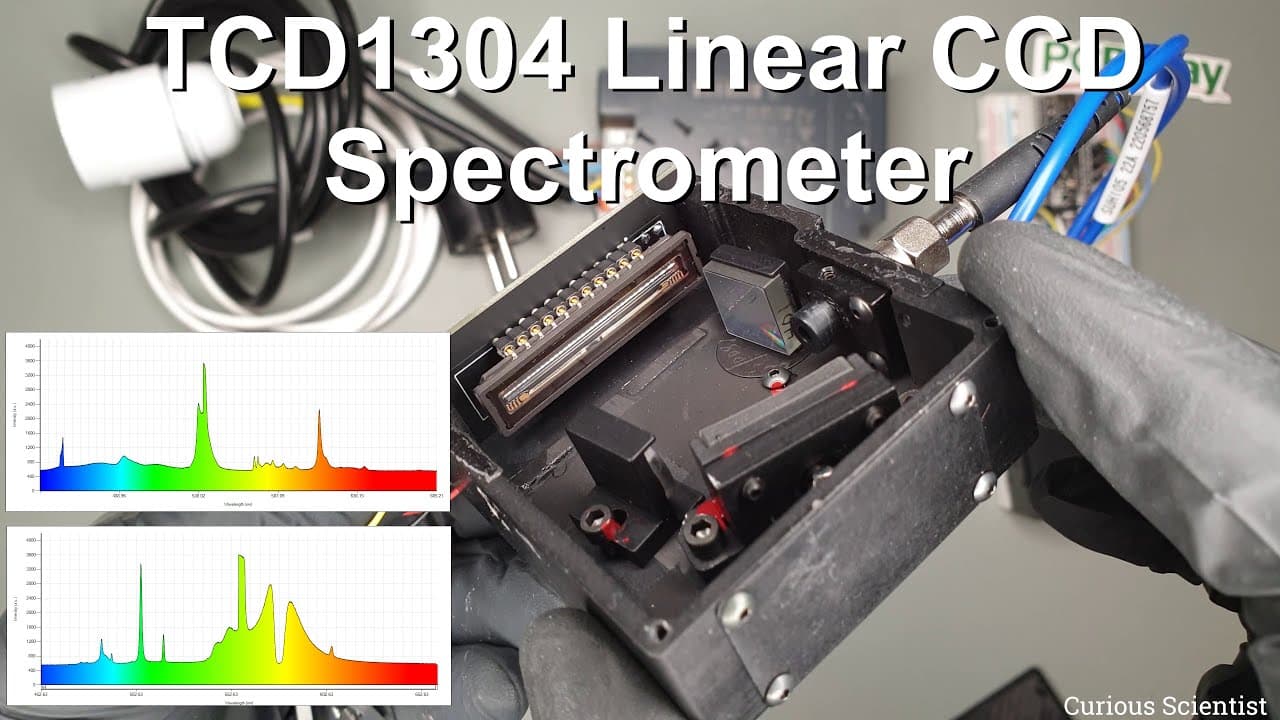
The video showcases a spectrometer project update including calibration methods and new light sources used for analysis.
Transcript
this video is sponsored by pcba welcome everyone in this video I'm going to show you the next update for my spectrometer project so in the previous video I have already showed you this little box this is the PCB that I designed and built which contains the linear CCD and then this is basically the box and this connector here is the SME connector wh... Read More
Key Insights
- 🙂 The project utilizes a TCD 1304 CCD on a custom PCB to create a compact spectrometer capable of analyzing various light spectra.
- 🙂 Calibration of the spectrometer software is performed using multiple reference points from known light sources for improved accuracy in wavelength measurements.
- 😀 A unique challenge faced was the fiber optics connection, which required precise insertion to capture accurate spectral data.
- ⚡ The creator emphasizes safety, particularly regarding heat generation from high-intensity light sources used in the project.
- 👤 Data processing and analysis are conducted using custom-developed software that visualizes spectra for easier interpretation by the user.
- 🏛️ The video demonstrates the iterative nature of engineering projects, highlighting both successes and setbacks in building the spectrometer.
- 🙂 The importance of proper housing for light sources is also highlighted, including securing connections and ensuring effective light output from fibers.
Install to Summarize YouTube Videos and Get Transcripts
Explore YouTube Video Summarizer or Get YouTube Transcript Extractor
Questions & Answers
Q: What components were used to build the spectrometer in this video?
The spectrometer was built using a custom-designed PCB housing a TCD 1304 CCD sensor, a collimating mirror, a diffraction grating, and an optical fiber for light input. The creator also utilized a 3D printed enclosure to maintain organization and aesthetics. These components enable the spectrometer to analyze various light sources effectively.
Q: How does the creator calibrate the spectrometer software to improve accuracy?
The creator employs a multi-point calibration method where they select four known wavelengths from various light sources, such as high-pressure sodium lamps. By creating a linear regression based on these calibration points, the software can accurately convert pixel numbers from the CCD into corresponding wavelengths, thus improving measurement accuracy.
Q: What issues did the creator encounter with the optical fiber used in the project?
The creator discovered that the optical fiber had a limited core diameter of only 100 micrometers, which hindered its ability to capture the complete spectrum effectively. This issue resulted in misleading measurements unless the fiber was properly seated in the spectrometer. Plans were suggested for upgrading to a fiber with a larger core diameter in the future.
Q: Why is temperature monitoring important when using high-intensity light sources with the spectrometer?
Temperature monitoring is crucial because high-intensity light sources, like high-pressure sodium lamps, generate significant heat during operation. Without adequate ventilation or cooling mechanisms within the enclosure, the heat could potentially damage the equipment, affect measurements, or lead to safety hazards. The video emphasizes the importance of allowing these light sources to cool down when necessary.
Summary & Key Takeaways
-
The video updates viewers on a DIY spectrometer project, detailing the assembly of a custom PCB and optical components for analyzing light spectra.
-
The creator explains calibration techniques using known light sources such as high-pressure sodium lamps and fluorescent lights to enhance spectrometer accuracy.
-
The use of software to analyze captured spectra data, along with challenges faced with optical fibers and resulting measurements, is discussed in detail.
Read in Other Languages (beta)
Share This Summary 📚
Summarize YouTube Videos and Get Video Transcripts with 1-Click
Try YouTube Summary with ChatGPT & Claude or YouTube Transcript Generator
Explore More Summaries from Curious Scientist 📚
![Building a coil winder [Part 6] - A few improvements thumbnail](/_next/image?url=https%3A%2F%2Fi.ytimg.com%2Fvi%2F3eyxG_g2iUA%2Fhqdefault.jpg&w=750&q=75)
Summarize YouTube Videos and Get Video Transcripts with 1-Click
Try YouTube Summary with ChatGPT & Claude or YouTube Transcript Generator