How to manufacture luck and spot opportunities
TL;DR
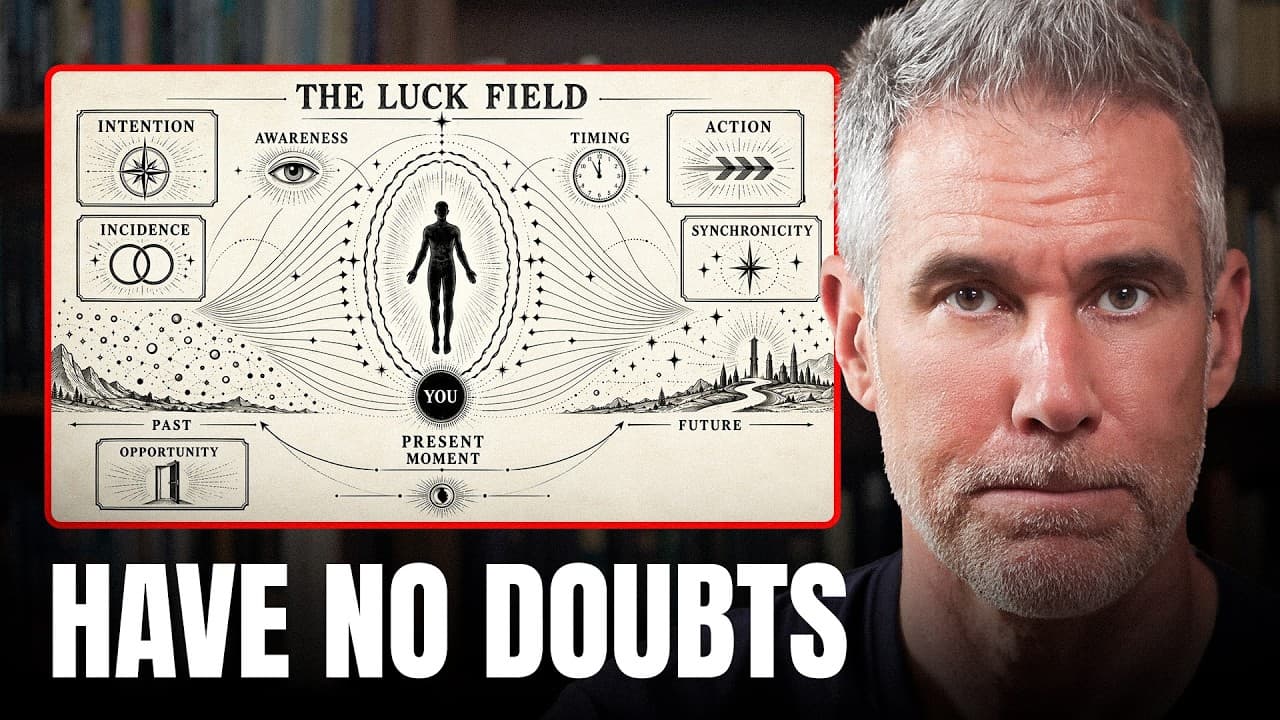
Luck is something you manufacture. Your beliefs shape what you notice, and states of mind influence openness to opportunities. By expanding your luck surface area, increasing collision points, and adopting an empowered mindset, you can create favorable outcomes rather than waiting for luck to strike. The video links psychology research to practical mindset shifts that increase opportunities and perceived luck.
Transcript
Some people seem to be incredibly lucky. They meet the right person at exactly the right time. They stumble [music] into opportunities that change their lives. But scientists have actually studied lucky people. And what they've discovered suggests that luck may not be nearly as random as we think. But I think the science only takes us [music] so fa... Read More
Key Insights
- Luck is manufactured, not random, and is influenced by beliefs, attention, and emotional state.
- Lucky people notice more because they expect good things and stay open to unexpected information.
- The 88 percent figure shows most reality is filtered subconsciously, guiding what we see and miss.
- A primal state focuses on threat, reducing openness to opportunities and creative exploration.
- A powerful state, through rest and curiosity, expands perception and opportunity recognition.
- Luck surface area measures how many chances you create for probability to work in your favor.
- Collision points are unplanned encounters that spark innovation and new ideas.
- Expanding belief systems and exposure increases the probability of favorable outcomes.
Install to Summarize YouTube Videos and Get Transcripts
Explore YouTube Video Summarizer or Get YouTube Transcript Extractor
Questions & Answers
Q: How can I start manufacturing luck today
Begin by examining your beliefs and emotional state. If you carry scarcity or fear, you are likely to miss opportunities because your attention narrows. Move toward a powerful state by cultivating curiosity, reducing threat signals, and engaging with diverse people and ideas. Start small, set a daily exposure goal, and reflect on what you notice.
Q: What is the luck surface area concept
Luck surface area is the idea that increasing exposure to new people, ideas, and environments creates more potential collision points where valuable encounters can occur. By broadening your social and informational landscape, you raise the odds that meaningful opportunities will appear, even if each individual chance remains unpredictable.
Q: What role do beliefs play in noticing opportunities
Beliefs shape what you expect to find and what you consider important. If you believe opportunities are scarce, you will filter out potential chances and misinterpret or overlook them. Reframing beliefs toward possibility expands attention, allowing you to notice people, signals, and moments that others miss.
Q: How does the concept of synchronicity fit into this
Synchronicity describes meaningful coincidences that seem connected beyond cause and effect. The video links this to how mind and matter might align when inner expectations and outer events converge, suggesting that awareness and timing can produce outcomes that feel guided rather than random.
Q: Who is Wiseman and what did his experiments show
Wiseman was a psychologist who studied lucky and unlucky people. His experiments showed that lucky individuals are more open to opportunities, expect good things, and notice information not explicitly sought. This supports the idea that perception and attention mediate the experience of luck.
Q: What does the 80/20 rule refer to in this talk
The 80/20 rule here states that about 80 percent of entrepreneurial success comes from mindset, while approximately 20 percent comes from tactics and strategies. This emphasizes the power of inner work and beliefs in driving external results.
Q: What is collision points and why do they matter
Collision points are unplanned encounters where diverse people share ideas, creating opportunities for innovation. Increasing these points raises the probability of lucky outcomes because it broadens the network and information flow that can trigger new directions or partnerships.
Q: How can someone practical apply these ideas
Practically, you can start by expanding your daily exposure to new people, roles, and environments, track what you notice, and practice shifting into a curious, presence-rich state. Regular reflection on your beliefs and emotional state helps realign attention with opportunities and builds a habit of spotting potential luck.
Summary & Key Takeaways
-
Luck is not random but manufactured through beliefs, attention, and emotional state, which determine what you notice and opportunities you miss. The talk blends Wiseman’s research with concepts from synchronicity to show how mindset and environment shape luck. It argues that expanding exposure to new people, ideas, and settings increases collision points that spark opportunities.
-
The presenter emphasizes an 80/20 balance where mindset drives 80 percent of success and tactics 20 percent, meaning inner work creates external results. He introduces luck surface area as a metric for how many chances you give probability to work in your favor.
-
Ultimately the video connects ancient ideas about synchronicity and collective unconscious to modern neuroscience and entrepreneurship, arguing that inner architecture of belief and attention can turn random encounters into meaningful outcomes.
Read in Other Languages (beta)
Share This Summary 📚
Summarize YouTube Videos and Get Video Transcripts with 1-Click
Try YouTube Summary with ChatGPT & Claude or YouTube Transcript Generator
Explore More Summaries from David Bayer 📚





Summarize YouTube Videos and Get Video Transcripts with 1-Click
Try YouTube Summary with ChatGPT & Claude or YouTube Transcript Generator