How to start journaling for personal growth and insight
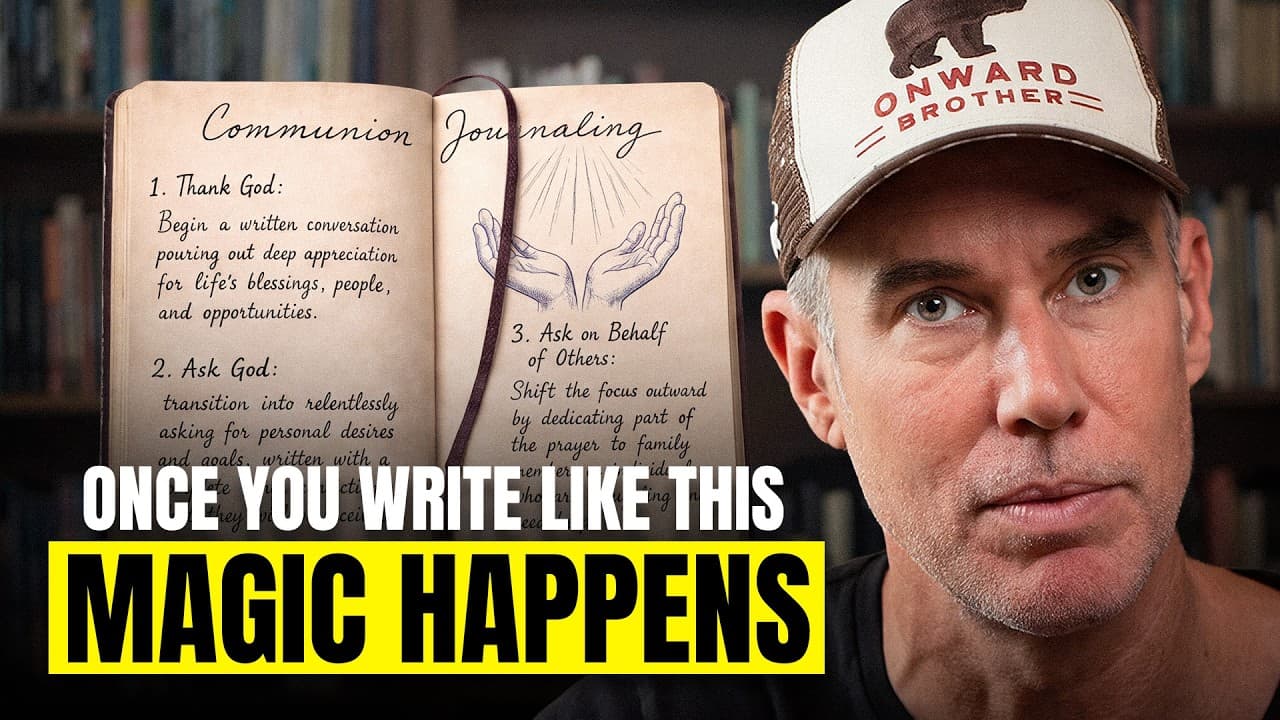
TL;DR
Journaling is a powerful multi dimensional tool for personal growth. Writing by hand slows thought, opens access to subconscious insights, and helps process emotions while reinforcing positive states like gratitude. The episode provides a 10 to 15 minute journaling routine you can adopt today to experience these benefits.
Transcript
I am begging you to start journaling. And I know how that sounds, because journaling feels like one of those things everybody tells you that you should do. You write down your thoughts, you keep a gratitude journal, you write down your goals. And I think because we've heard all of that so many times, we've completely underestimated what journaling ... Read More
Key Insights
- Journaling can address multiple dimensions of transformation simultaneously, unlike practices that focus on a single aspect.
- Writing by hand slows cognitive speed, enabling access to deeper subconscious insights that can reframe problems.
- The act of handwriting engages more brain areas than typing, creating stronger memory traces and reinforcing ideas.
- Journaling gives permission for emotions to flow, helping release stuck energy through honest writing.
- Expressive writing can reveal underlying problems that the mind initially hides, leading to breakthroughs in understanding.
- Gratitude and positive emotions are amplified when you write them out, sustaining the experience beyond a fleeting thought.
- The practice connects ideas to physical form, turning thoughts into actionable insights through inscription.
- A simple 10 to 15 minute routine can produce meaningful shifts without needing complex tools or frameworks.
Install to Summarize YouTube Videos and Get Transcripts
Explore YouTube Video Summarizer or Get YouTube Transcript Extractor
Questions & Answers
Q: A real search query question about the video (e.g. 'How to...', 'What is...', 'Why does...', 'When should...'). Question 1
Journaling is presented as a versatile, time efficient practice that engages the whole transformational system. By writing by hand you slow down your thinking, access deeper insights, and surface underlying issues that your mind may miss when thinking rapidly. The method can simultaneously address thoughts, emotions, future orientation, and gratitude, making it a practical single tool for personal growth.
Q: What makes handwriting more powerful than typing according to the video?
The video explains that handwriting involves the movement of the body which engages far more of the brain than typing. This physical act helps imprint ideas into the neurology, creating stronger memory associations and a deeper cognitive connection to what is being written. It also aligns with ancient practices where inscription had ritual or creation significance.
Q: How does journaling reveal the true cause of procrastination?
In the example shared, the mind might state a surface reason for procrastination such as not feeling like working, while the act of writing uncovers a deeper emotion, such as feeling that nobody cares about them or their work. The slower pace of writing creates space for the subconscious to surface the real trigger behind the avoidance.
Q: What are the five unlocks of journaling mentioned in the video?
The video outlines five unlocks: access to the subconscious by slowing down thought via writing; brain programming through handwriting and spell like inscription; emotional release by giving feelings permission to flow; amplification of positive emotions through deliberate written gratitude; and the practical routine that makes journaling accessible with just pen and paper.
Q: How does journaling interact with emotions and movement of energy?
Journaling provides a channel for emotional energy to move rather than storing it inside the body. By writing what you truly feel and what you fear or desire, you allow suppressed feelings to express themselves, which reduces inner blocks and creates movement toward change even if external circumstances stay the same.
Q: Why is journaling described as underutilized for personal growth?
The host argues that journaling is deeply powerful yet underrated because people often see it as just an outlet for daily thoughts rather than a transformative tool. The combination of cognitive slowing, emotional processing, and neurophysical engagement makes journaling capable of multi dimensional growth with minimal setup.
Q: What practical routine is suggested for beginners to start journaling today?
The recommended practice is a 10 to 15 minute journaling session using only a pen and paper. The routine begins by slowing thinking, allows for free writing to surface subconscious insights, then moves into expressing gratitude or positive emotions. The routine is designed to be simple, repeatable, and capable of delivering noticeable shifts quickly.
Q: Can journaling impact future planning or goal setting, and how?
Yes, journaling helps crystallize goals by moving ideas from thought to physical form, which creates a tangible record and triggers concrete actions. By writing goals and related feelings, the brain reinforces commitment and aligns future planning with present awareness. This process can also reveal practical steps that were previously overlooked.
Summary & Key Takeaways
-
The video argues that journaling engages multiple transformational dimensions at once, more than typical practices like meditation or therapy, and requires only a pen and paper to begin.
-
It explains how writing by hand slows the mind, allowing deeper access to subconscious thoughts and revealing underlying causes behind procrastination or emotional blocks.
-
The host outlines a practical 10 to 15 minute journaling routine and highlights four unlocks, including accessing the subconscious, programming the brain, releasing emotions, and amplifying positive feelings.
Read in Other Languages (beta)
Share This Summary 📚
Summarize YouTube Videos and Get Video Transcripts with 1-Click
Try YouTube Summary with ChatGPT & Claude or YouTube Transcript Generator
Explore More Summaries from David Bayer 📚


Summarize YouTube Videos and Get Video Transcripts with 1-Click
Try YouTube Summary with ChatGPT & Claude or YouTube Transcript Generator