How Will AI Agents Change SaaS Platforms?
TL;DR
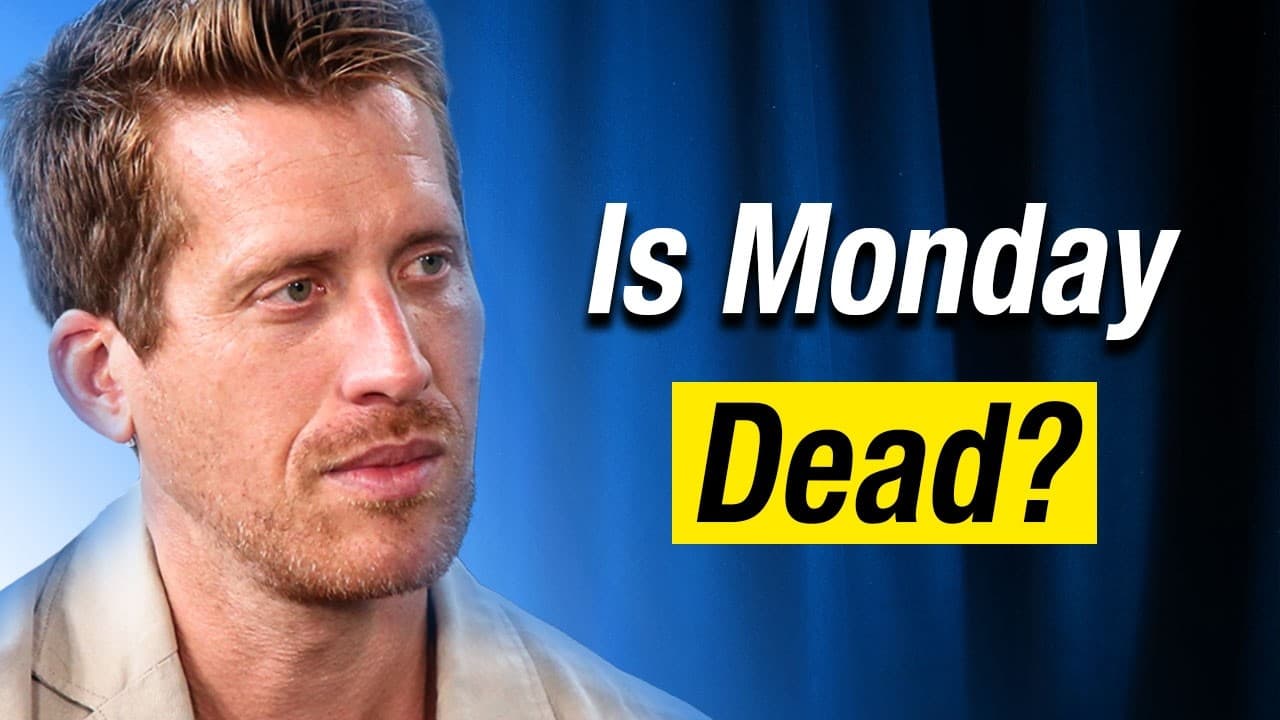
Established SaaS platforms are unlikely to disappear simply because users can generate interfaces with AI. Durable business software requires maintenance, organizational depth, and continuous adaptation, while model providers may expand into applications without capturing the entire market. Monday.com is therefore pursuing its largest strategic pivot, aiming to make software perform more of the work rather than merely store information.
Transcript
Some days I feel like I was ran over by a truck, hit by a plane, and barbecued, and it's just 11:00 a.m. What the market is saying to me is the company is worth zero. Okay, fine. Now I need to build. Screw it. I'm going to go all in. The SAS apocalypse is real, and no one has felt it more than monday.com. With close to 1.3 billion in revenue, they'... Read More
Key Insights
- Monday.com's market valuation and operating performance are presented as separate realities. The company reports close to $1.3 billion in revenue, while the description places its valuation near $3.8 billion and says its shares have fallen more than 60 percent since the IPO.
- Vibe coding is effective at producing an initial user interface, but a visible interface does not equal complete business software. Organizational products require deeper functionality, dependable operation, ongoing changes, and the ability to work across teams over time.
- Software maintenance is a major barrier to companies replacing purchased applications with internally generated tools. Creating a first version may be relatively easy, but adapting and supporting it continuously requires dedicated people whose cost can exceed the modest expense of commercial software.
- The threat from vibe coding is expected to be marginal rather than existential. Zinman considers the technology impressive and says Monday.com has its own vibe-coding capability, yet he views this scenario as the least convincing explanation for current pressure on software companies.
- Foundation-model providers may capture part of the application layer, but they are not expected to absorb all enterprise software value. Zinman compares the concern with earlier predictions that Amazon would dominate software after AWS simplified infrastructure, followed instead by rapid growth in companies built on that infrastructure.
- AI agents could reduce established platforms to systems of record, but that outcome is presented as one possible scenario rather than a settled conclusion. Monday.com is responding by changing its products so they perform more work for customers instead of functioning only as passive software.
- Monday.com's strategic response is described as the largest pivot in the company's history. Its guiding assumption is that customers will not want software that fails to complete most of the work on their behalf, making active automation central to future product value.
- The potential software market could become much larger as AI lowers development barriers and expands what applications can accomplish. Zinman predicts that company spending on software could eventually become 100 times its current level, despite current fears of a SaaS collapse.
Install to Summarize YouTube Videos and Get Transcripts
Explore YouTube Video Summarizer or Get YouTube Transcript Extractor
Questions & Answers
Q: Why does Eran Zinman believe SaaS is not dead?
Eran Zinman argues that negative public-market sentiment should not be confused with the actual operation of software businesses. He says many companies continue to operate normally, with some exceeding expectations. He also believes AI will expand software creation and spending rather than erase applications, although software companies must adapt their products so they perform substantially more work for customers.
Q: Can companies replace Monday.com by vibe coding their own apps?
Companies can use vibe coding to create an initial interface that resembles Monday.com, but Zinman argues that this is not equivalent to building the complete product. Organizational software needs deep functionality, reliability, maintenance, and continuous adaptation across teams. A business would also need dedicated employees to support its internal applications, creating a significant cost relative to purchasing software.
Q: What is the difference between vibe coding an interface and building software?
Vibe coding can quickly generate the visible first version of an application, especially its user interface. Building durable software requires considerably more work beneath that surface, including organizational functionality, ongoing changes, dependable operation, and maintenance over time. Zinman emphasizes that the first increment is comparatively easy, while sustained adaptation demands effort, expertise, and long-term dedication.
Q: Why is maintaining vibe-coded business software difficult?
Maintaining business software requires more than producing a working prototype. The application must change as the organization changes, continue operating reliably, and support deeper workflows across multiple users. Zinman argues that these responsibilities demand a dedicated person or team. Since software is a relatively small expense for many companies, internal maintenance may be economically unattractive.
Q: Will OpenAI, Anthropic, or Gemini capture all enterprise software value?
Zinman accepts that foundation-model providers may capture some application-layer value, but he believes observers overestimate how much they will control. He compares the situation with predictions made when AWS simplified infrastructure. Instead of Amazon capturing all enterprise software value, easier infrastructure contributed to a boom in companies building products on top of it. He expects a similarly expansive possibility from AI.
Q: Will AI agents turn platforms like Monday.com into databases?
AI agents could use established platforms primarily as systems of record while another layer controls the customer experience, and Zinman recognizes this as one of several credible threat scenarios. However, he does not treat that result as inevitable. Monday.com is changing its products around the belief that future software must perform most of the work, preserving value beyond passive data storage.
Q: How is Monday.com responding to the shift toward AI?
Monday.com is undertaking what Zinman calls the biggest pivot in the company's history. The company is redesigning its approach around a clear expectation: customers will not want to buy software that leaves most of the work to them. Monday.com also has its own vibe-coding capability and is considering how AI changes efficiency, pricing, enterprise adoption, and product value.
Q: Why can easier software creation expand the SaaS market?
Easier creation can allow more founders and companies to build applications instead of making every software business interchangeable. Zinman uses AWS as a historical analogy: when infrastructure became easier to provision, the result was a boom in software companies built on top of that foundation. He predicts AI could similarly expand demand, with software spending potentially reaching 100 times its current level.
Summary & Key Takeaways
-
Monday.com faces severe public-market skepticism despite reporting close to $1.3 billion in revenue and describing its underlying operations as normal. Eran Zinman separates this negative software sentiment from business performance, acknowledges legitimate investor concerns, and evaluates several possible threats involving vibe coding, foundation-model companies, AI agents, pricing, customer acquisition, and enterprise adoption.
-
Zinman argues that generating a recognizable interface is fundamentally different from creating dependable organizational software. Production systems require deep functionality, maintenance, adaptation, availability, and sustained investment. Because software represents a relatively small business expense, employing dedicated people to recreate and maintain applications may cost companies more than continuing to buy established products.
-
Monday.com expects AI to transform software rather than eliminate its market. The company is changing its products around the expectation that customers will reject tools that fail to perform most of the work. Zinman believes easier development could expand software creation, much as cloud infrastructure enabled more companies to build products instead of ending application businesses.
Read in Other Languages (beta)
Share This Summary 📚
Summarize YouTube Videos and Get Video Transcripts with 1-Click
Try YouTube Summary with ChatGPT & Claude or YouTube Transcript Generator
Explore More Summaries from 20VC with Harry Stebbings 📚





Summarize YouTube Videos and Get Video Transcripts with 1-Click
Try YouTube Summary with ChatGPT & Claude or YouTube Transcript Generator